All Blog Posts
Awareness
Kumbh Mela vs Magh Mela: Key Differences Explained Simply
K
Kumbh AdminSeptember 12, 20267 min readUnderstand the key differences between Kumbh Mela and Magh Mela in frequency, scale, spiritual importance, and locations with this simple guide.
Introduction: Are Kumbh Mela and Magh Mela the Same?
A frequent point of confusion among spiritual travelers is:
- “Is Magh Mela the same as Kumbh Mela?”
- “What is the difference between Kumbh and Magh Mela?”
At first glance, both events may look similar—large gatherings at sacred riverbanks, holy bathing rituals, spiritual activities, and temporary settlements.
However, they differ significantly in scale, frequency, locations, monastic participation, and overall character.
This guide provides a simple, structured breakdown of how Kumbh Mela and Magh Mela compare.
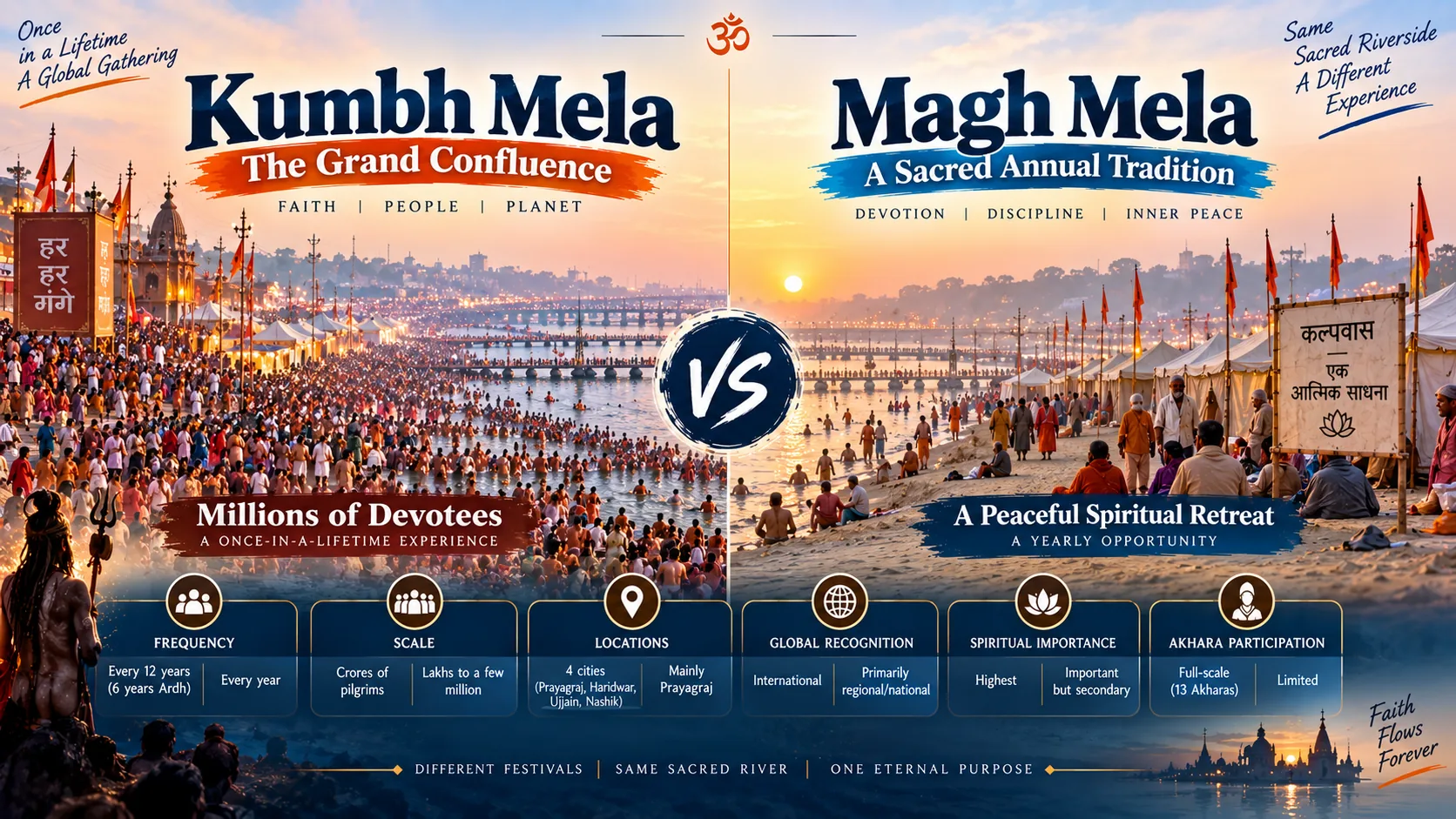
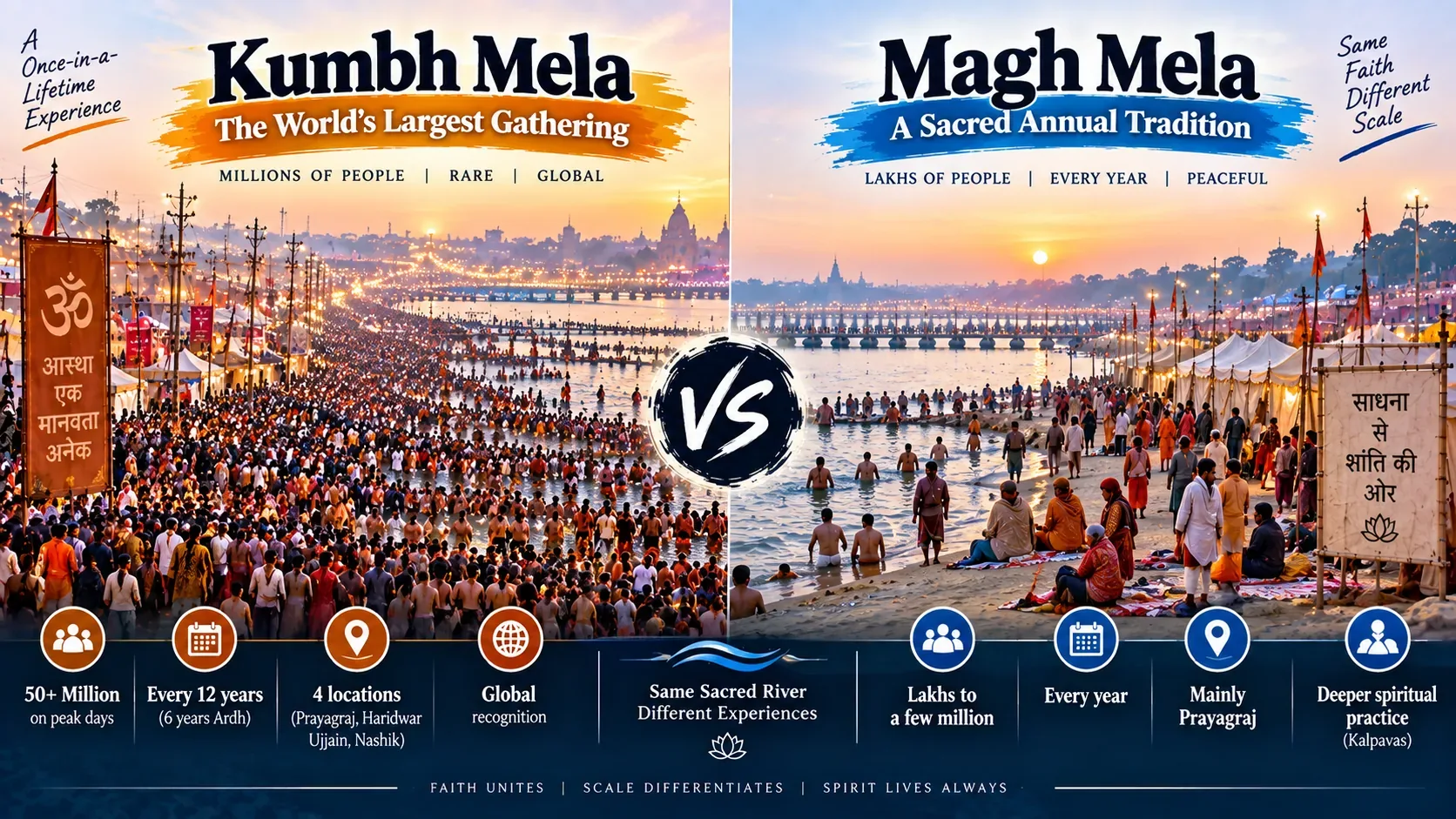
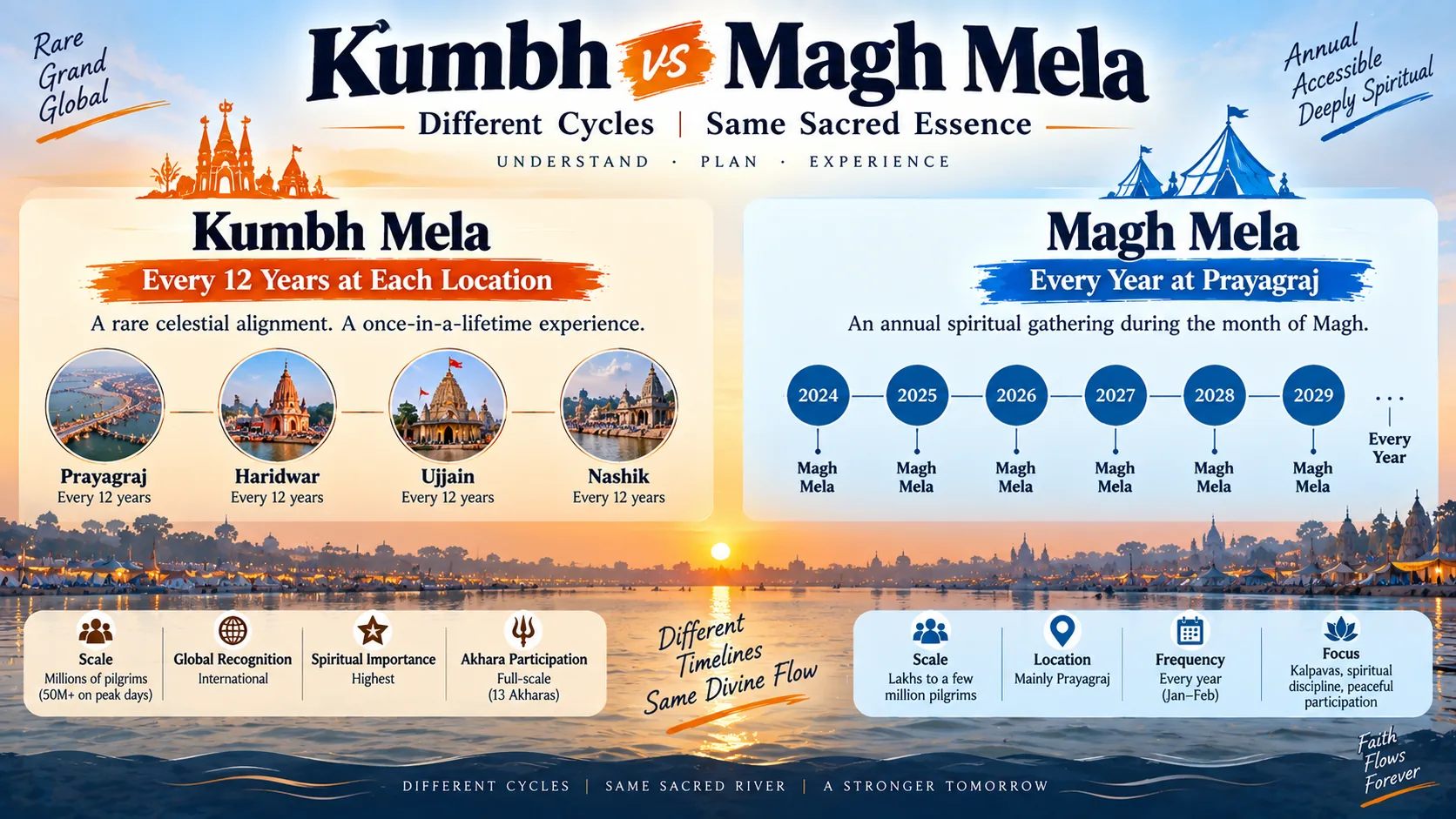
Quick Comparison Table
| Feature | Kumbh Mela | Magh Mela |
|---|---|---|
| Frequency | Major Kumbh occurs roughly every 12 years at a given location; Ardh Kumbh is observed at six-year intervals at relevant locations | Annual, during the Hindu month of Magh |
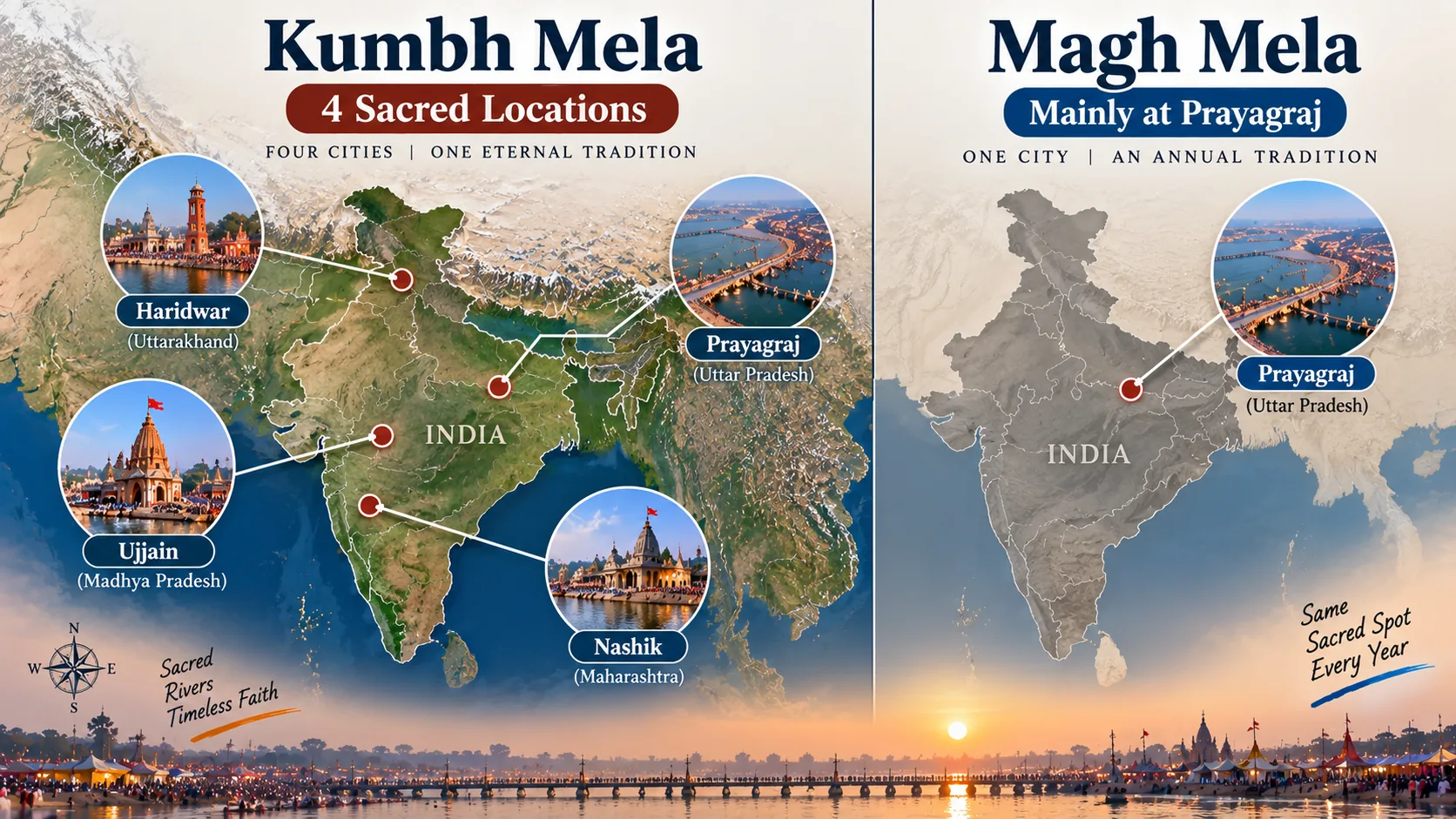
| Primary Location | Rotates across 4 cities: Prayagraj, Haridwar, Ujjain, and Nashik | Primarily Prayagraj, especially around the Triveni Sangam |
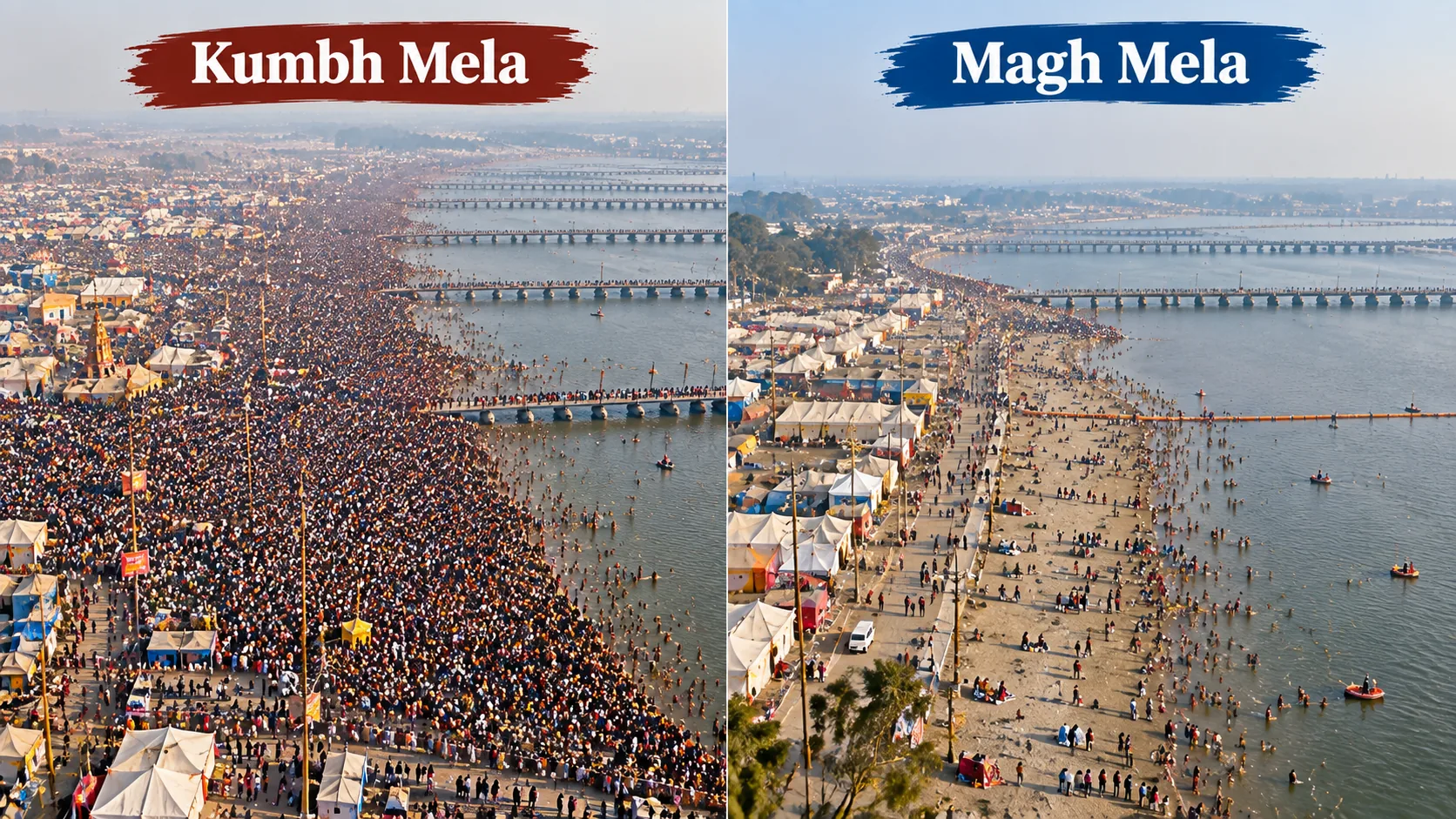
| Scale | Massive, ranging from millions to tens of millions of visitors | Smaller but still significant, ranging from lakhs to a few million |
| Akhara Presence | Large-scale participation with major ceremonial processions | More limited participation compared with Kumbh |
| Global Footprint | Major international attention | Primarily regional and national |
| Core Character | Rare, large-scale cyclical pilgrimage and spiritual congregation | Annual pilgrimage and disciplined spiritual practice |
1. Basic Overview: Understanding the Two Festivals
What is Kumbh Mela?
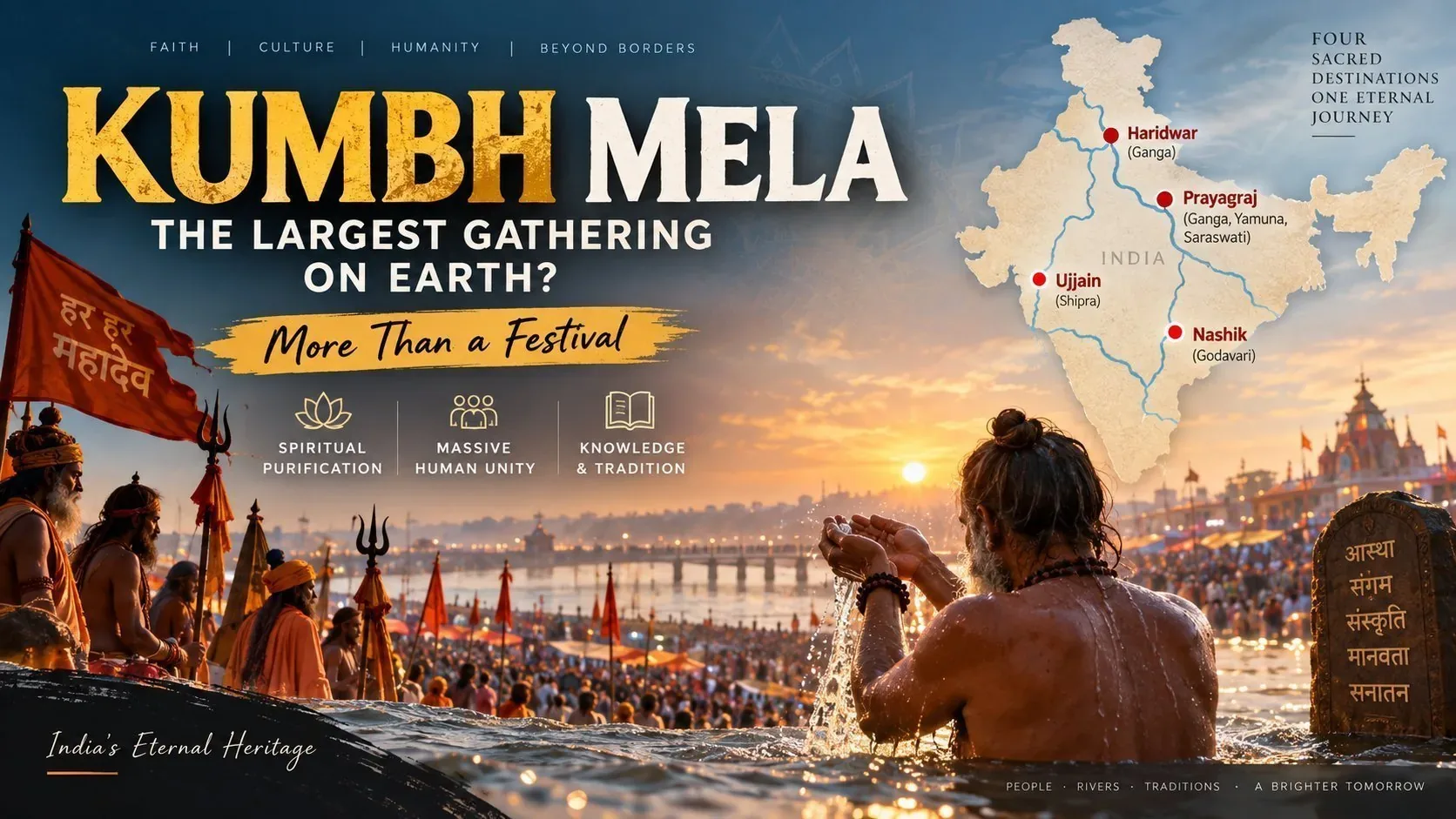
Kumbh Mela is one of the largest religious gatherings in the world, held at four sacred locations in India.
It brings together millions of pilgrims, saints, ascetics, spiritual seekers, and visitors from across India and around the world.
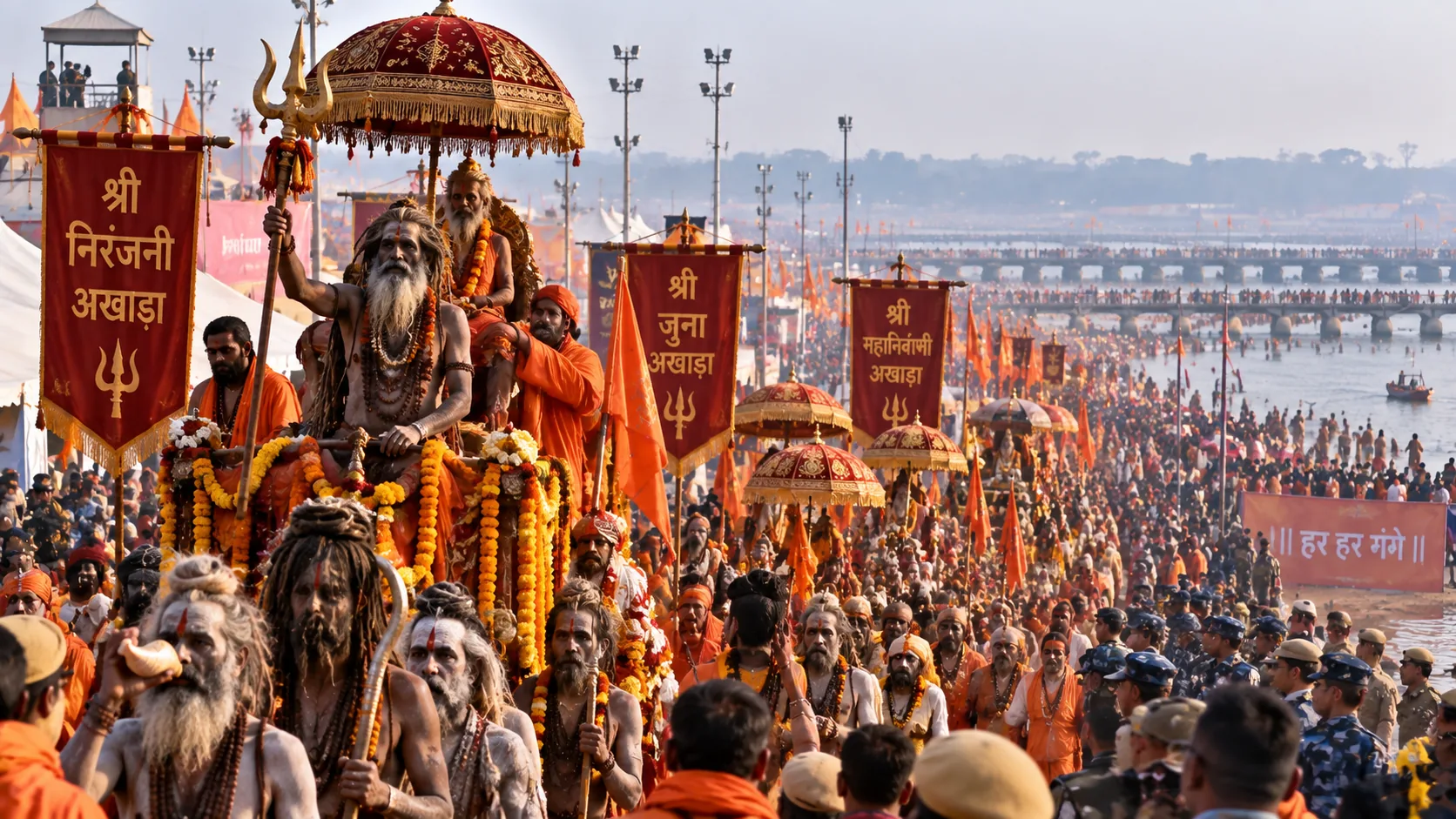
Kumbh is particularly known for its sacred bathing days, Akhara participation, religious discourses, and grand ceremonial processions.
What is Magh Mela?
Magh Mela is an annual religious gathering, primarily held in Prayagraj during the Hindu month of Magh, generally corresponding to January–February.
It is sometimes called a “mini Kumbh” because it shares several features with Kumbh Mela, including sacred bathing, temporary camps, spiritual activities, and Kalpavas.
However, Magh Mela is considerably smaller in scale.
2. Frequency and Astronomical Alignment
Kumbh Mela
Kumbh Mela is scheduled according to specific astronomical and religious calculations involving celestial positions.
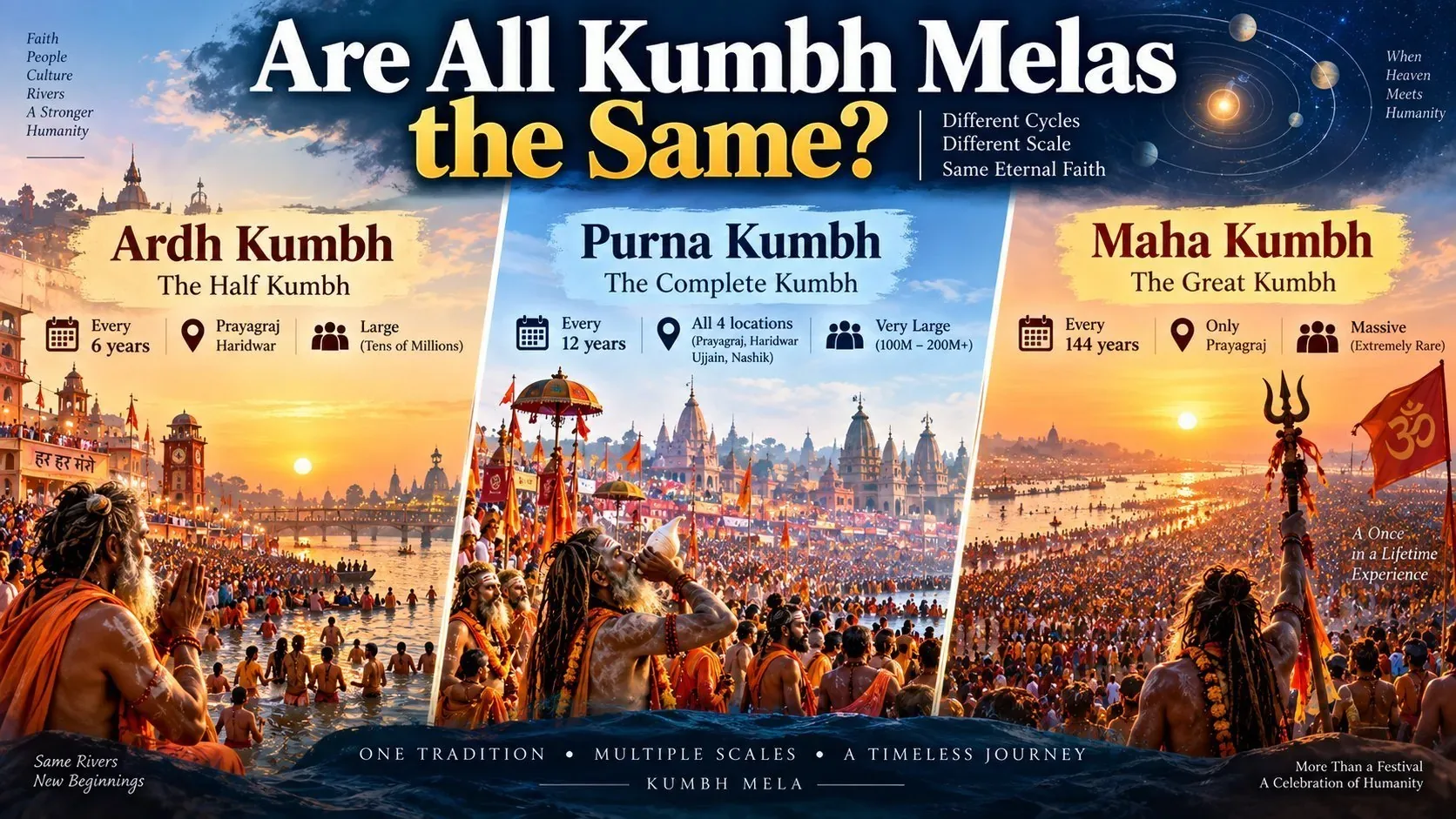
At each traditional Kumbh location, a major Kumbh occurs roughly every 12 years, while Ardh Kumbh is associated with a six-year interval at relevant locations.
The exact timing differs between the four pilgrimage centers.
Magh Mela
Magh Mela takes place every year during the Hindu month of Magh, usually falling in January–February.
The annual gathering generally begins around Makar Sankranti and continues through the Magh period, with several important bathing occasions.
What This Means for Visitors
- Kumbh → A rare, large-scale pilgrimage experience
- Magh → A recurring annual opportunity for pilgrimage and spiritual practice
3. Scale & Crowd: Unmatched vs Manageable
Kumbh Mela Scale
Kumbh Mela can attract tens of millions of visitors across its duration, with particularly large crowds gathering on major bathing days.
The extraordinary scale requires extensive temporary infrastructure, transportation systems, sanitation facilities, security arrangements, medical services, and crowd-management operations.
Magh Mela Scale
Magh Mela is considerably smaller but remains a major pilgrimage gathering.
Depending on the year and important bathing dates, it can attract lakhs to a few million pilgrims.
Compared with Kumbh, the environment is generally more manageable for visitors seeking a quieter pilgrimage experience.
Visitor Insight
👉 Which is better to attend—Kumbh or Magh?
- Choose Kumbh Mela for grandeur, enormous crowds, and a rare large-scale cultural experience.
- Choose Magh Mela for comparatively peaceful participation and deeper personal spiritual practice.
4. Locations: Multi-City vs Primarily Prayagraj
Kumbh Mela Locations
Kumbh Mela is traditionally associated with four sacred cities:
- Prayagraj
- Haridwar
- Ujjain
- Nashik
Each location has its own astronomical configuration, religious traditions, and pilgrimage significance.
Magh Mela Location
Magh Mela is primarily associated with Prayagraj, particularly the area around the Triveni Sangam.
This is one of the main reasons for confusion between the two festivals: Prayagraj hosts both Kumbh Mela and Magh Mela.
5. Spiritual Importance: Peak Gathering vs Continuous Practice
Kumbh Mela
Kumbh Mela is associated with rare astronomical configurations, major bathing occasions, and large-scale spiritual gatherings.
For many pilgrims, bathing during the important dates of Kumbh is considered an especially significant religious observance.
The presence of saints, Akharas, spiritual teachers, and millions of devotees creates a distinctive atmosphere of collective pilgrimage.
Magh Mela
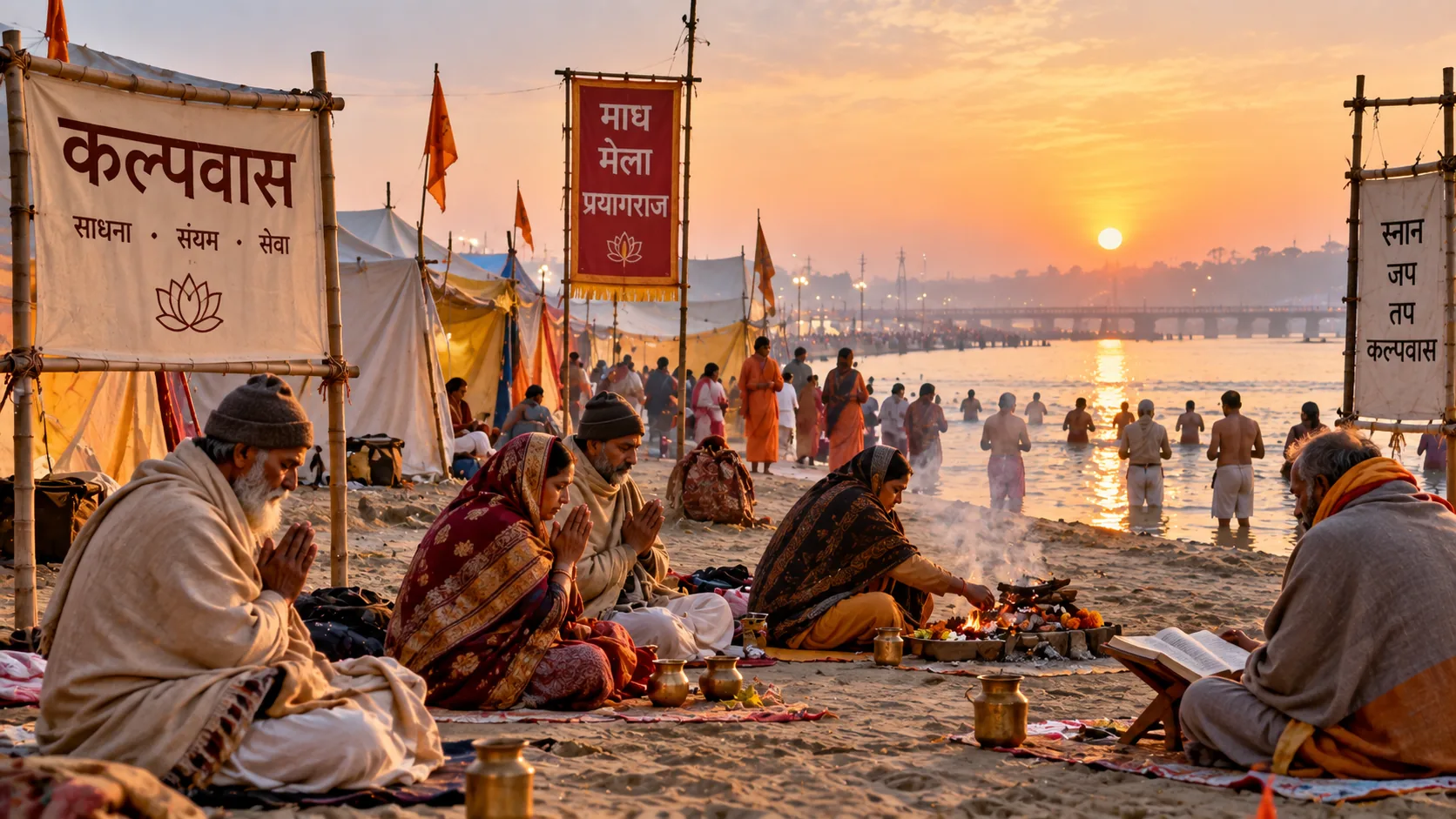
Magh Mela places greater emphasis on annual spiritual practice, particularly Kalpavas.
Kalpavasis traditionally stay near the river during the Magh period and follow disciplined routines involving bathing, prayer, meditation, devotional practices, and simple living.
Key Insight
A simple way to understand the distinction is:
Kumbh → A major cyclical spiritual gathering
Magh → An annual cycle of pilgrimage and spiritual discipline
Both are important expressions of India's living pilgrimage traditions, but their scale and institutional character differ.
6. Monastic Participation & Processions
At Kumbh Mela
The Akharas have a highly visible role during Kumbh Mela.
The major ascetic orders establish camps, participate in religious activities, and take part in ceremonial processions associated with important bathing occasions.
The Shahi Snan processions involving Naga Sadhus and other ascetics are among the most recognizable features of Kumbh.
At Magh Mela
Magh Mela also brings together saints, religious organizations, spiritual teachers, and ascetic communities.
However, the scale of Akhara participation and ceremonial pageantry is generally more limited than at Kumbh Mela.
The event places greater emphasis on individual pilgrimage, bathing, Kalpavas, prayer, and spiritual discipline rather than large-scale royal processions.
7. Infrastructure & Organization
Kumbh Mela
Kumbh Mela requires the creation of a massive temporary city to accommodate its enormous visitor numbers.
Its organization can involve:
- Temporary roads and bridges
- Large-scale sanitation systems
- Water and electricity networks
- CCTV surveillance
- GIS-based mapping
- Crowd monitoring
- Emergency response systems
- Sector and zonal administration
- Traffic and transportation management
Modern technologies can also assist authorities in monitoring crowd movement and coordinating security and emergency responses.
Magh Mela
Magh Mela uses many of the same organizational principles but generally operates on a smaller scale.
Temporary camps, roads, sanitation facilities, medical services, security arrangements, and administrative systems are established to support the annual gathering.
8. Which Gathering Fits Your Spiritual Journey?
Choose Kumbh Mela If You Want:
✔ To witness the sheer spectacle and grandeur of India's living spiritual heritage
✔ To experience a rare, large-scale pilgrimage
✔ To see major ceremonial processions and Akhara participation
✔ To experience global cultural convergence
Choose Magh Mela If You Want:
✔ A comparatively peaceful and less congested environment
✔ To spend more time in personal meditation and spiritual practice
✔ To undertake month-long Kalpavas disciplines
✔ An introspective riverside pilgrimage experience
9. A Fascinating Difference in Scale
The scale of Kumbh Mela can be difficult to comprehend.
The 2019 Prayagraj Kumbh Mela recorded more than 120 million visits over the course of the event, demonstrating the extraordinary size that Kumbh can reach.
Magh Mela, although a major annual pilgrimage, does not approach the same level of visitor numbers.
This enormous difference in scale is one of the clearest reasons Kumbh requires such extensive temporary infrastructure and large-scale crowd management.
Conclusion: Two Gatherings, One Living Faith
While Kumbh Mela and Magh Mela revolve around faith, devotion, sacred bathing, pilgrimage, and spiritual practice, they serve different roles within India's pilgrimage traditions.
Kumbh Mela → Grand, rare, cyclical, and globally recognized
Magh Mela → Annual, disciplined, comparatively smaller, and spiritually immersive
Understanding this difference helps you choose the experience that best suits your journey.
Whether you stand among millions during Kumbh or spend a quieter period beside the Sangam during Magh Mela, both gatherings offer a meaningful connection to India's living spiritual traditions.
Enhance Your Pilgrimage Experience
Mobile App
Read Kumbh Guides on Mobile
Download the Divya Kripa to read all 19 guides offline, receive real-time snan alerts, and access GPS-enabled navigation on the ground.
Download AppAI Assistant
Personalized Planner & Chatbot
Access your Kumbh Planner AI Assistant to receive tailored ritual advice, customized itineraries, and instant answers to spiritual questions.
Try AI Planner