All Blog Posts
EngagementAwareness
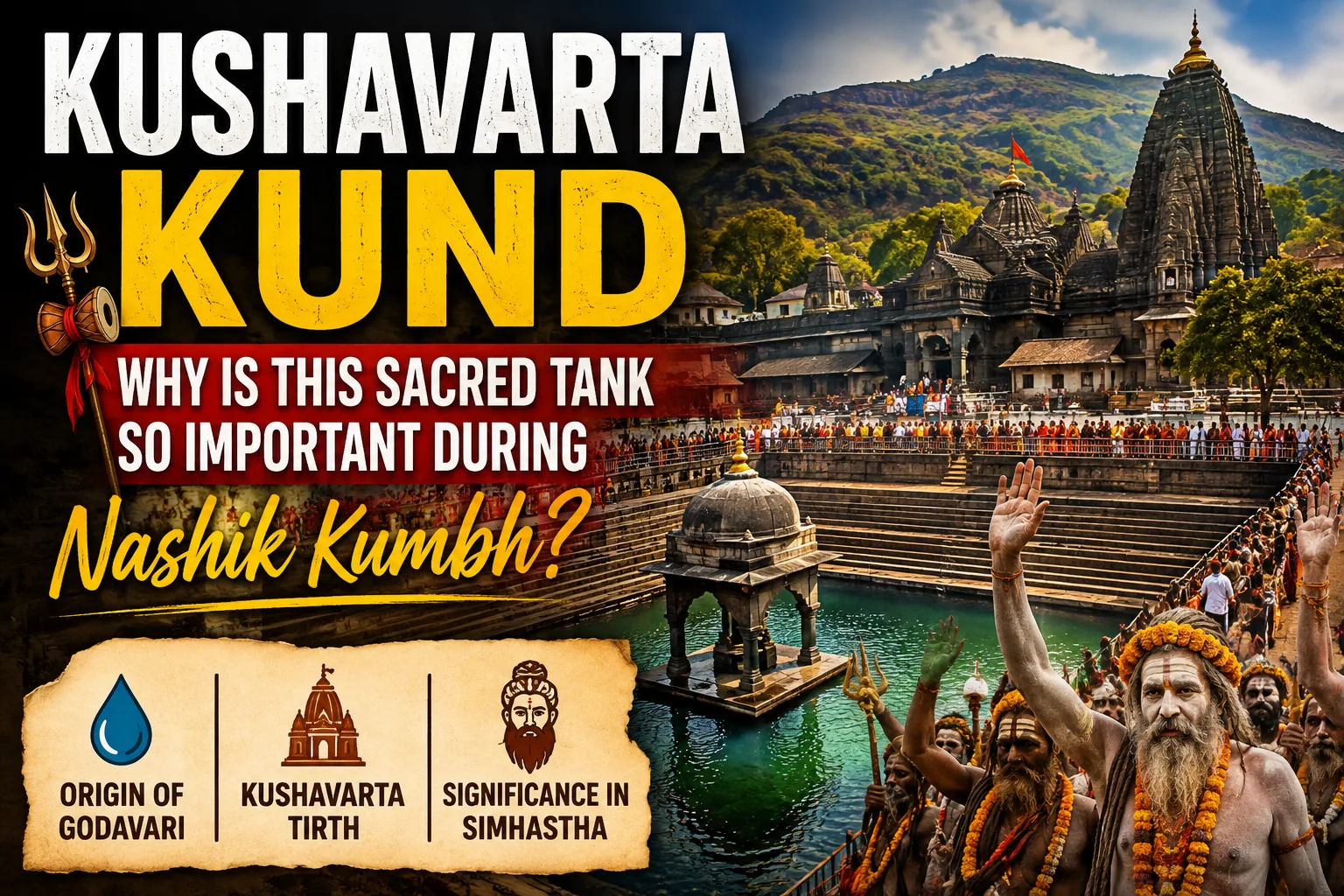
Kushavarta Kund: Why Is This Sacred Tank So Important During Nashik Kumbh?
K
Kumbh AdminNovember 21, 202611 min readKushavarta Kund in Trimbakeshwar, Maharashtra, is one of the most sacred pilgrimage sites associated with the Godavari River and Nashik-Trimbakeshwar Simhastha Kumbh Mela. Discover the story of the Godavari's origin, the religious traditions associated with this ancient water tank, the significance of Kushavarta Tirth, and why it becomes a central destination for holy bathing during Simhastha.
Kushavarta Kund, located in Trimbakeshwar near Nashik in Maharashtra, is one of the most important sacred bathing sites associated with the Nashik-Trimbakeshwar Simhastha Kumbh Mela. It is closely connected with the origin of the Godavari River, the religious traditions of Lord Shiva and the ancient pilgrimage history of the Brahmagiri hills.
Unlike an ordinary temple tank, Kushavarta Kund holds a special position in Hindu pilgrimage traditions because it is regarded as the visible source of the Godavari's flow. During Simhastha, it becomes the principal bathing place for Shaiva sadhus, including Naga sadhus, who gather here for the sacred Amrit Snan.
Understanding Kushavarta Kund requires understanding the story of the Godavari, the religious significance of Trimbakeshwar and the traditions that make Nashik's Kumbh different from other Kumbh Melas.
1. What Is Kushavarta Kund and Where Is It Located?
Kushavarta Kund, also known as Kushavarta Tirth, is a sacred water tank situated in the town of Trimbakeshwar, approximately 30 kilometres from Nashik city. It is located close to the famous Trimbakeshwar Shiva Temple, one of the twelve Jyotirlingas in Hinduism.
The kund is a square-shaped stone tank surrounded by steps, ghats and a traditional stone pavilion. Pilgrims visit it throughout the year to perform religious bathing, prayers and other rituals.
Its importance comes from its association with the Godavari River. While the river's geographical source is associated with the Brahmagiri mountain, Kushavarta is traditionally regarded as the place where the sacred river becomes visibly accessible to devotees at Trimbakeshwar.
The Maharashtra government's official Simhastha portal identifies Kushavarta Tirth as the visible source of the Godavari and the principal bathing location for Shaiva ascetics during the Kumbh.
2. The Origin of the Godavari River: The Story Behind Kushavarta
The religious importance of Kushavarta Kund is closely connected with the origin story of the Godavari River.
The Godavari is one of India's major rivers and is traditionally known as the Dakshin Ganga, meaning the Ganga of the South. Its origin is associated with the Brahmagiri mountain near Trimbakeshwar.
According to Hindu tradition, the story of the river is connected with Sage Gautama and Lord Shiva.
The Legend of Sage Gautama and the Descent of Ganga
According to the traditional account, Sage Gautama lived and performed penance in the Brahmagiri region with his wife, Ahilya.
One day, a cow entered his field. While attempting to drive it away, the sage accidentally caused its death. In Hindu religious tradition, the killing of a cow is considered a serious sin. Sage Gautama therefore sought purification through severe penance and prayers to Lord Shiva.
Pleased with his devotion, Lord Shiva granted his request and brought the sacred Ganga to the earth.
The river descended near Brahmagiri mountain and became associated with Sage Gautama. It came to be known as Gautami or Godavari.
This is why the Godavari is considered sacred and why Trimbakeshwar holds an important position in Hindu pilgrimage traditions.
The story is a religious account explaining the river's sacred origin, rather than a geological explanation of its formation.
How Does the Godavari Reach Kushavarta Kund?
According to local religious tradition, the river emerges at Gangadwar on Brahmagiri mountain and follows a sacred route towards Trimbakeshwar.
It is believed that the water disappears underground along parts of this route and becomes visible again at several sacred locations, including Ram-Lakshman Kund and Kushavarta.
Kushavarta is therefore regarded as the visible source of the Godavari in the town of Trimbakeshwar.
The traditional pilgrimage route connects several important sacred places:
- Brahmagiri Mountain: The sacred mountain associated with the origin of the Godavari.
- Gangadwar: A revered point where water emerges from the hillside.
- Ram-Lakshman Kund: Another sacred water location associated with the river's journey.
- Kushavarta Tirth: The principal sacred tank where the Godavari becomes accessible to pilgrims.
This religious geography makes Kushavarta an important part of the wider Godavari pilgrimage.
3. Why Is Kushavarta Called Kushavarta Tirth?
The name Kushavarta has a connection with the traditional story of Sage Gautama and the sacred river.
The word is commonly explained through two Sanskrit elements:
- Kusha: A sacred type of darbha grass used in Hindu religious ceremonies.
- Avarta: A circular movement, turning or whirlpool.
According to the Puranic tradition associated with the kund, Sage Gautama used darbha grass to control the flow of the descending Ganga and contain the water in a tank. The water moved around the grass, creating a circular motion.
This traditional account is associated with the name Kushavarta.
The word Tirth refers to a sacred place of pilgrimage, particularly a location associated with spiritual purification through bathing, prayer and religious observances.
Therefore, Kushavarta Tirth is not simply a water tank. It is regarded as a sacred pilgrimage destination connected with the descent of the Godavari and the religious traditions of Sage Gautama.
Who Constructed the Present Kushavarta Kund?
The present stone structure of Kushavarta Kund is traditionally attributed to Sardar Raosaheb Parnerkar of the Indore princely state.
The kund has stone ghats and a pavilion surrounding the water. A half-length statue of Sardar Raosaheb Parnerkar and his wife is also present near the tank.
This distinction is important: the religious tradition associated with Kushavarta is ancient, while the present architectural structure reflects a later period of patronage and construction.
4. Religious Traditions and Rituals at Kushavarta Kund
Kushavarta Kund is an important centre of religious activity throughout the year. Its connection with the Godavari makes it a significant place for bathing, prayer, purification rituals and ancestral observances.
Some important traditions associated with the region include:
Holy Bathing and Spiritual Purification
Bathing in sacred rivers and tirthas is an important practice in Hindu religious traditions.
Devotees visit Kushavarta to take a holy dip, offer prayers and seek spiritual purification. During auspicious occasions, the number of pilgrims visiting the kund increases significantly.
During Simhastha, bathing here carries particular importance because the Godavari is regarded as a sacred river and the kund is associated with its visible emergence at Trimbakeshwar.
Rituals for Ancestors
The Godavari region is also associated with ancestral rites, including Shraddha and other religious observances performed for departed family members.
The nearby Gautami-Ahilya Sangam, where the Ahilya River meets the Godavari, is traditionally considered sacred for ancestral rituals.
These practices connect the wider Trimbakeshwar pilgrimage with Hindu beliefs about remembrance, family obligations and spiritual liberation.
Brahmagiri Parikrama
Another important religious tradition is the Brahmagiri Parikrama, also locally known as Brahmagiri Pheri.
Devotees circumambulate the sacred Brahmagiri mountain, which is closely associated with the origin of the Godavari.
A major pilgrimage gathering takes place on Mondays during the Hindu month of Shravan. The route is hilly and can become slippery during the monsoon season.
The tradition reflects the religious relationship between the sacred mountain, the Godavari River and the Trimbakeshwar temple.
Kartik Purnima and Other Religious Occasions
Kushavarta also has connections with several annual religious observances.
One notable tradition takes place on Kartik Purnima, when the palanquin of Trimbakraja is carried to Kushavarta.
The town also witnesses religious gatherings associated with the Nivruttinath Yatra and other pilgrimage occasions.
These traditions demonstrate that Kushavarta is an active pilgrimage destination throughout the year, not only during the Kumbh Mela.
5. Why Is Kushavarta Kund So Important During Nashik-Trimbakeshwar Simhastha Kumbh?
The most important occasion associated with Kushavarta Kund is the Nashik-Trimbakeshwar Simhastha Kumbh Mela.
Among the four traditional Kumbh locations in India, Nashik-Trimbakeshwar has a distinctive arrangement: the major bathing activities take place at two separate sacred locations.
- Ramtirth, Nashik: Traditionally associated with Vaishnava akhadas.
- Kushavarta Tirth, Trimbakeshwar: Traditionally associated with Shaiva akhadas.
This division is one of the defining characteristics of the Nashik-Trimbakeshwar Kumbh.
Why Do Shaiva Sadhus Bathe at Kushavarta?
Trimbakeshwar is one of the twelve Jyotirlingas of Lord Shiva. Its religious identity is therefore closely connected with Shaiva traditions.
During Simhastha, Shaiva akhadas, including Naga sadhus, gather at Trimbakeshwar for their ceremonial bathing rituals.
Kushavarta Tirth is their principal sacred bathing location.
For these ascetic orders, the holy bath is not merely an individual religious activity. It is also a collective expression of their spiritual traditions, monastic identity and relationship with Lord Shiva.
The procession and ceremonial bathing of the akhadas form an important part of the Simhastha celebrations.
What Is the Significance of Amrit Snan?
Amrit Snan is one of the most important bathing traditions of Kumbh Mela.
The term refers to the sacred bath performed on especially auspicious occasions during the festival.
According to Hindu belief, bathing in the sacred river during these auspicious periods brings spiritual merit and purification.
At Trimbakeshwar, Shaiva akhadas perform their ceremonial Amrit Snan at Kushavarta Tirth.
The bathing procession is organised according to established religious traditions and arrangements. Sadhus and ascetics participate in their respective akhada processions before taking the sacred dip.
For ordinary pilgrims, witnessing these processions is an opportunity to understand the religious organisation and living traditions of the Kumbh Mela.
Why Are There Two Bathing Locations During Nashik Kumbh?
Unlike other Kumbh locations, the Nashik-Trimbakeshwar Simhastha has two principal bathing centres.
This arrangement is rooted in the historical relationship between Shaiva and Vaishnava ascetic traditions.
Historical accounts associate the separation of bathing locations with disputes between ascetic groups over ritual precedence. Arrangements made during the Peshwa period established separate bathing centres for the two traditions.
| Bathing Location | Religious Tradition | Associated Significance |
|---|---|---|
| Kushavarta Tirth, Trimbakeshwar | Shaiva akhadas | Lord Shiva, Godavari origin and Shaiva ascetics |
| Ramtirth, Nashik | Vaishnava akhadas | Lord Rama, Panchavati and Vaishnava traditions |
This division allows both traditions to maintain their distinct ceremonial practices during Simhastha.
What Makes Kushavarta Different from Ramkund?
Both Kushavarta and Ramkund are important bathing locations associated with the Godavari, but their religious identities are different.
Kushavarta is located in Trimbakeshwar and is particularly associated with the Godavari's sacred origin and Shaiva traditions.
Ramkund is situated in Panchavati, Nashik, and is closely connected with the religious memory of Lord Rama's stay in the region.
Their complementary roles make Nashik-Trimbakeshwar Simhastha distinct from the other Kumbh gatherings.
6. Kushavarta Kund: A Living Connection Between the Godavari and Kumbh Tradition
Kushavarta Kund represents the close relationship between sacred geography, religious mythology and pilgrimage traditions in Hinduism.
Its importance comes from several interconnected elements:
- Connection with the Godavari: It is traditionally regarded as the visible source of the river at Trimbakeshwar.
- Association with Sage Gautama: Its religious identity is rooted in the traditional story of the descent of Ganga as Godavari.
- Proximity to a Jyotirlinga: It is located near the Trimbakeshwar Shiva Temple, one of the twelve Jyotirlingas.
- Religious bathing traditions: Devotees visit throughout the year for sacred bathing and religious observances.
- Role in Simhastha: It serves as the principal bathing site for Shaiva akhadas during the Nashik-Trimbakeshwar Kumbh.
The significance of Kushavarta extends beyond the Kumbh period. It remains an important pilgrimage destination throughout the year, connecting devotees with the Godavari, Lord Shiva and the religious heritage of Trimbakeshwar.
Frequently Asked Questions
1. Why Is Kushavarta Kund Famous?
Kushavarta Kund is famous because it is traditionally regarded as the visible source of the Godavari River at Trimbakeshwar. It is also the principal bathing location for Shaiva akhadas during the Nashik-Trimbakeshwar Simhastha Kumbh Mela.
2. Where Is Kushavarta Kund Located?
Kushavarta Kund is located in Trimbakeshwar town in Nashik district, Maharashtra. It is situated close to the Trimbakeshwar Jyotirlinga Temple.
3. What Is the Connection Between Kushavarta Kund and the Godavari River?
According to religious tradition, the Godavari originates near Brahmagiri mountain and becomes visibly accessible at Kushavarta Kund. This association makes the kund an important Godavari pilgrimage site.
4. Who Built Kushavarta Kund?
The present stone structure of Kushavarta Kund is traditionally attributed to Sardar Raosaheb Parnerkar of the Indore princely state.
5. Why Do Naga Sadhus Bathe at Kushavarta Kund?
Kushavarta is the principal bathing location for Shaiva akhadas during Simhastha. Naga sadhus, who belong to the Shaiva ascetic tradition, participate in ceremonial holy bathing here.
6. What Is the Difference Between Kushavarta Kund and Ramkund?
Kushavarta Kund is located in Trimbakeshwar and is associated with Shaiva akhadas. Ramkund is located in Nashik's Panchavati area and is traditionally associated with Vaishnava akhadas.
7. Is Kushavarta Kund Important Outside Kumbh Mela?
Yes. Devotees visit Kushavarta throughout the year for holy bathing, prayers and religious observances. It is also connected with annual pilgrimage traditions such as Kartik Purnima and the wider Brahmagiri pilgrimage.
8. Why Is the Nashik Kumbh Called Simhastha?
It is called Simhastha because the Kumbh takes place when Jupiter (Brihaspati) enters the zodiac sign of Leo (Simha). This astrological alignment is central to the timing of the Nashik-Trimbakeshwar Kumbh.
Conclusion
Kushavarta Kund is important during Nashik-Trimbakeshwar Simhastha because it is traditionally regarded as the visible source of the sacred Godavari River and serves as the principal bathing place for Shaiva akhadas, including Naga sadhus.
Its connection with Sage Gautama, the origin of the Godavari, Lord Shiva and Trimbakeshwar's Jyotirlinga tradition makes it one of the most significant pilgrimage sites associated with the Kumbh Mela.
For devotees, Kushavarta is much more than a sacred water tank. It is a place where the religious heritage of the Godavari and the living traditions of Simhastha come together.
Pilgrim Resources
Enhance Your Pilgrimage Experience
Mobile App
Download AppRead Kumbh Guides on Mobile
Download Divya Kripa to read all official guides offline, receive real-time snan alerts, and access GPS-enabled navigation on the ground.
AI Assistant
Try AI PlannerPersonalized Planner & Guide
Access your Kumbh Planner AI Assistant to receive tailored ritual advice, customized itineraries, and instant answers to spiritual questions.
More Stories Culture
 Travel Tips
 Awareness
Related Articles
Can’t Make It to the Ghats? Here’s How to Bring the Magic of Dev Diwali Straight into Your Living Room
Nov 24, 2026Beyond Shahi Snan: 10 Sacred Places to Visit in Nashik During Kumbh 2027
Nov 23, 2026Smart Crowd Management at Kumbh Mela: How Digital Twins Could Transform Crowd Safety and Planning
Nov 20, 2026Loading discussion & reviews...