All Blog Posts
Planning
Structure of Kumbh Mela: Akharas, Camps, Sectors & Zones Explained
K
Kumbh AdminSeptember 11, 20265 min readDiscover the complete structural framework of Kumbh Mela. Learn how Akharas, camps, sectors, and administrative zones manage millions of pilgrims smoothly.
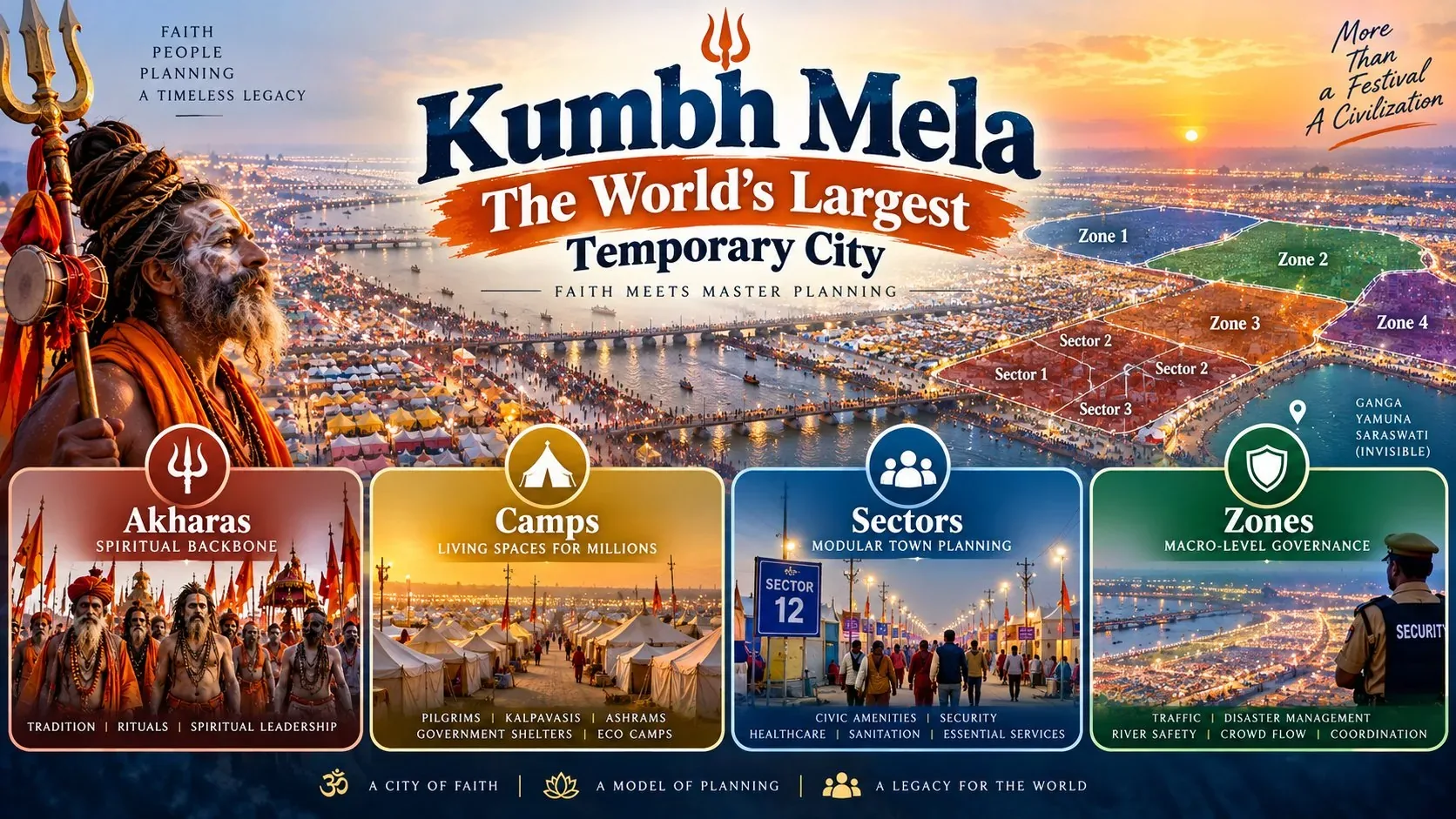
Introduction: The World’s Largest Temporary City
When millions of people gather at the Kumbh Mela, it’s not chaos—it’s one of the most well-organized temporary cities in the world.
From spiritual orders to administrative zones, everything is meticulously planned.
If you’ve ever wondered:
- How is Kumbh Mela organized?
- Who manages the massive crowd?
- What are Akharas and camps?
This guide breaks down the complete structure of Kumbh Mela, making it easy to understand how faith meets large-scale planning.
1. The Core Framework of Kumbh Mela
At its highest level, Kumbh Mela operates on four structural pillars:
- Akharas (Spiritual Orders)
- Camps (Accommodation & Experience Zones)
- Sectors (Administrative Divisions)
- Zones (Macro-Level Governance Areas)
Each layer plays a distinct role—together helping ensure the smooth functioning of the Mela for crores of pilgrims.
2. Akharas: The Spiritual Backbone
What are Akharas?
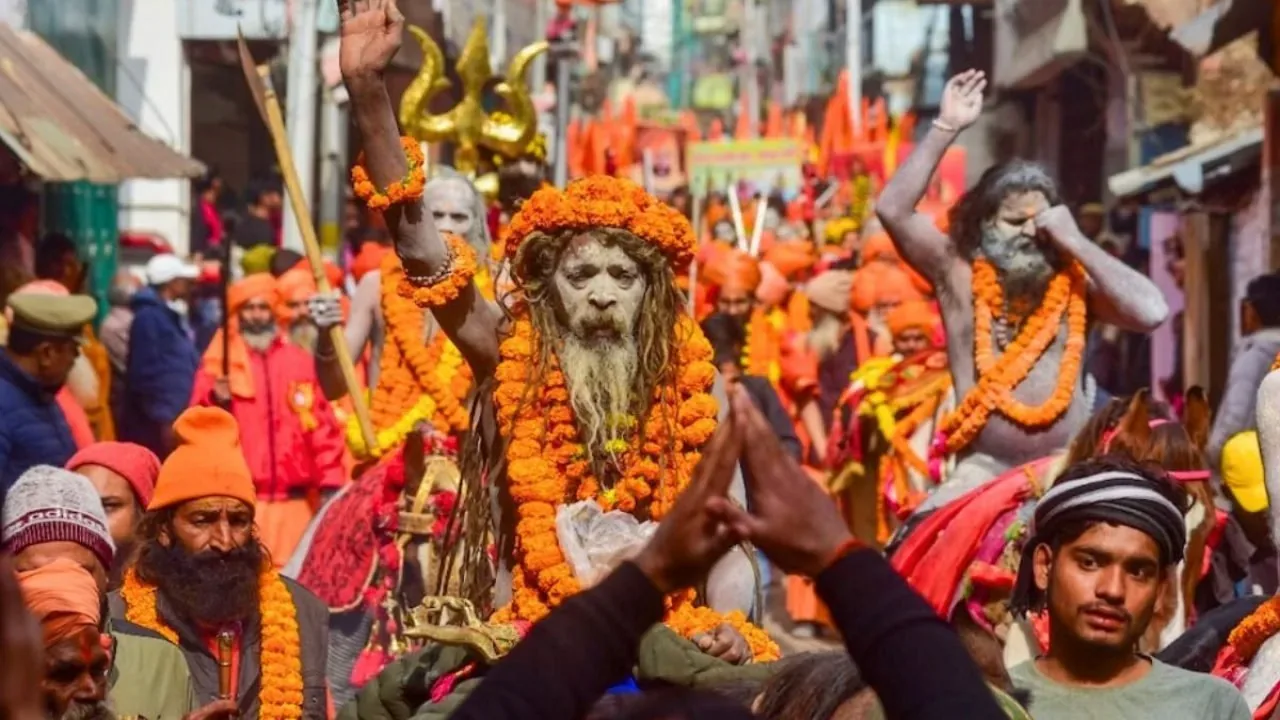
Akharas are ancient monastic orders of saints and sadhus, deeply rooted in Sanatan traditions. They form the heart of Kumbh Mela’s spiritual ecosystem.
Key Highlights:
-
There are 13 recognized Akharas
-
They are broadly categorized into:
- Shaiva Akharas
- Vaishnava Akharas
- Udasin & Nirmal Akharas
-
They are prominently associated with Shahi Snan (Royal Bath) processions
Why Akharas Matter:
- Preserve spiritual traditions
- Lead major rituals and processions
- Provide spaces for spiritual teaching and community
- Attract global curiosity, particularly around traditions such as those of the Naga Sadhus
Akharas also establish camps where saints, disciples, and visitors gather for religious activities, discourses, and ceremonies.
3. Camps: Where Devotion Meets Daily Living
What are Camps?
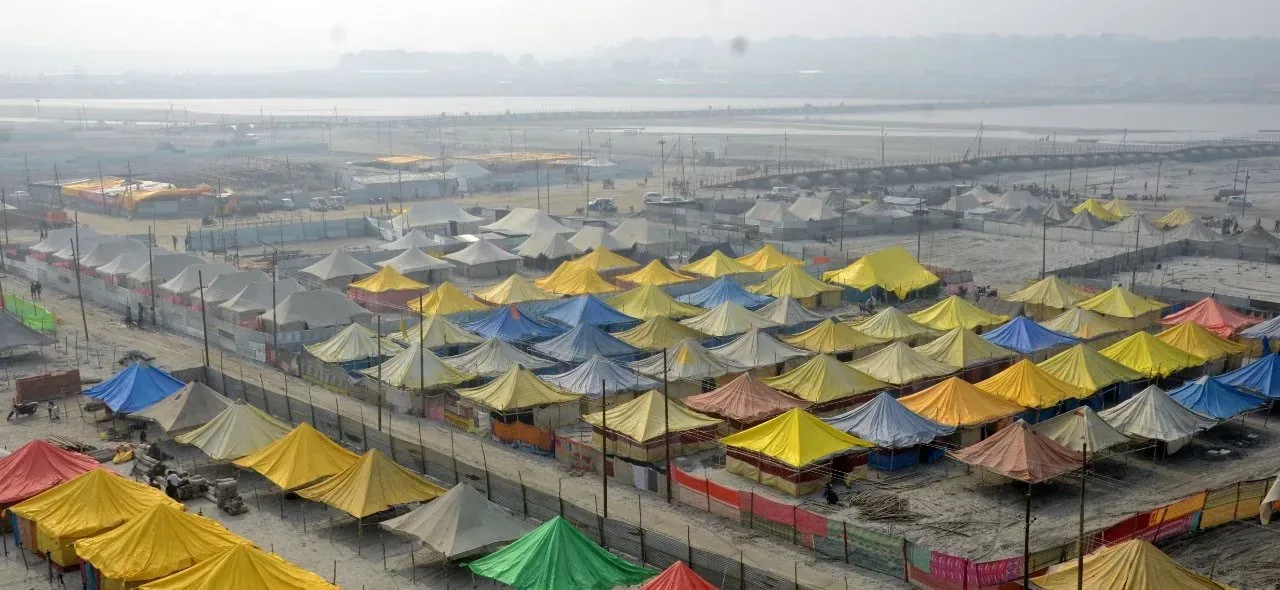
Camps are temporary living and activity spaces established across the Kumbh grounds for:
- Pilgrims
- Saints
- Tourists
- Religious and social organizations
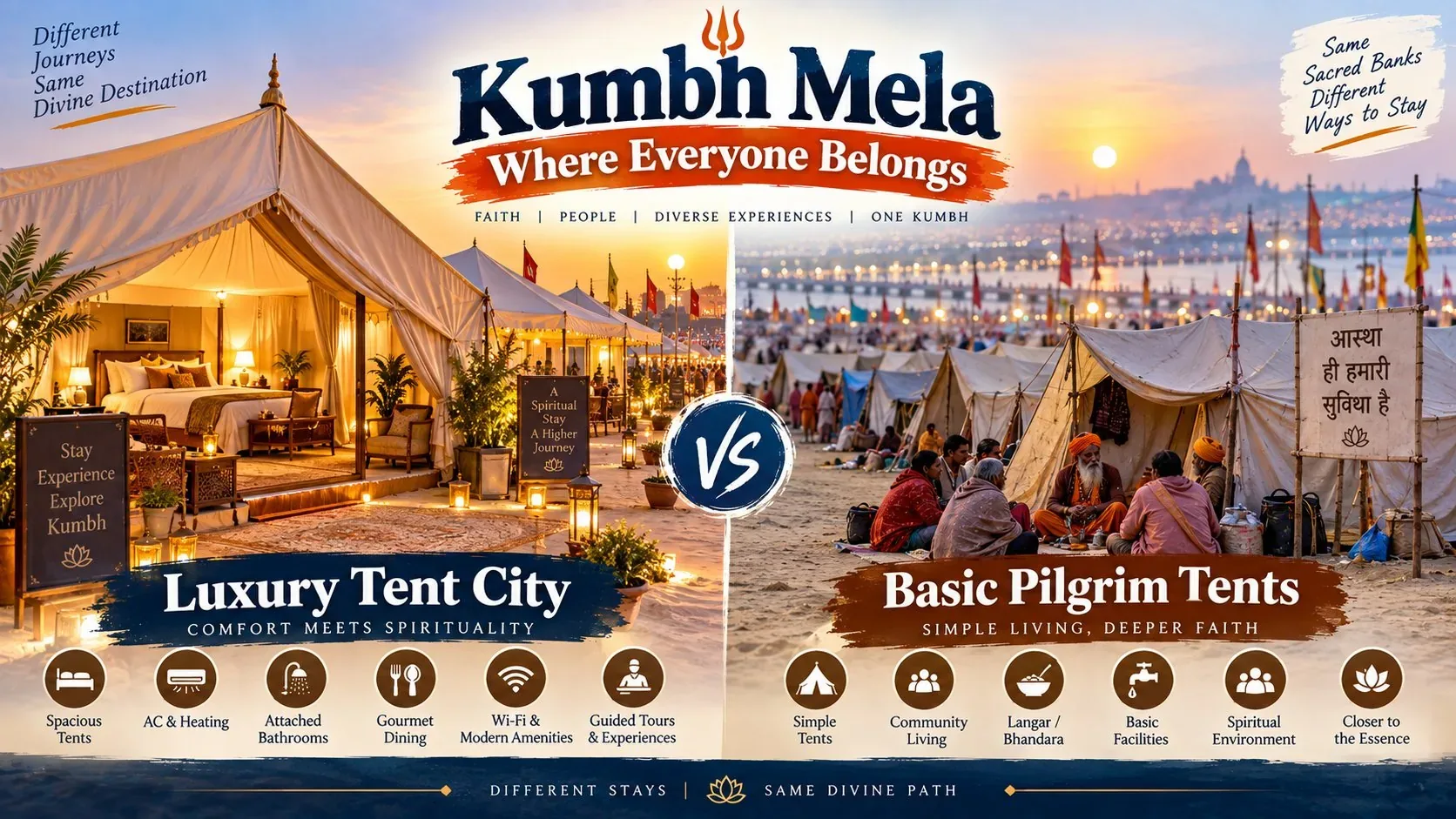
They range from basic tents to luxury spiritual retreats.
Types of Camps:
- Akhara Camps – Associated with specific Akharas and their followers
- Government Camps – Budget-friendly or public pilgrim accommodation
- Private Camps – Premium tents offering additional facilities and services
- Ashram Camps – Centers for spiritual learning, satsang, meditation, and religious activities
What Happens Inside Camps?
Depending on the type of camp, visitors may find:
- Accommodation and food, including langar or prasad
- Spiritual discourses
- Meditation and yoga sessions
- Cultural and religious activities
- Community gatherings
4. Sectors: Micro-Level City Planning
What are Sectors?
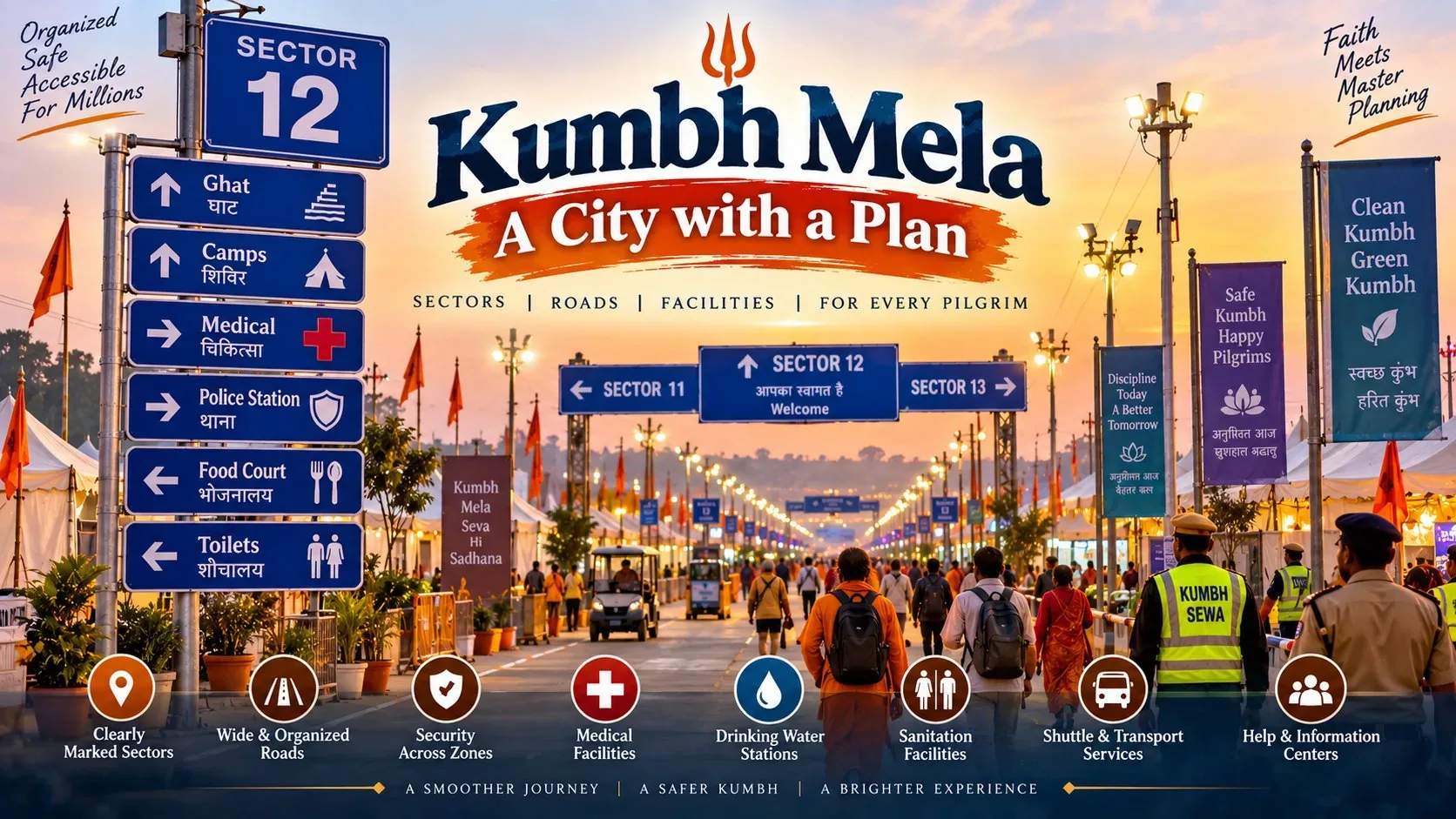
The entire Kumbh area is divided into multiple sectors, with each sector functioning like a mini township.
This approach makes it easier for authorities to organize services and manage large numbers of visitors across the temporary city.
Each Sector Includes:
- Roads and pathways
- Water supply
- Toilets and sanitation facilities
- Police stations or security posts
- Medical centers
- Other essential public services
Why Sectors Are Important:
- Efficient crowd management
- Easier navigation
- Faster emergency response
- Better distribution of civic services
Example:
At major Kumbh events, there can be 20+ sectors, with designated officers, police personnel, sanitation teams, and other staff responsible for local operations.
5. Zones: Macro-Level Administration
What are Zones?
Zones are larger administrative clusters made up of multiple sectors.
While sectors focus on local, day-to-day management, zones provide a broader layer of coordination across larger areas of the Mela grounds.
Managed By:
- Senior government officials
- Police and security teams
- Disaster management personnel
- Other specialized administrative teams
Responsibilities:
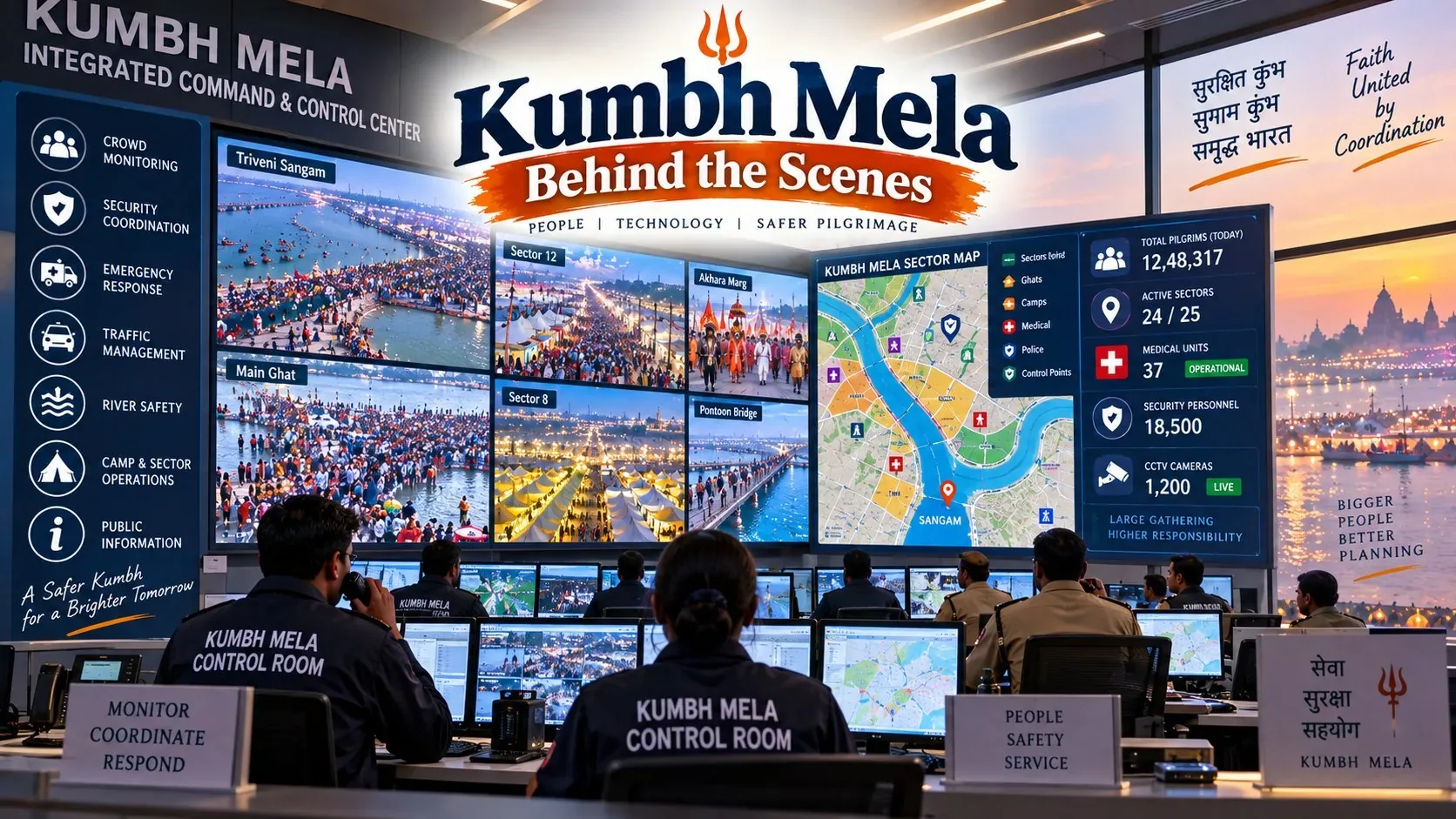
- Security coordination
- Traffic control
- Crowd-flow regulation
- Emergency response
- VIP movement management
- Coordination between different administrative departments
Why Zones Matter:
Zones provide top-level governance and crisis management, particularly during peak bathing and festival days such as:
- Makar Sankranti
- Mauni Amavasya
- Basant Panchami
During periods of exceptionally high footfall, coordination between zones becomes essential for keeping major roads, bridges, bathing areas, and access routes functional.
6. How Everything Works Together
Think of Kumbh Mela like a living organism, where every layer has a different function:
- Akharas → Spiritual energy and religious leadership
- Camps → Living, learning, and community experience
- Sectors → Daily operations and civic services
- Zones → Governance, security, and large-scale coordination
These layers work together to manage enormous crowds while maintaining access to essential services, religious spaces, transportation routes, and emergency systems.
The result is a temporary urban environment capable of accommodating tens of millions of visitors over the course of the festival.
7. Fascinating Facts About Kumbh Infrastructure
The temporary infrastructure of Kumbh Mela is remarkable in both scale and complexity.
-
Large sections are built in weeks or months and dismantled after the event
-
The Mela is widely described as one of the largest temporary cities in the world
-
Modern technologies are increasingly used for planning and management, including:
- GIS mapping
- CCTV surveillance
- Drone monitoring
- Digital communication and control systems
Temporary roads, bridges, sanitation systems, electricity networks, water infrastructure, security installations, and public facilities must all operate together for the duration of the event.
8. Why Understanding Structure Matters for You
If you’re planning to attend Kumbh, understanding its organizational structure can help you:
- Choose the right camp or accommodation
- Navigate the Mela more efficiently
- Understand sector and zone signage
- Avoid unnecessarily crowded routes
- Locate essential facilities more easily
- Experience the event more meaningfully
Once you understand how the Mela is divided, the enormous temporary city becomes much easier to navigate.
Conclusion: Organized Faith at an Unimaginable Scale
Kumbh Mela is not just a spiritual gathering—it is a masterclass in large-scale human organization.
Behind the devotion lies a deeply structured system involving spiritual institutions, temporary settlements, administrative sectors, security zones, transportation networks, and essential public services.
Together, these systems help provide:
✔ Safety
✔ Accessibility
✔ Efficient crowd management
✔ Spiritual immersion
Understanding this structure transforms your visit from overwhelming to enriching.
Enhance Your Pilgrimage Experience
Mobile App
Read Kumbh Guides on Mobile
Download the Divya Kripa to read all 19 guides offline, receive real-time snan alerts, and access GPS-enabled navigation on the ground.
Download AppAI Assistant
Personalized Planner & Chatbot
Access your Kumbh Planner AI Assistant to receive tailored ritual advice, customized itineraries, and instant answers to spiritual questions.
Try AI PlannerRelated Articles

Loading discussion & reviews...