All Blog Posts
Spirituality
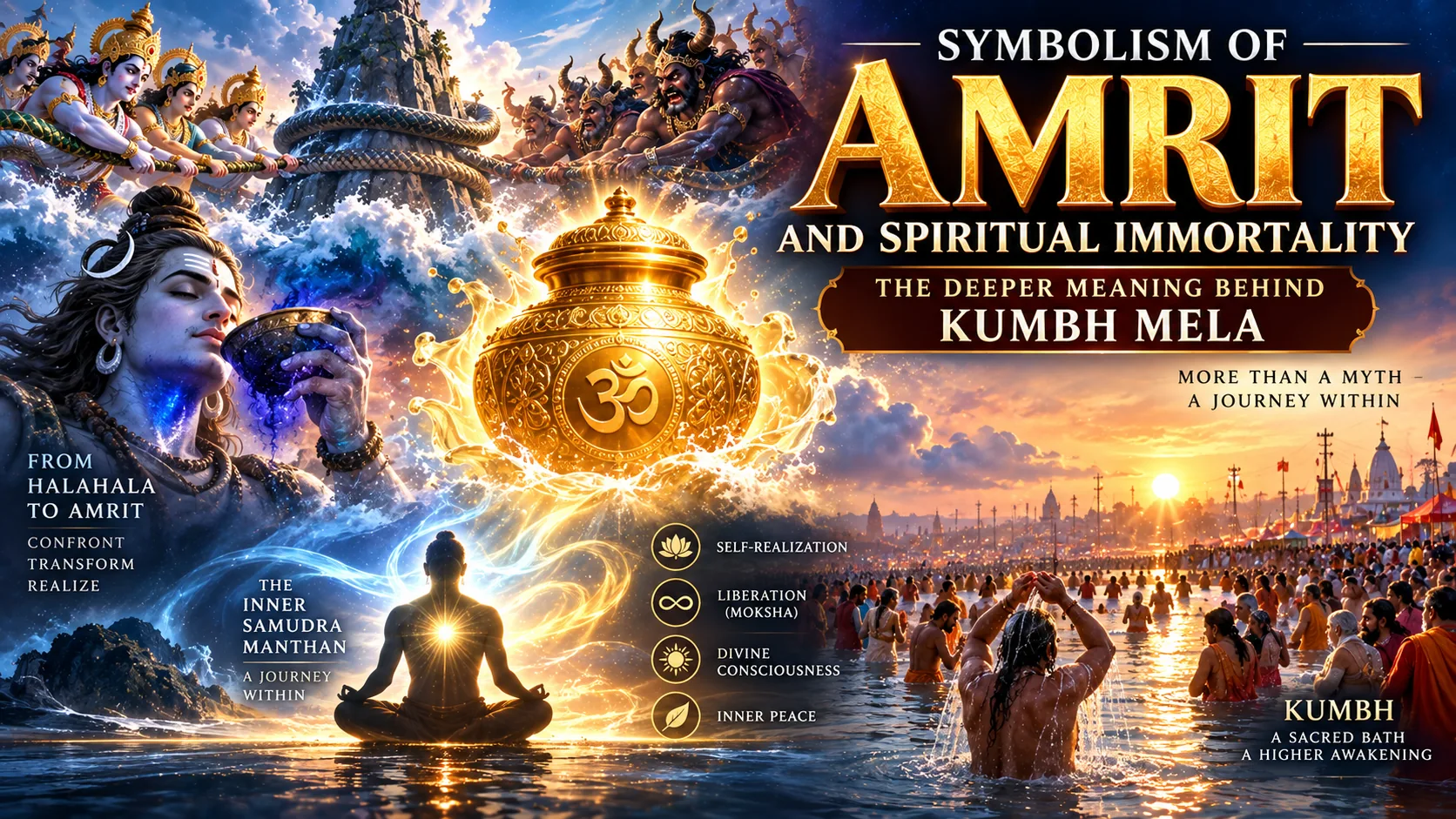
Symbolism of Amrit and Spiritual Immortality: The Deeper Meaning Behind Kumbh Mela
K
Kumbh AdminSeptember 16, 20266 min readExplore the spiritual symbolism of Amrit and inner immortality. Understand why Kumbh Snan represents inner transformation, Moksha, and self-realization.
Introduction: Is Amrit Really About Physical Immortality?
After exploring the Samudra Manthan and the story of Amrit drops falling at four sacred places, an important question arises:
- What does Amrit truly symbolize?
- Is immortality physical or spiritual?
- Why do millions seek Amrit through Kumbh Snan?
The answer lies not only in the literal story, but also in its deeper spiritual symbolism.
For many traditions, Amrit represents more than a substance that grants physical immortality. It can also symbolize spiritual realization, divine consciousness, and liberation.
What is Amrit? Beyond the Literal Meaning
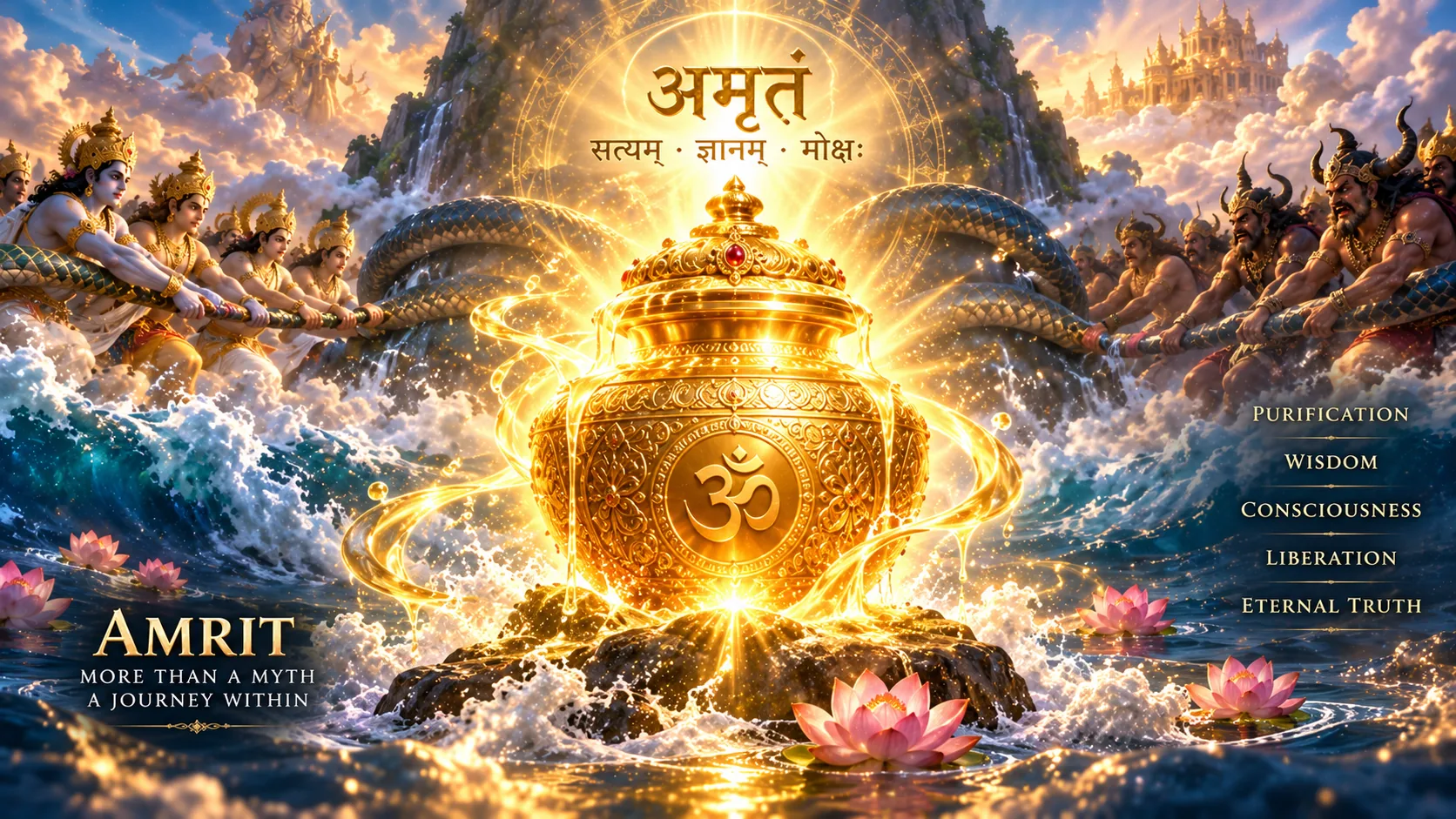
In Hindu mythology, Amrit is described as the nectar of immortality.
At a deeper spiritual level, it can represent:
- Eternal truth (Satya)
- Divine consciousness (Chaitanya)
- Liberation from the cycle of birth and death (Moksha)
- Spiritual wisdom and realization
💡 Key Insight
The deeper question behind the meaning of Amrit is not simply “How can someone live forever?”
It is:
👉 What does it mean to overcome the limitations of ordinary existence and realize one's spiritual nature?
In this interpretation, Amrit becomes a symbol of inner transformation rather than physical immortality.
The Inner Samudra Manthan: A Human Experience
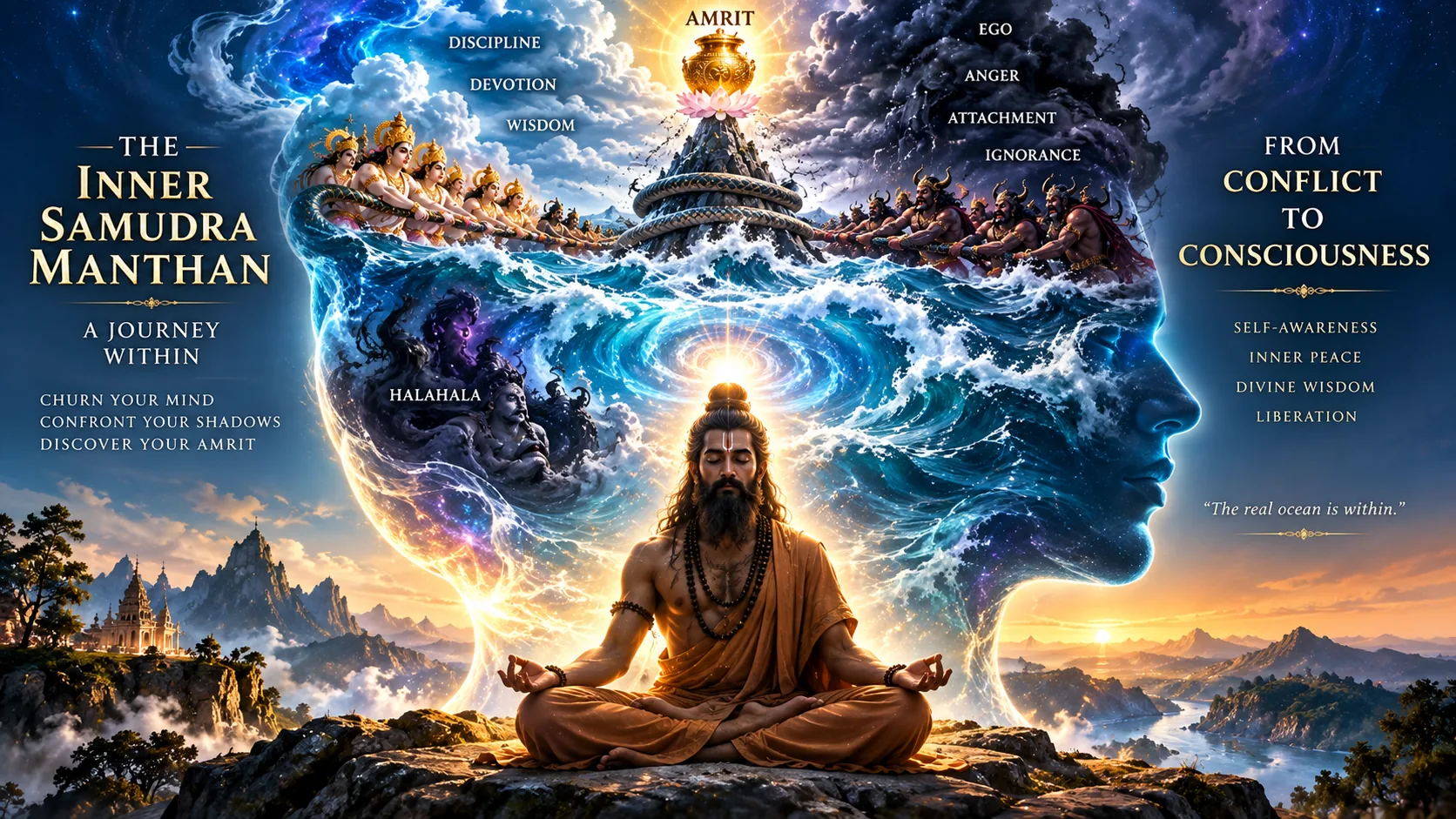
The story of Samudra Manthan can also be interpreted as a spiritual metaphor for the human experience.
The cosmic ocean and its churning can be understood as an image of the inner struggles that take place within the human mind.
| Mythological Element | Inner Meaning |
|---|---|
| Ocean (Samudra) | Human mind and consciousness |
| Devas | Positive and constructive tendencies |
| Asuras | Negative and conflicting tendencies |
| Churning | Inner struggle, discipline, and effort |
| Poison (Halahala) | Negativity, ego, attachment, and difficulties |
| Amrit | Spiritual wisdom and self-realization |
👉 Just as the cosmic ocean was churned to obtain Amrit, the human mind can be understood as requiring discipline, devotion, self-awareness, and sustained effort to reach deeper understanding.
The journey is therefore not about avoiding struggle.
It is about transforming through it.
Spiritual Immortality: What Does It Really Mean?
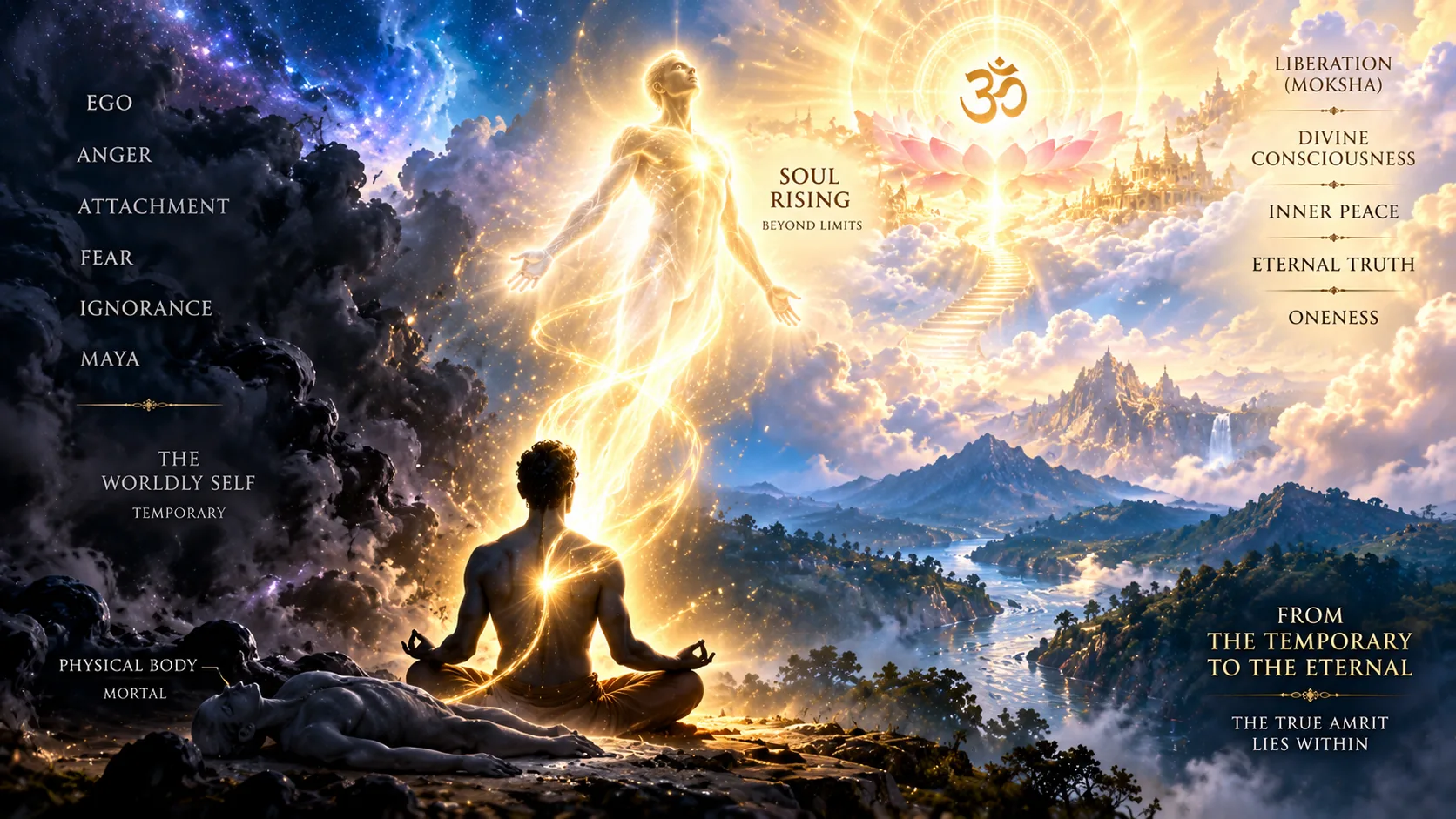
Immortality in this spiritual interpretation does not simply mean living forever in the physical body.
Instead, it can refer to realization of the eternal nature of the Atman, or Self.
This understanding includes:
✔ Realizing the eternal Self (Atman)
✔ Moving beyond Maya, understood as illusion or mistaken perception
✔ Seeking liberation from the cycle of birth and death
✔ Aspiring toward Moksha
✔ Recognizing one's connection with the divine
💡 Key Insight
In this sense, the search for Amrit becomes a search for spiritual awakening.
The physical body remains temporary, while spiritual realization points toward something understood as eternal.
Why Millions Seek Amrit Through Kumbh Snan
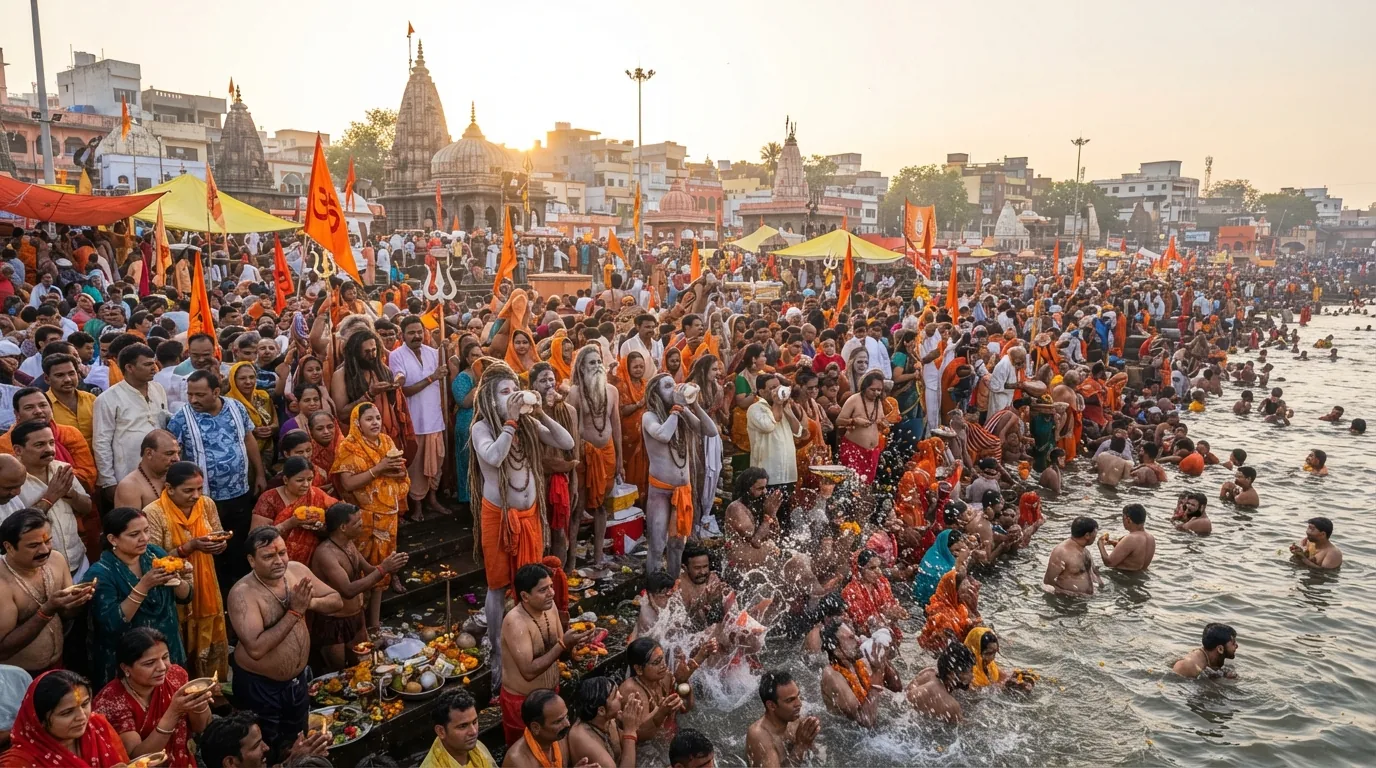
Kumbh Mela brings together enormous numbers of pilgrims, saints, sadhus, and spiritual seekers.
People travel from across India and around the world to participate in:
- Snan (sacred bathing)
- Prayer and worship
- Religious discourses
- Meditation and spiritual practices
- Meetings with saints and spiritual teachers
But for many devotees, the significance of the sacred bath goes beyond simply entering the water.
👉 It can represent inner purification and spiritual renewal.
Within traditional belief, bathing at a sacred river during an auspicious Kumbh occasion is associated with purification, the removal of accumulated karmic impurities, and spiritual merit.
The Amrit symbolism gives this ritual an additional layer of meaning: the sacred bath becomes a reminder of the ancient quest for purification, grace, and liberation.
The Hidden Symbolism: Poison Before Amrit
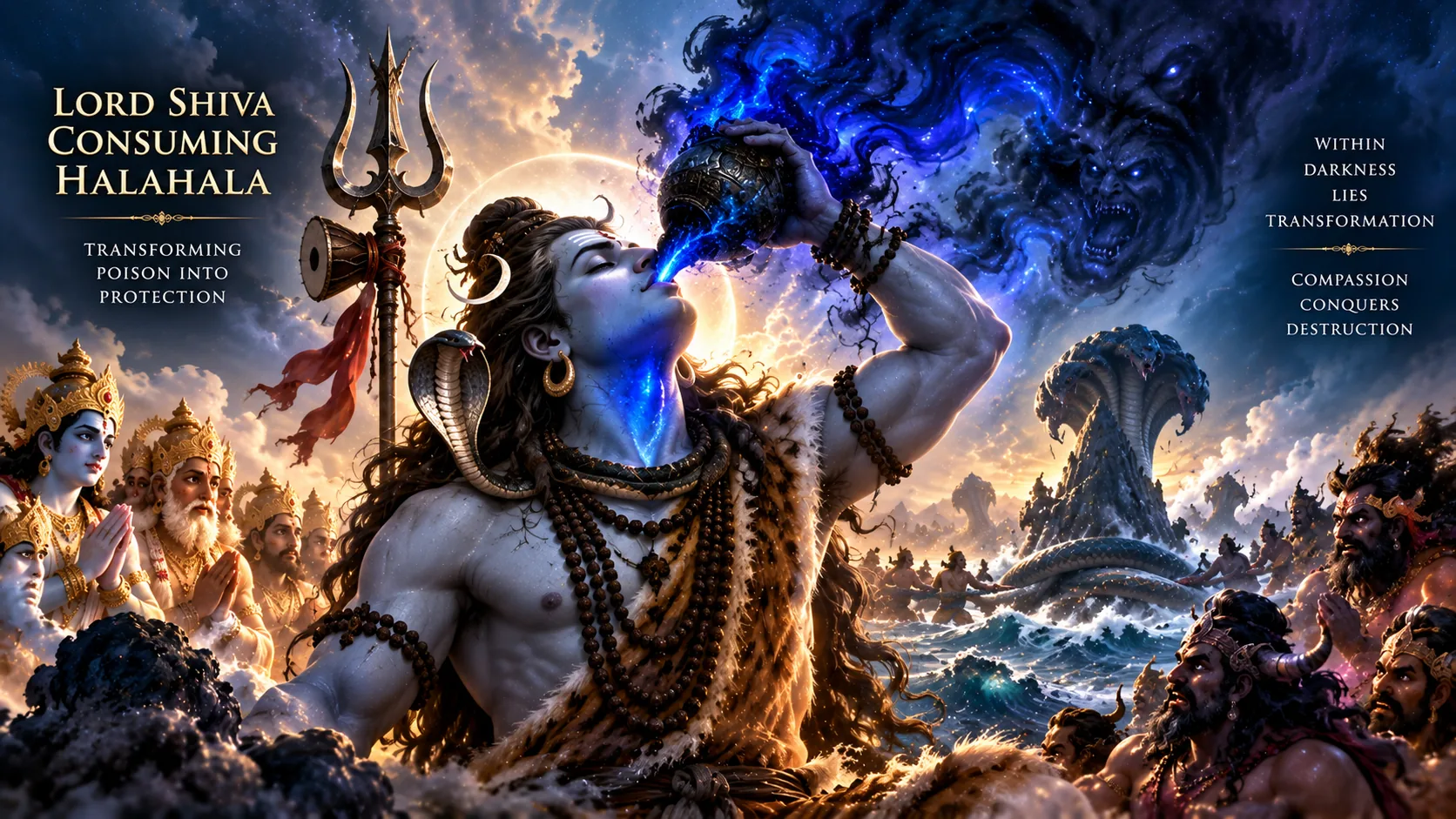
Before Amrit emerged from the cosmic ocean, the deadly poison Halahala appeared.
This sequence carries a powerful spiritual message.
👉 Before experiencing spiritual transformation, one must confront the difficult aspects of oneself.
These may include:
- Ego
- Anger
- Attachment
- Fear
- Destructive desires
- Ignorance
The story of Lord Shiva consuming Halahala can therefore be interpreted as a symbol of confronting and transforming negativity rather than allowing it to destroy oneself or others.
Only after the poison emerges and is contained does the search for Amrit continue.
The Deeper Lesson
Spiritual growth does not begin with Amrit.
It begins with the courage to face what lies beneath the surface.
Amrit as a State of Consciousness
Amrit can also be understood symbolically as a state of spiritual realization rather than simply as a physical substance.
A person who experiences this state may be described as having:
- Greater freedom from fear and attachment
- Clarity of thought and purpose
- Inner peace
- Spiritual awareness
- A deeper sense of connection with existence
In this interpretation, Amrit represents the experience of divine wisdom and inner fulfillment.
The metaphor is powerful:
👉 The nectar is not something to possess.
It represents something to realize.
Scriptural Echoes of Immortality
The idea of spiritual immortality appears in several Hindu philosophical traditions.
Upanishads
The Upanishads explore the nature of the Self, consciousness, and the search for knowledge that leads beyond ordinary notions of mortality.
Their teachings are often associated with the realization of the Atman and the ultimate nature of reality.
Bhagavad Gita
The Bhagavad Gita describes the Self as eternal and not destroyed when the physical body is destroyed.
This philosophical understanding helps explain why immortality in Hindu thought can refer to the eternal nature of the Self, rather than endless physical existence.
Together, these traditions provide a philosophical context for understanding Amrit as a symbol of spiritual awakening and liberation.
The Deeper Connection Between Amrit and Kumbh
The connection between Amrit and Kumbh operates on two levels.
Mythological Level
The Amrit Kalash is central to the Samudra Manthan narrative and the traditional story connecting the four Kumbh locations with drops of the nectar.
Spiritual Level
Amrit becomes a metaphor for the inner transformation that pilgrims seek through devotion, discipline, sacred bathing, reflection, and spiritual practice.
This creates a bridge between ancient mythology and the lived experience of Kumbh Mela.
Final Reflection
The real Amrit is not simply found in a pot.
It can also be understood as a symbol of what lies within the human search for truth.
Kumbh Mela reminds us:
- Life is a journey of inner churning
- Struggles can become part of spiritual growth
- Negativity must be confronted before deeper realization can emerge
- The ultimate spiritual aspiration is self-realization and liberation
👉 In the deepest symbolic interpretation, the true drop of Amrit does not merely fall upon the land.
It falls into consciousness.
Enhance Your Pilgrimage Experience
Mobile App
Read Kumbh Guides on Mobile
Download the Divya Kripa to read all 19 guides offline, receive real-time snan alerts, and access GPS-enabled navigation on the ground.
Download AppAI Assistant
Personalized Planner & Chatbot
Access your Kumbh Planner AI Assistant to receive tailored ritual advice, customized itineraries, and instant answers to spiritual questions.
Try AI PlannerRelated Articles
The Nashik-Trimbakeshwar Simhastha: A Journey into Spiritual Tradition and Innovation
Aug 5, 2026Kumbh Mela 2026-2028: A Complete Guide to the Nashik-Trimbakeshwar Simhastha
Jun 24, 2026
Godavari River: The Sacred Lifeline of Maharashtra and Its Spiritual Legacy
Jun 20, 2026Loading discussion & reviews...