All Blog Posts
Awareness
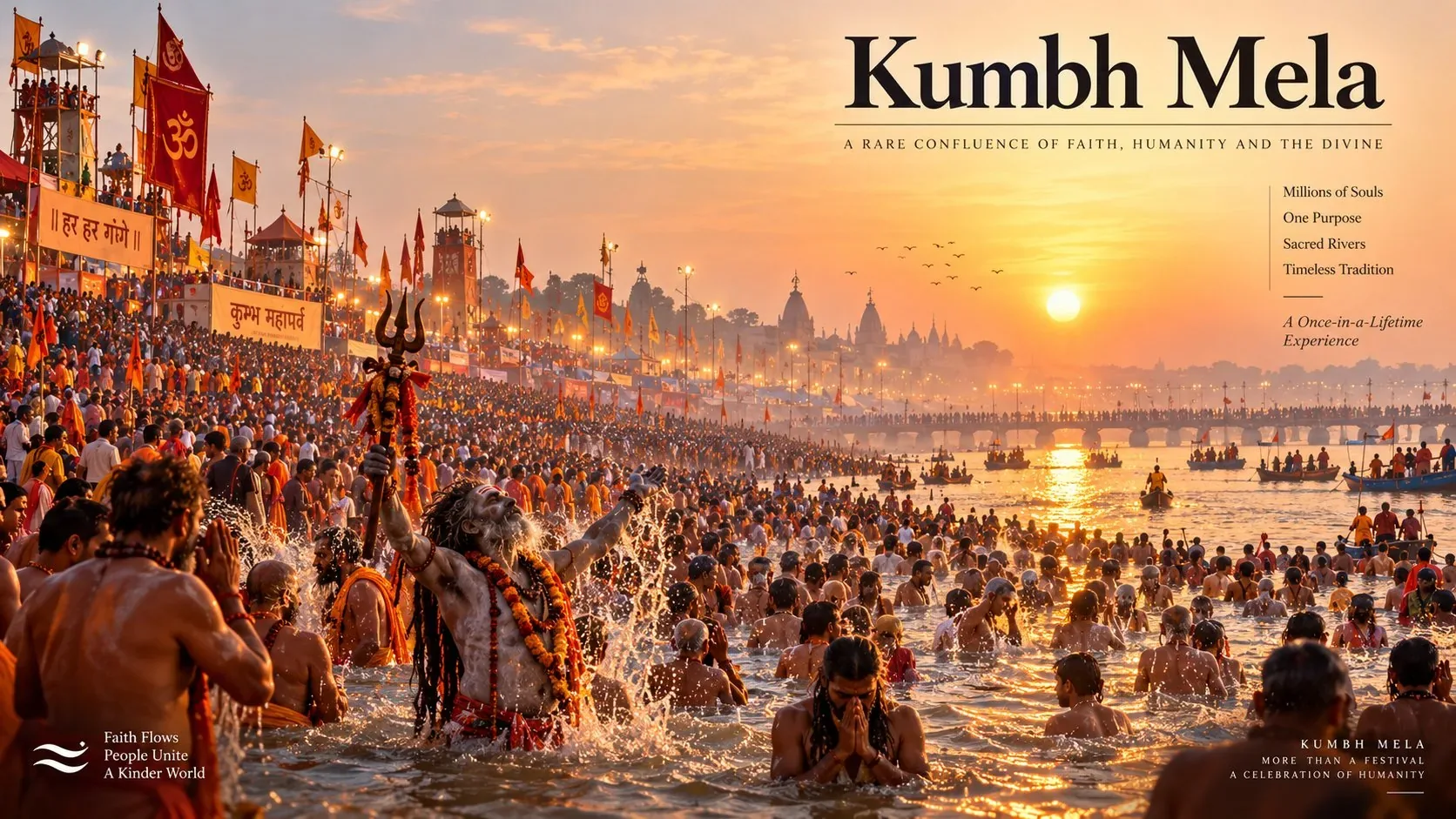
Types of Kumbh Mela: Ardh, Purna & Maha Kumbh Explained
K
Kumbh AdminSeptember 9, 20264 min readLearn the types of Kumbh Mela—Ardh, Purna, and Maha Kumbh. Understand their differences, frequency, scale, and significance in this complete guide.
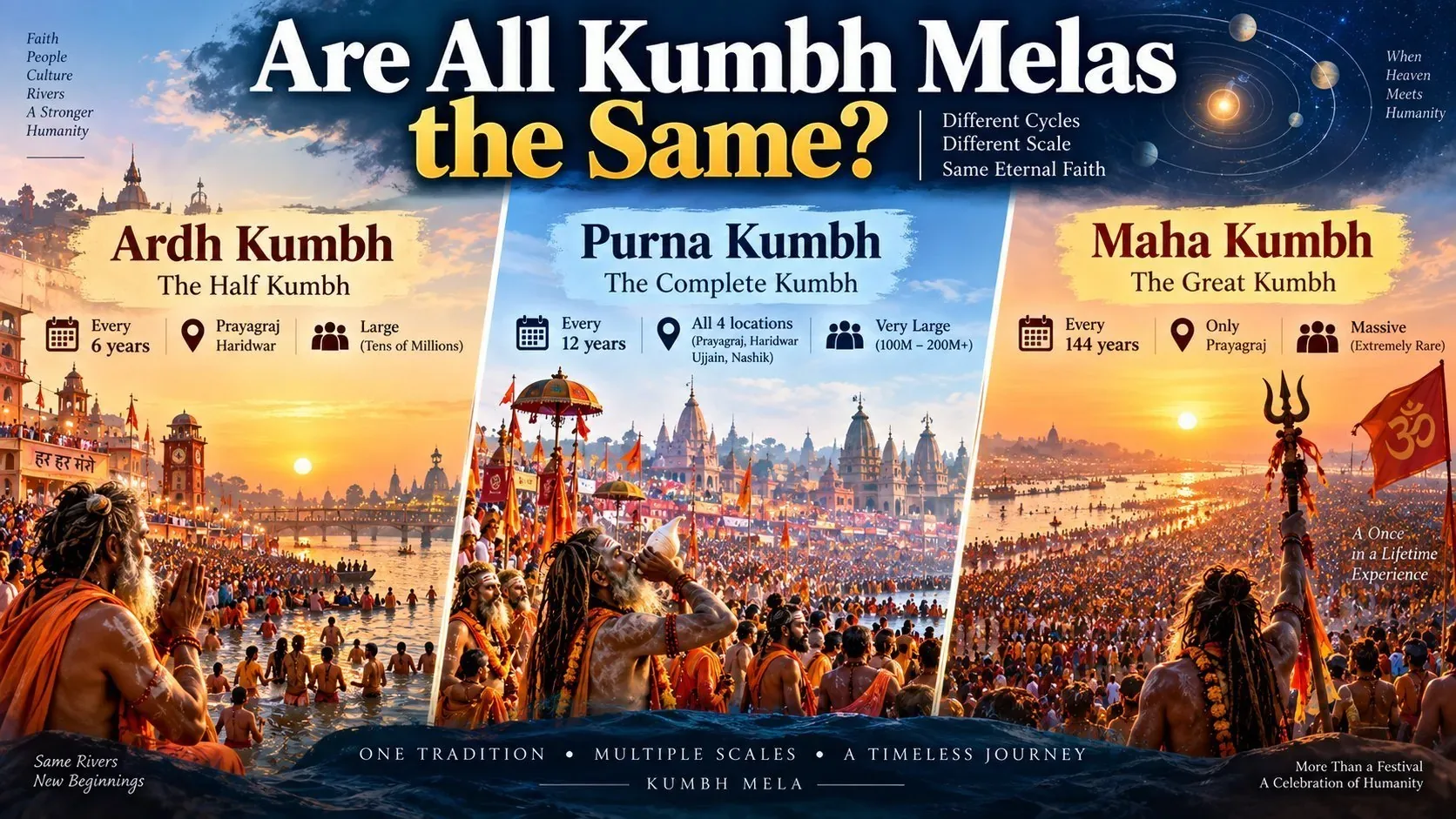
Introduction: Are All Kumbh Melas the Same?
If you've been searching:
- “How many types of Kumbh Mela are there?”
- “Difference between Ardh Kumbh and Purna Kumbh”
- “What is Maha Kumbh and when does it happen?”
—you're asking the right questions.
While many people assume Kumbh Mela is a single recurring event, the reality is:
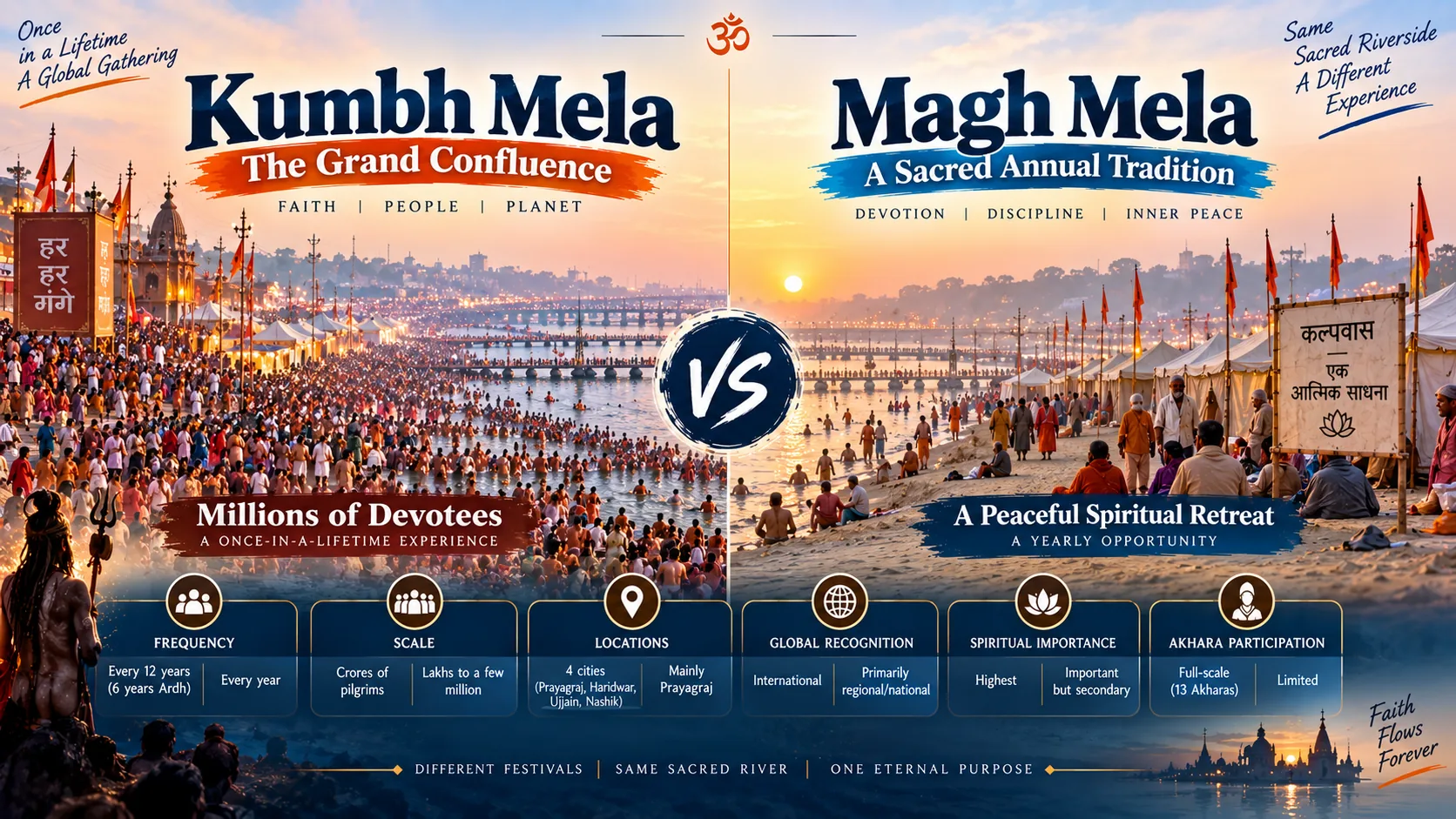
There are multiple types of Kumbh Melas, each with different frequency, scale, and astronomical significance.
Understanding these differences is essential if you are planning to attend, researching traditions, or simply curious about how this monumental event functions.
Quick Overview: Types of Kumbh Mela
| Type | Frequency | Scale | Locations |
|---|---|---|---|
| Ardh Kumbh | Every 6 years | Large | Prayagraj, Haridwar |
| Purna Kumbh | Every 12 years | Very Large | All 4 locations (Prayagraj, Haridwar, Ujjain, Nashik) |
| Maha Kumbh | Every 144 years | Massive (Extremely Rare) | Only Prayagraj |
1. Ardh Kumbh Mela (Half Kumbh)
What is Ardh Kumbh?
Ardh Kumbh literally translates to “Half Kumbh”. As the name implies, it occurs midway between two consecutive Purna Kumbh celebrations—marking the completion of a six-year cycle.
Key Characteristics:
- Held every 6 years
- Celebrated exclusively at two sacred cities:
- Prayagraj (Triveni Sangam)
- Haridwar (River Ganga)
- Attracts tens of millions of devotees from across the subcontinent and abroad.
Why is Ardh Kumbh Important?
Even though labeled "half," its spiritual weight and attendance are immense:
- ✔ Maintains the uninterrupted continuity of collective sadhana and pilgrimage.
- ✔ Provides more frequent access to sacred auspicious bathing windows.
- ✔ Acts as a massive foundational phase for the upcoming full cycle.
Real Example: The 2019 Prayagraj gathering—technically an Ardh Kumbh cycle—hosted more than 200 million visitors, proving that even Ardh Kumbh operates at an unprecedented global scale.
2. Purna Kumbh Mela (Full Kumbh)
What is Purna Kumbh?
Purna Kumbh is the primary, canonical 12-year cycle celebration that rotates systematically across the four holy pilgrimage centers:
- Prayagraj (confluence of Ganga, Yamuna, Saraswati)
- Haridwar (River Ganga)
- Ujjain (River Shipra)
- Nashik-Trimbakeshwar (River Godavari)
Key Characteristics:
- Occurs every 12 years at each specific site.
- Represents the standard, most widely celebrated format of the Kumbh.
- Features maximum mobilization of all 13 Akharas, Shankaracharyas, Mahamandaleshwars, and ascetic orders.
- Hosts multiple Shahi Snans (Royal Bathing Days) with spectacular ceremonial processions.
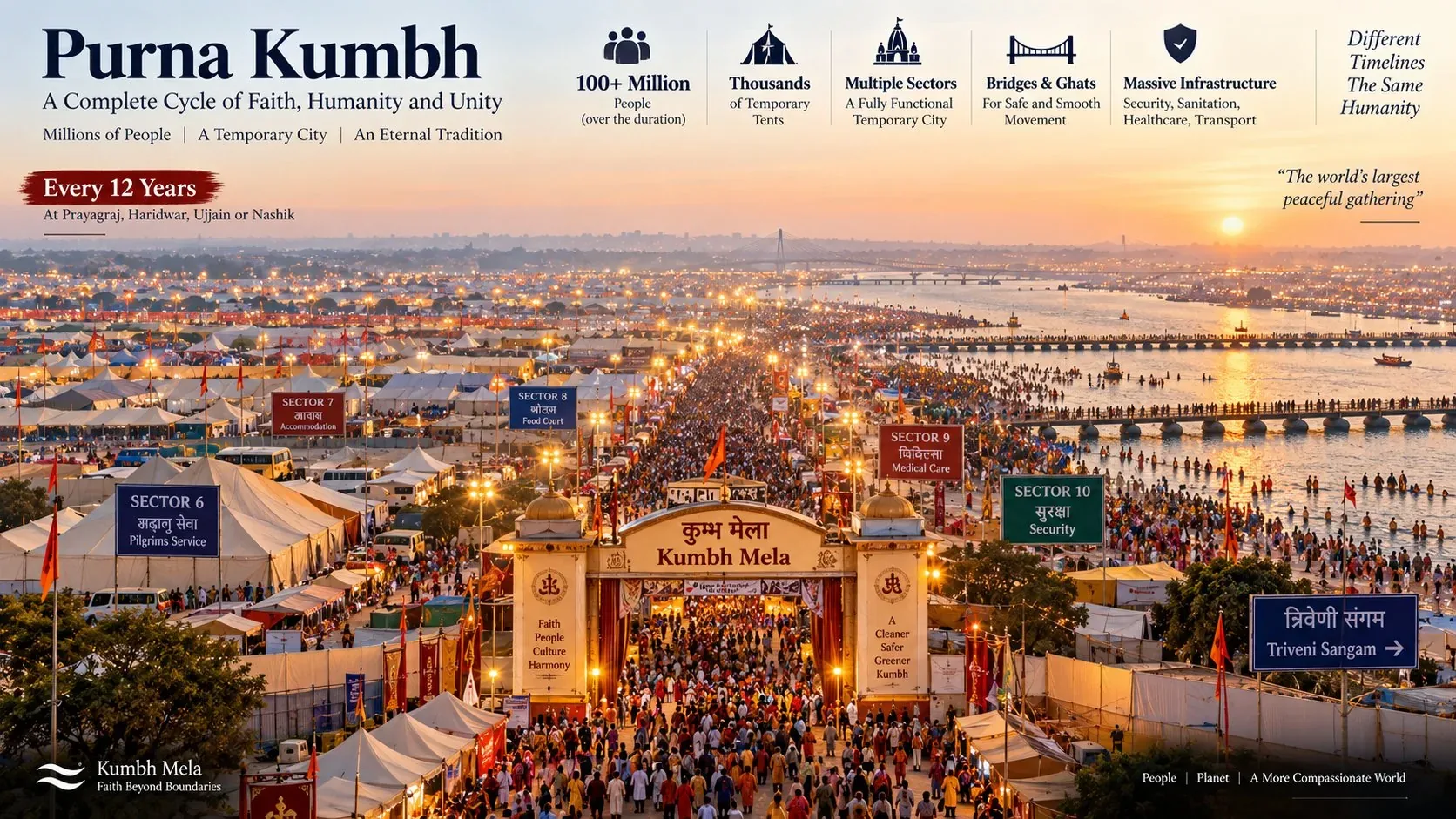
Scale Insight:
A full Purna Kumbh requires months of preparation to construct pop-up townships equipped with power substations, water purification grids, emergency response hospitals, and sector-based security networks.
3. Maha Kumbh Mela (The Grand Convergence)
What is Maha Kumbh?
Maha Kumbh is the rarest, most revered congregation in Hindu tradition. It takes place once every 144 years—completing an astronomical cycle of 12 Purna Kumbhs (12 × 12 years).
Where Does Maha Kumbh Take Place?
👉 Strictly at Prayagraj (Triveni Sangam).
Why is Maha Kumbh So Special?
- ✔ Considered the supreme cosmic convergence of spiritual energies, when celestial planetary alignments are believed to maximize the purifying power of the holy Sangam.
- ✔ An extraordinary once-in-a-century occasion that most generations never get to witness.
- ✔ Draws unprecedented global media attention, academic researchers, and international spiritual seekers.
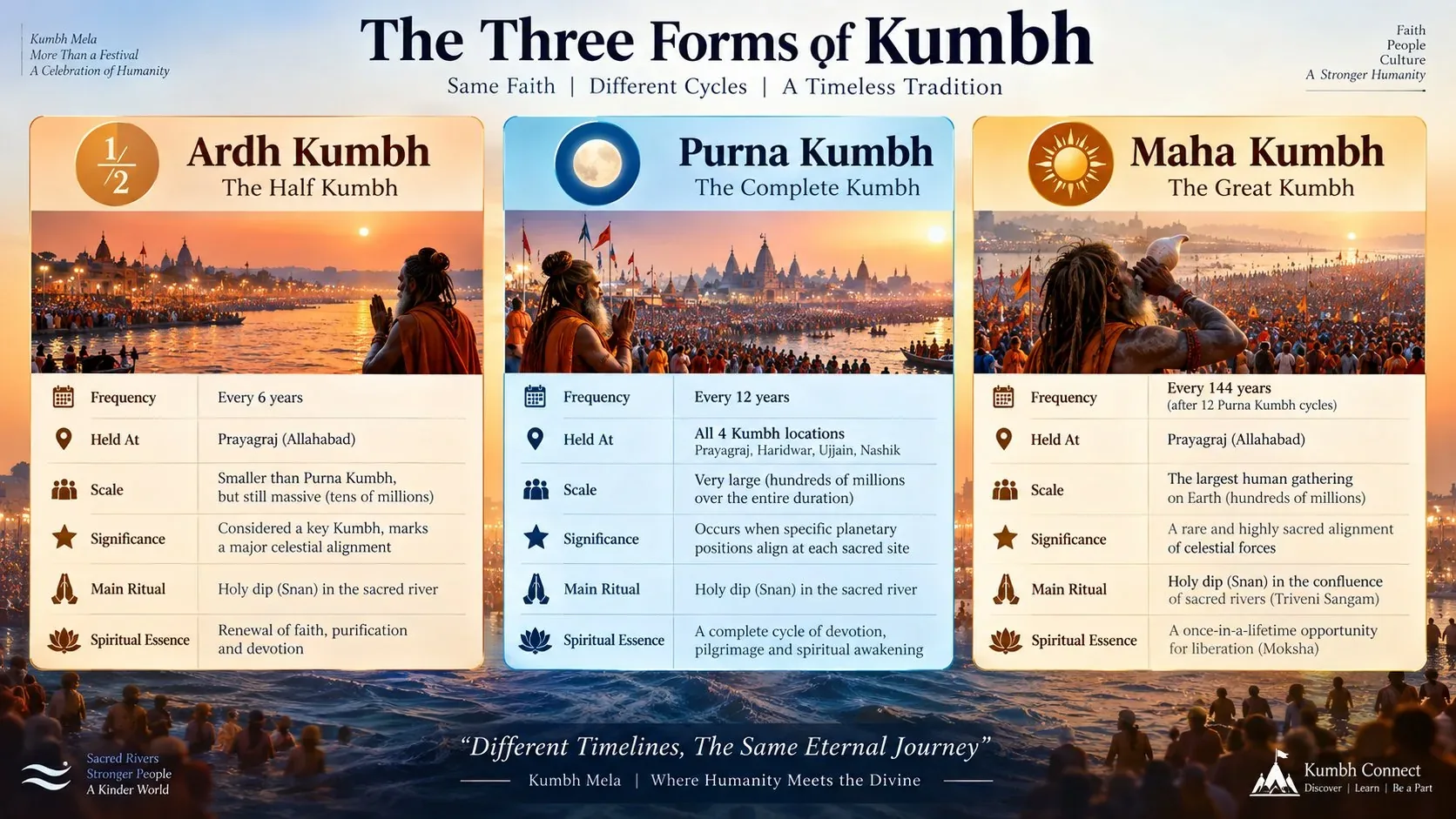
Key Differences Summary Table
| Feature | Ardh Kumbh | Purna Kumbh | Maha Kumbh |
|---|---|---|---|
| Recurrence | 6 Years | 12 Years | 144 Years (12 Cycles) |
| Eligible Cities | Prayagraj, Haridwar | Prayagraj, Haridwar, Ujjain, Nashik | Prayagraj Only |
| Estimated Footfall | Tens of Millions | 100M – 200M+ | 250M+ Historical Peak |
| Rarity | Moderate | High | Once in a Lifetime |
| Spiritual Focus | Periodic Purification | Full Monastic Convergence | Cosmic Enlightenment & Moksha |
Which Kumbh Should You Attend?
- For a less crowded, focused experience: Look toward Ardh Kumbh.
- For the full cultural & monastic spectacle: Purna Kumbh provides the quintessential immersion.
- For once-in-a-lifetime historic significance: Maha Kumbh represents the zenith of human pilgrimage.
Conclusion: One Tradition, Multiple Scales
Kumbh Mela is not a single isolated event—it is a continuous cosmic rhythm. From Ardh to Maha, each gathering deepens the collective consciousness and carries forward centuries of living heritage.
Photo Gallery
Visual highlights & moments from this story
1 / 1 Photos
Gallery
Types of kumbh mela ardh, purna & maha kumbh explained
Types of Kumbh Mela Ardh, Purna & Maha Kumbh Explained.png
Enhance Your Pilgrimage Experience
Mobile App
Read Kumbh Guides on Mobile
Download the Divya Kripa to read all 19 guides offline, receive real-time snan alerts, and access GPS-enabled navigation on the ground.
Download AppAI Assistant
Personalized Planner & Chatbot
Access your Kumbh Planner AI Assistant to receive tailored ritual advice, customized itineraries, and instant answers to spiritual questions.
Try AI Planner