All Blog Posts
Culture
Who Attends Kumbh Mela and Why It Matters
K
Kumbh AdminSeptember 13, 20267 min readExplore who attends Kumbh Mela—from sadhus and pilgrims to tourists and researchers—and discover the motivations behind the world's largest gathering.
Introduction: More Than Just a Crowd
When you see images of Kumbh Mela, one question naturally arises:
- “Who are these millions of people?”
- “Why do they come here?”
Kumbh Mela is not just a gathering—it is a cross-section of humanity united by faith, curiosity, culture, and purpose.
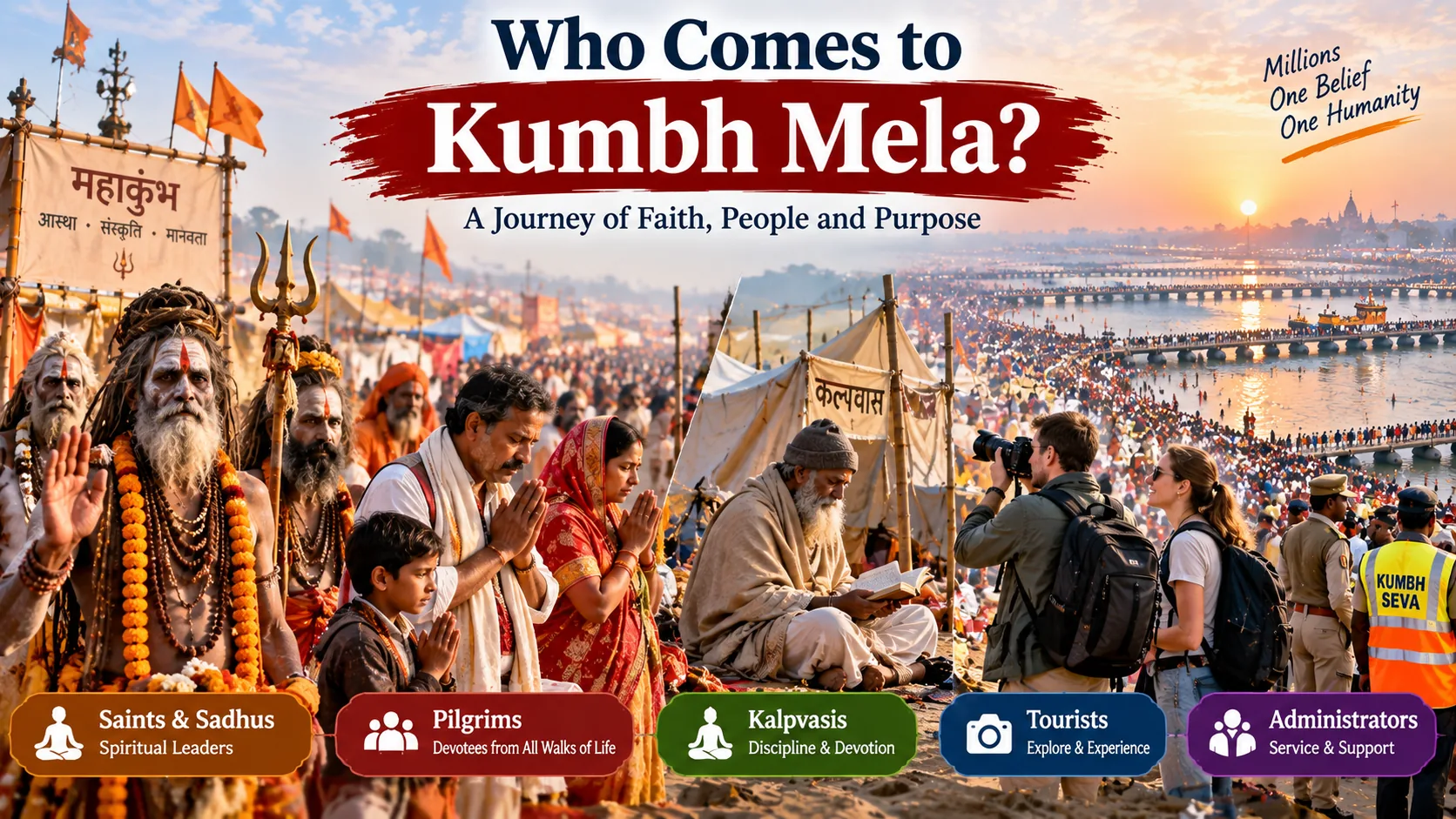
From saints and spiritual seekers to pilgrims, tourists, researchers, journalists, and administrators, the diversity of attendees is what makes Kumbh Mela globally unique and deeply meaningful.
1. The Scale of Participation
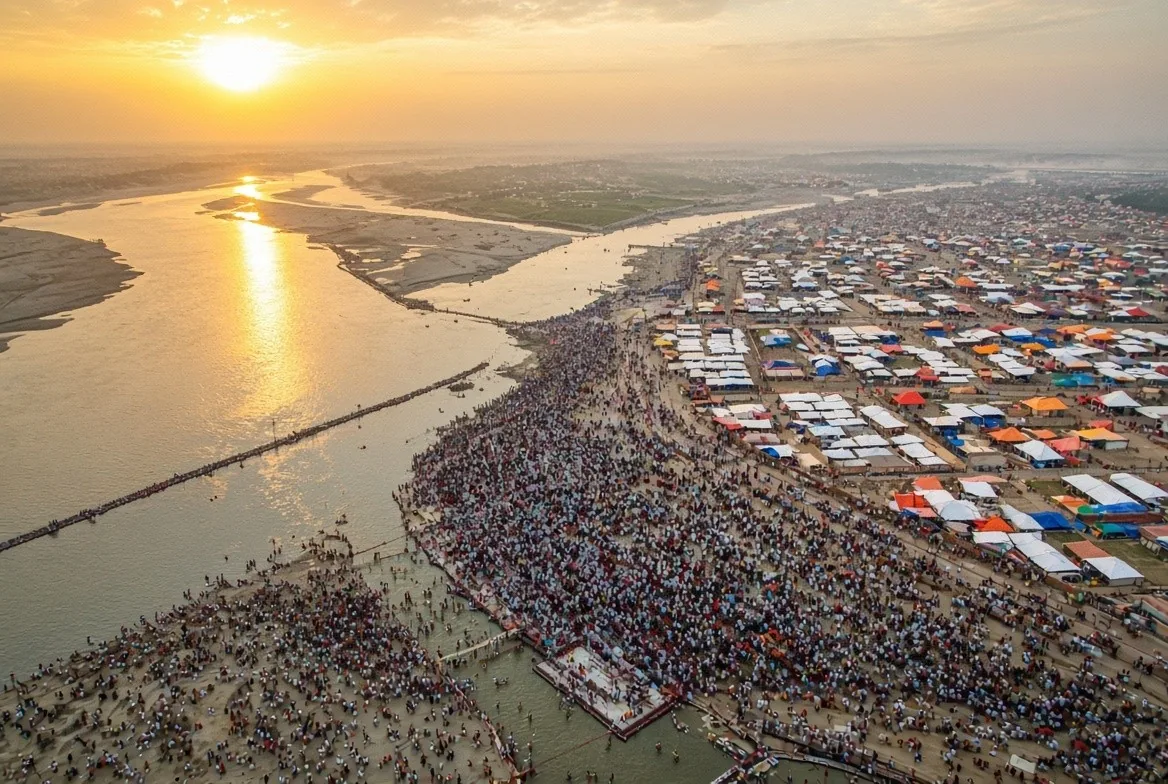
Kumbh Mela is often described as one of the largest human gatherings in the world.
Its enormous scale is reflected in:
- Over 100 million visits during some major Kumbh events
- Visitors from across India and countries around the world
- Participation cutting across age, social background, nationality, and personal beliefs
Why This Matters
The scale and diversity transform Kumbh into a living ecosystem of human interaction, rather than simply a religious event.
People arrive with very different motivations, yet share the same physical space, riverbanks, rituals, roads, camps, and temporary city.
2. The Key Groups Who Attend Kumbh Mela
2.1 Saints & Sadhus (Spiritual Leaders)
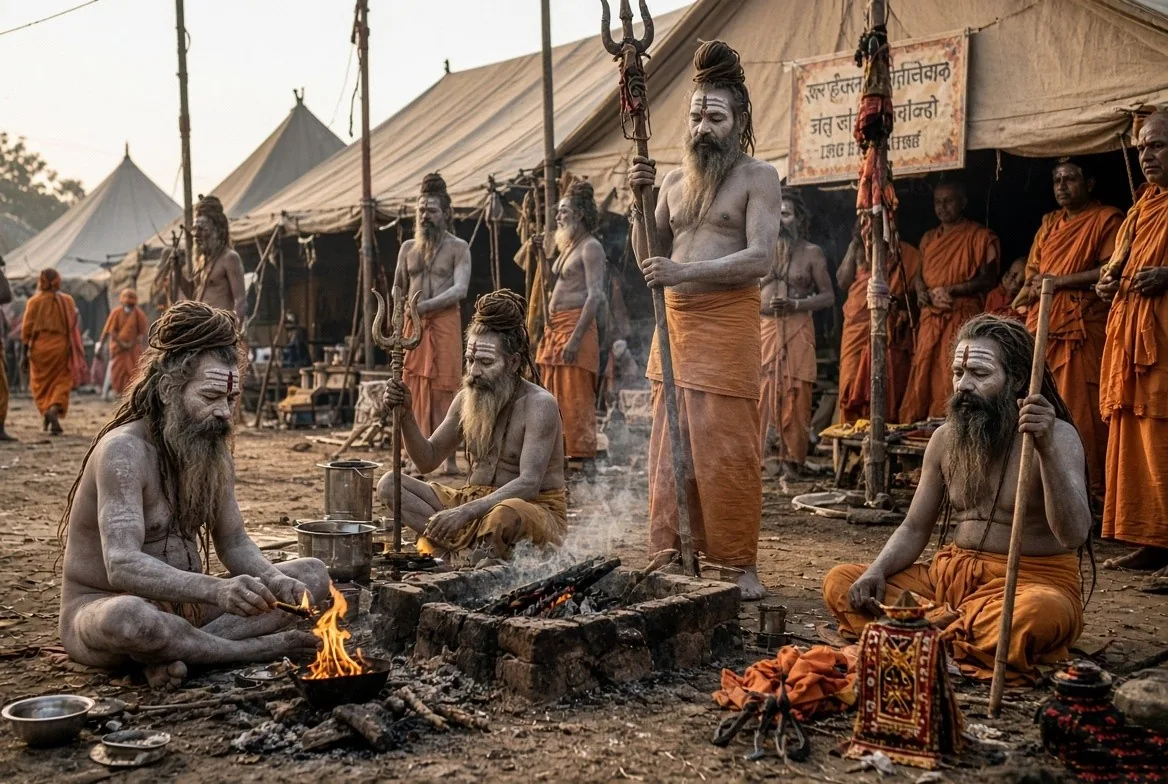
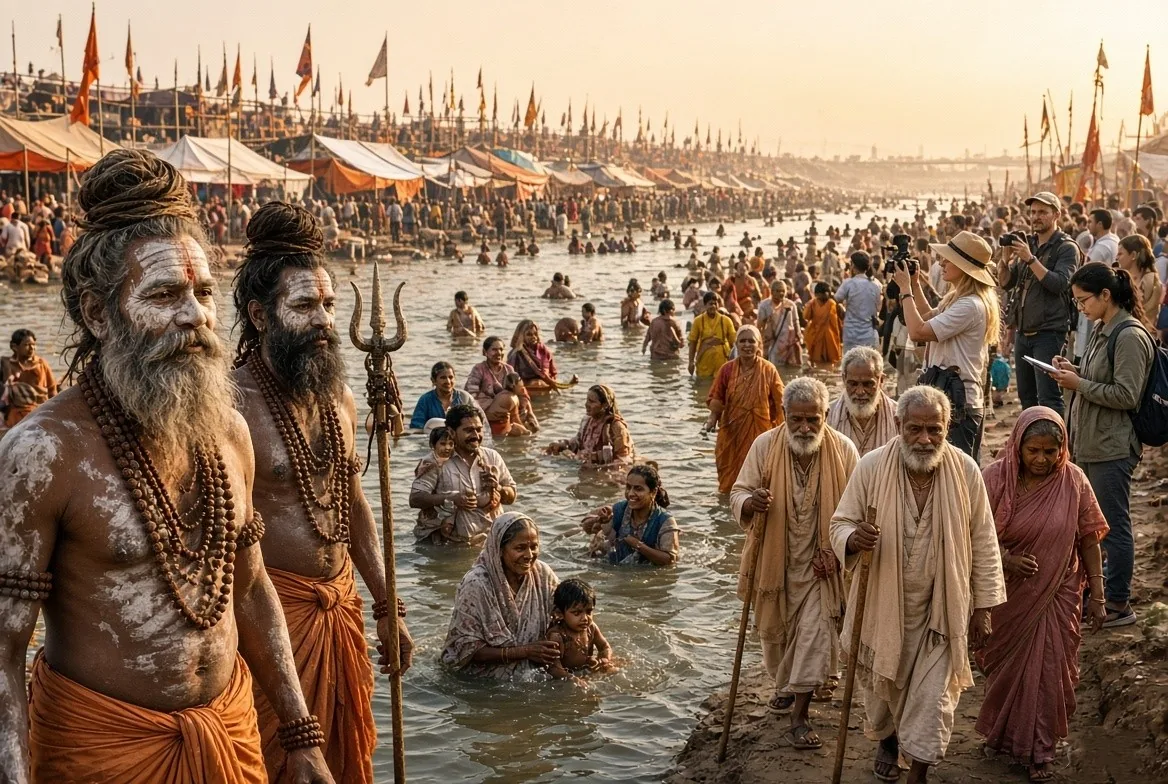
Saints and sadhus are among the most iconic participants at Kumbh Mela.
They come from different spiritual traditions and monastic orders, including the various Akharas.
They may include:
- Naga Sadhus
- Mahants
- Yogis
- Other ascetics and spiritual teachers
Their Role at Kumbh
- Lead and participate in important rituals
- Take part in ceremonial bathing and processions
- Guide spiritual seekers
- Preserve religious traditions and practices
- Represent different monastic lineages
The presence of ascetic communities gives Kumbh much of its distinctive spiritual character.
2.2 Pilgrims (श्रद्धालु)
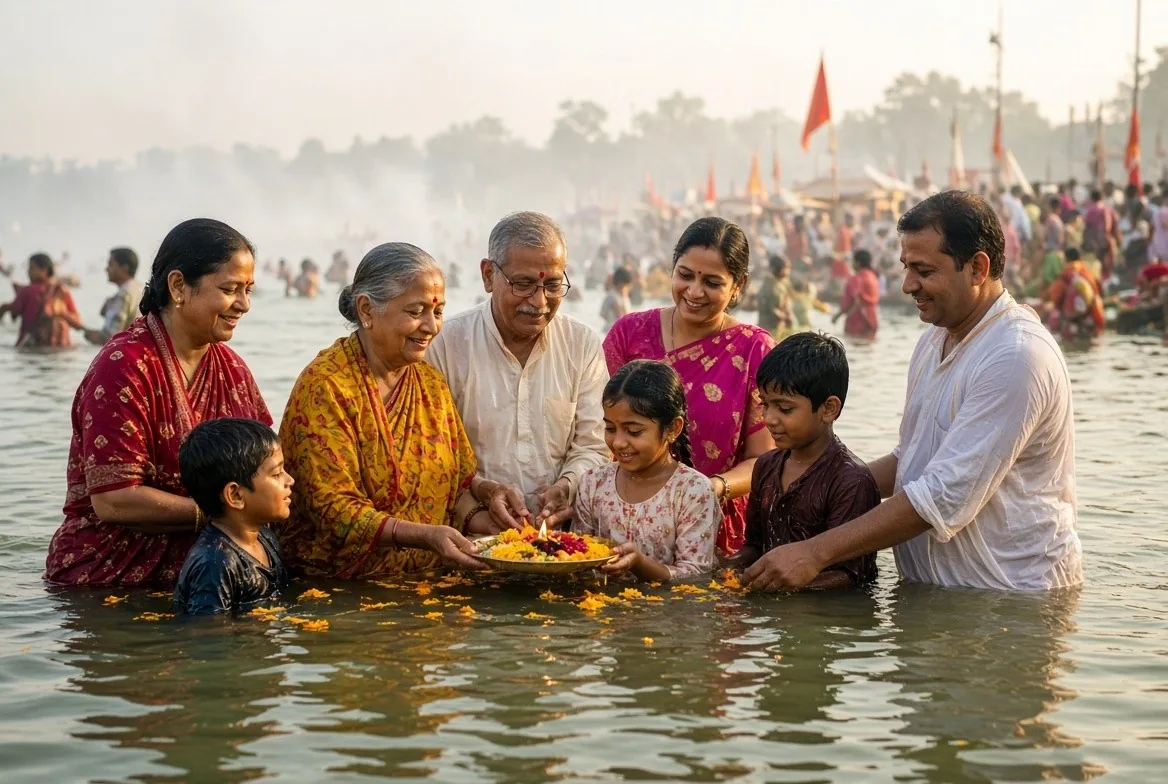
Pilgrims are the largest and most diverse group at Kumbh Mela.
They include:
- Individuals and families
- Elderly devotees
- Rural and urban visitors
- First-time pilgrims
- People who have participated in Kumbh for generations
Many travel long distances to take a holy dip (Snan) and participate in religious activities.
For some families, attending Kumbh is a lifelong aspiration or an important family tradition.
Why They Come
- Spiritual purification
- Fulfillment of a lifelong aspiration
- Family and cultural traditions
- Religious devotion
- Personal reflection and renewal
Visitor Insight
Kumbh is attended by people of many ages and backgrounds. Families and elderly pilgrims are also a significant part of the gathering, although visitors should plan carefully around accommodation, walking distances, weather, crowds, and medical needs.
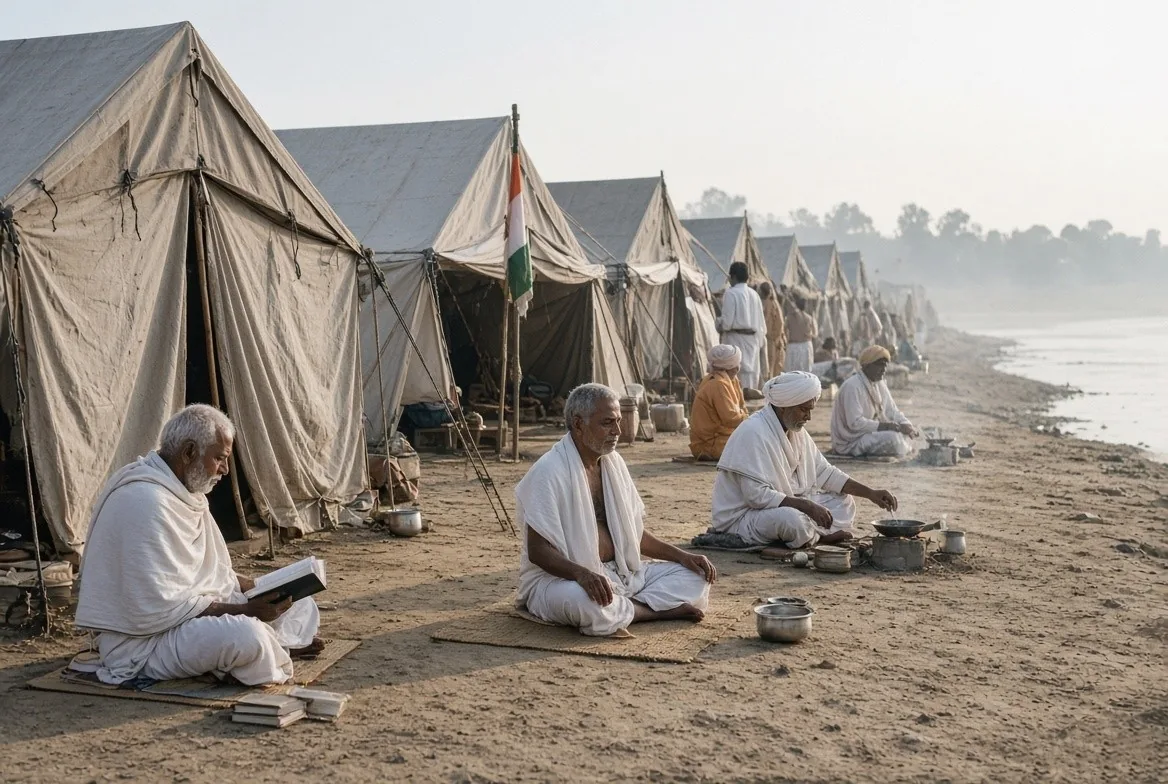
2.3 Kalpvasis (Long-Term Spiritual Practitioners)
Kalpvasis represent a particularly disciplined form of participation.
They traditionally stay near the sacred river for the Magh period, often around one month, following a structured spiritual routine.
Their practices may include:
- Daily bathing
- Prayer and meditation
- Fasting or dietary restrictions
- Scriptural reading
- Simple living
- Religious observances
Why They Matter
Kalpvasis demonstrate that Kumbh is not only about visiting a sacred place for a single day.
For many practitioners, it is an opportunity for deep commitment, discipline, simplicity, and spiritual practice.
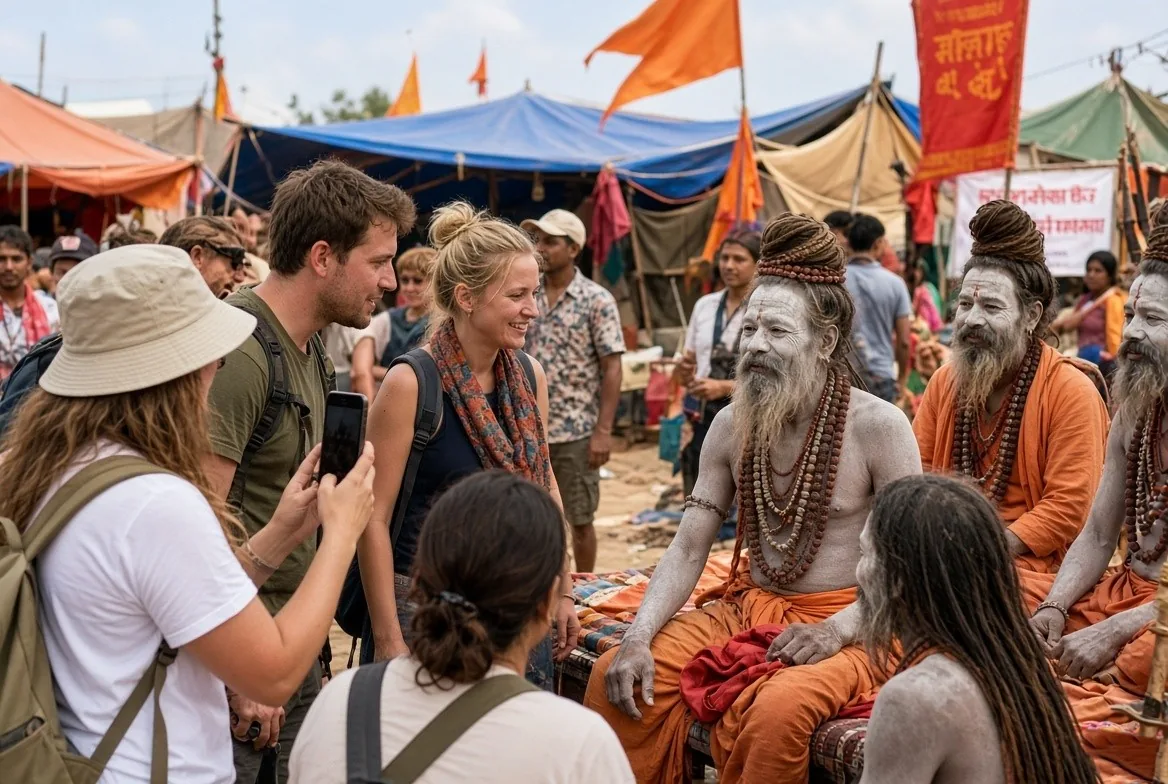
2.4 Tourists & Cultural Explorers
Not everyone comes to Kumbh primarily for religious reasons.
The gathering also attracts:
- Domestic and international tourists
- Photographers
- Filmmakers
- Travel writers
- Cultural explorers
- Experience seekers
Why They Come
- Witness a unique cultural phenomenon
- Experience India's spiritual diversity
- Explore traditional practices and communities
- Capture extraordinary visual moments
- Understand one of the world's largest pilgrimage gatherings
Global Appeal
Kumbh has developed into a major global cultural phenomenon, attracting people interested in religion, anthropology, photography, history, culture, and large-scale human gatherings.
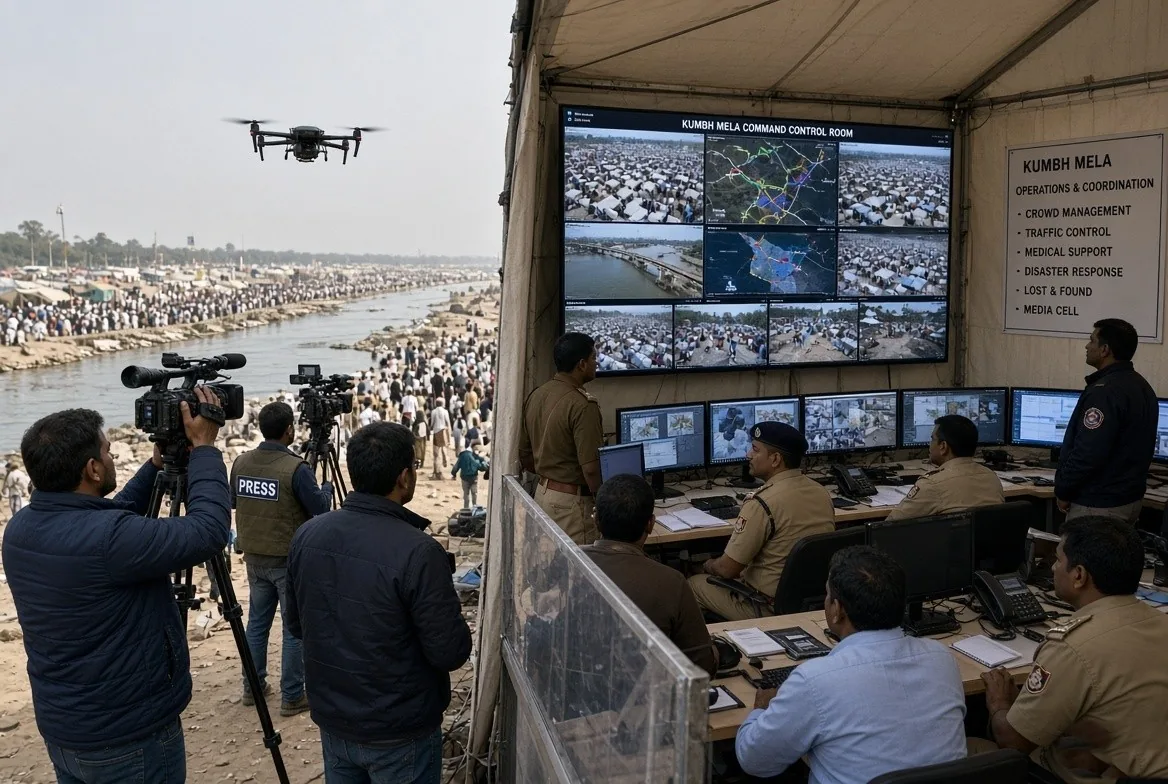
2.5 Researchers, Media & Government
Another important group consists of people who come to study, document, operate, and manage the event.
They may include:
- Anthropologists
- Sociologists
- Researchers
- Journalists
- Documentary filmmakers
- Photographers
- Government officials
- Police and security personnel
- Disaster-management teams
- Healthcare and civic workers
Why They Matter
Their work helps:
- Document traditions and social practices
- Study crowd movement and behavior
- Understand large-scale temporary urban planning
- Manage logistics and public services
- Maintain security and emergency response
- Record the event for future generations
Behind the visible crowds is an enormous network of people working to keep the temporary city functional.
3. Why Do People Attend Kumbh Mela?
One of the most important questions about Kumbh is:
👉 “Why do millions of people go to Kumbh Mela?”
There is no single answer.
Different visitors arrive with different expectations, beliefs, and personal goals.
3.1 Spiritual Motivation
For many pilgrims, the primary motivation is spiritual.
They seek:
- Inner purification
- Peace and clarity
- Religious fulfillment
- A deeper connection with their faith
- A sense of connection to something larger than themselves
3.2 Cultural & Social Connection
Kumbh is also deeply connected with family and community traditions.
People may attend because of:
- Family traditions
- Community participation
- Shared religious practices
- Cultural heritage
- The desire to pass traditions to younger generations
For many families, visiting Kumbh is not simply an individual decision—it is part of a shared cultural journey.
3.3 Curiosity & Experience
Some visitors are motivated primarily by curiosity.
They want to:
- Witness a once-in-a-lifetime gathering
- See the Akharas and ascetic communities
- Experience India's spiritual heritage
- Explore the temporary city
- Observe rituals and traditions firsthand
For international visitors especially, Kumbh can provide a rare window into India's living religious culture.
3.4 Personal Transformation
For some people, Kumbh represents an opportunity to step away from everyday life and reflect.
Visitors may seek:
- Emotional clarity
- Renewed purpose
- A stronger sense of belonging
- Personal reflection
- A fresh spiritual beginning
The experience can therefore be meaningful even when people arrive with very different motivations.
4. Why This Diversity Matters
Kumbh Mela is not just about numbers—it is about diversity, interaction, and shared participation.
What Makes It Unique
✔ Brings together people from different regions and backgrounds
✔ Combines spirituality, culture, society, and tourism
✔ Connects rural and urban India
✔ Attracts international visitors
✔ Creates interaction between ordinary pilgrims, saints, researchers, and cultural observers
The Bigger Picture
Kumbh can be viewed as a mirror of humanity, where people with different backgrounds and motivations converge in the same place.
A pilgrim may arrive seeking spiritual merit.
A sadhu may arrive to continue a centuries-old monastic tradition.
A tourist may arrive out of curiosity.
A researcher may arrive to study the social phenomenon.
A journalist may arrive to document it.
All become part of the same enormous gathering.
5. What This Means for You as a Visitor
Understanding who attends Kumbh can help you set realistic expectations before visiting.
It can help you:
- Choose the type of experience you want
- Understand the diversity of people around you
- Plan according to expected crowd levels
- Respect different religious and cultural practices
- Prepare for the scale and intensity of the gathering
Whether you arrive as a pilgrim, tourist, spiritual seeker, photographer, or cultural explorer, understanding the people around you can make the experience more meaningful.
6. Fascinating Insight
Despite the enormous diversity of people attending Kumbh, the gathering revolves around a shared environment of discipline, faith, ritual, and collective movement.
Millions of people may have completely different reasons for coming, yet they participate within the same temporary ecosystem of camps, roads, ghats, religious spaces, and pilgrimage routes.
This ability to bring together such a diverse population at an extraordinary scale is one of Kumbh Mela's most remarkable characteristics.
Conclusion: A Gathering That Represents Humanity
Kumbh Mela is not defined only by how many people attend, but also by who attends and why.
It is:
- A meeting of seekers and saints
- A convergence of tradition and curiosity
- A gathering of families, pilgrims, tourists, and researchers
- A rare space where millions move with a shared purpose
Understanding the diversity of Kumbh transforms your perspective from simply observing a massive crowd to recognizing the individual stories, beliefs, traditions, and aspirations within it.
Kumbh Mela is, ultimately, not just a gathering of millions—it is a gathering of millions of different journeys brought together in one extraordinary place.
Enhance Your Pilgrimage Experience
Mobile App
Read Kumbh Guides on Mobile
Download the Divya Kripa to read all 19 guides offline, receive real-time snan alerts, and access GPS-enabled navigation on the ground.
Download AppAI Assistant
Personalized Planner & Chatbot
Access your Kumbh Planner AI Assistant to receive tailored ritual advice, customized itineraries, and instant answers to spiritual questions.
Try AI PlannerRelated Articles

Loading discussion & reviews...