
All Blog Posts

Heritage
Why 4 Locations Are Sacred in Kumbh Mela (Mythological Perspective)
K
Kumbh AdminSeptember 17, 20265 min readUncover the mythology behind the 4 Kumbh locations—Prayagraj, Haridwar, Ujjain, and Nashik—and why each represents a sacred stage of spiritual evolution.
Introduction: Why Only These 4 Places?
After understanding the Amrit Katha, one question becomes even more intriguing:
- Why are only 4 places associated with Kumbh Mela?
- What makes Prayagraj, Haridwar, Ujjain, and Nashik sacred?
- Is there a deeper mythological reason behind these locations?
According to the traditional Kumbh mythology, the answer lies in the story of the Amrit Kalash, combined with the sacred geography and long-standing pilgrimage traditions of these four places.
The Core Myth: Where Amrit Touched Earth
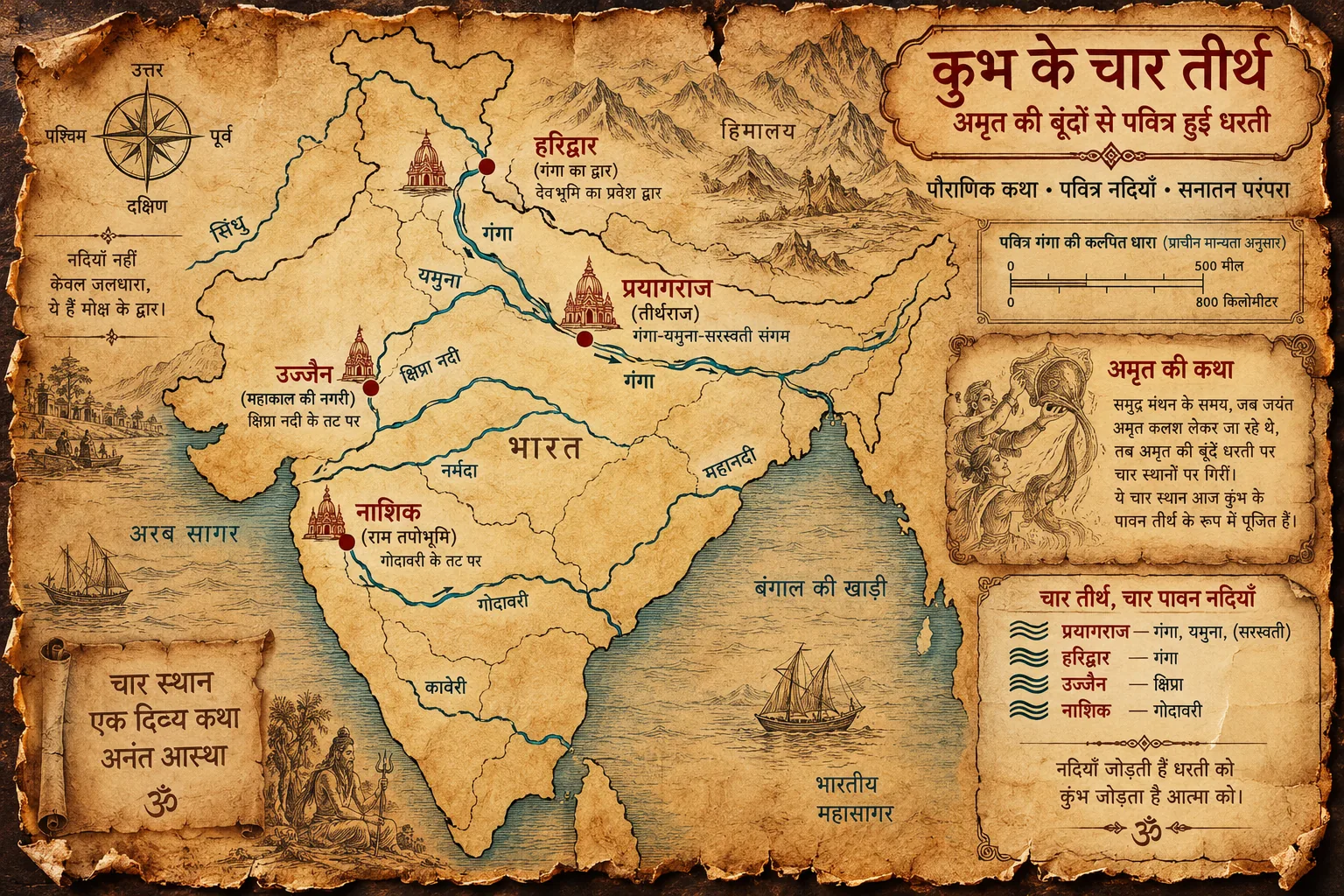
During the celestial struggle between the Devas and Asuras, when Jayant carried the Amrit Kalash, drops of the divine nectar are traditionally believed to have fallen at four places on Earth.
These four places became associated with the Kumbh tradition:
- Prayagraj
- Haridwar
- Ujjain
- Nashik
👉 In the traditional narrative, these locations were not chosen randomly.
Their association with the Amrit story became intertwined with their existing importance as sacred pilgrimage centers.
The Sacred Four: Mythological Significance of Each Location
1. Prayagraj – The King of Pilgrimage Sites
[IMAGE PLACEHOLDER: Triveni Sangam aerial view]
Why is Prayagraj sacred in Kumbh?
- Known for the Triveni Sangam, traditionally understood as the confluence of the Ganga, Yamuna, and Saraswati
- Considered one of the most important pilgrimage centers in Hindu tradition
- Traditionally associated with the Kumbh mythology of the Amrit Kalash
- Known in pilgrimage traditions as Tirtha Raj, or the “King of Tirthas”
👉 The Sangam gives Prayagraj a distinctive sacred geography where multiple rivers and pilgrimage traditions converge.
2. Haridwar – Gateway to the Divine
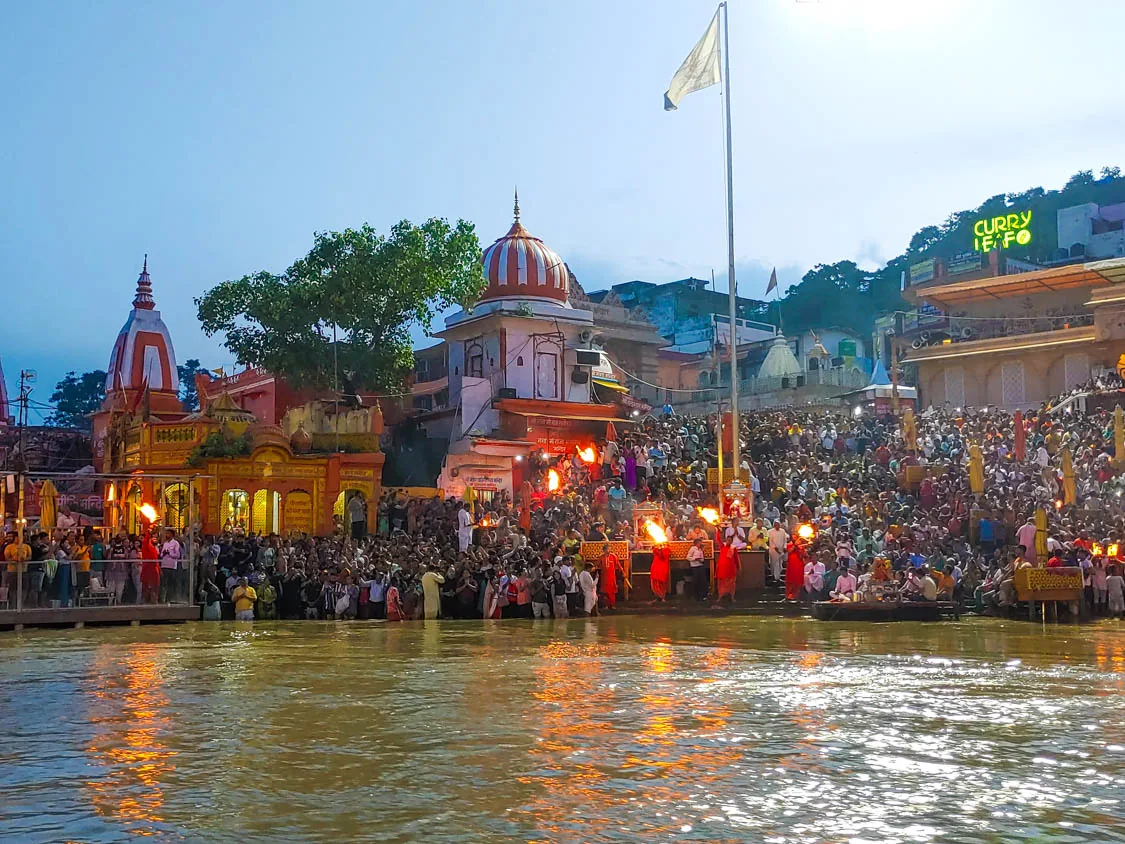
Why is Haridwar important in Kumbh Mela?
- Known as Haridwar, commonly understood as a gateway to Hari or the divine
- Located on the banks of the Ganga
- Closely associated with the sacred descent and earthly journey of the Ganga
- Traditionally connected with the story of the Amrit Kalash
👉 Haridwar represents a major gateway into the Himalayan and Ganga pilgrimage traditions.
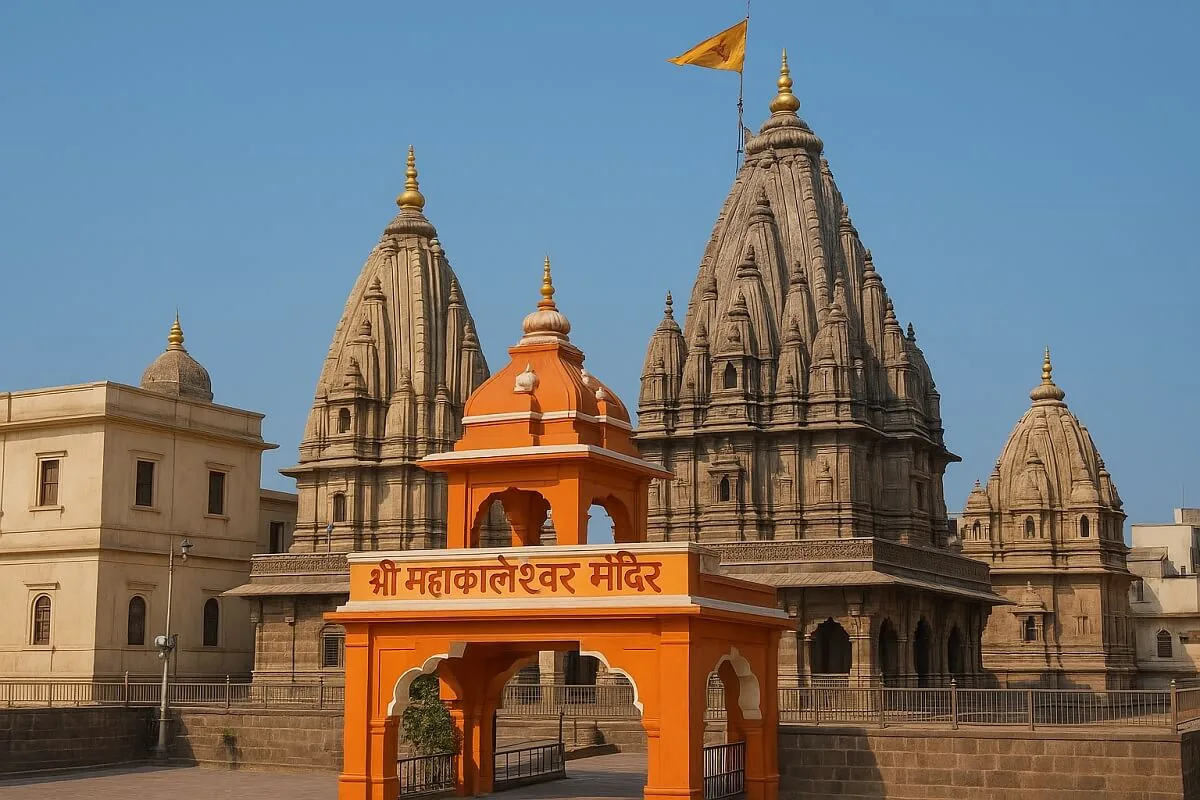
3. Ujjain – The Land of Mahakal
Why is Ujjain sacred for Kumbh?
- Located on the banks of the Shipra River
- Closely associated with Lord Shiva and the Mahakaleshwar Jyotirlinga
- Hosts the Kumbh gathering traditionally known as Simhastha
- Has a long history as an important center of Hindu pilgrimage
👉 Ujjain's religious identity combines the sacred Shipra, the worship of Mahakal, and the traditions surrounding Simhastha.
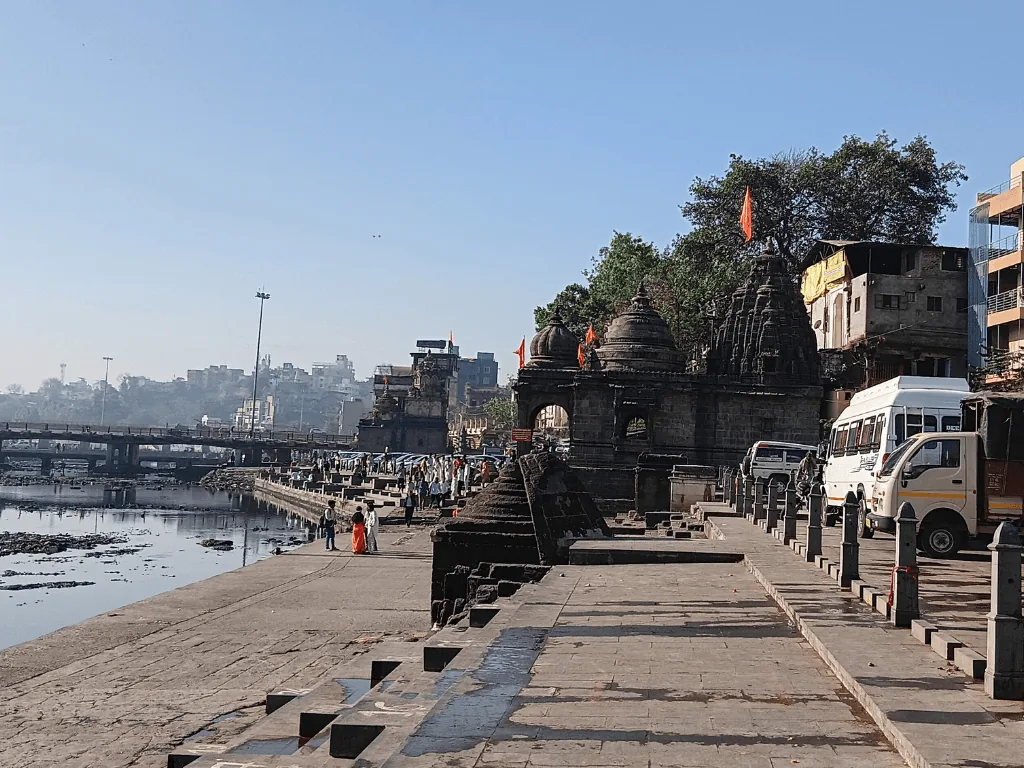
4. Nashik – The Tapobhoomi of Lord Rama
Why is Nashik included among the Kumbh locations?
- Located on the banks of the Godavari River, often revered as the “Dakshin Ganga”
- Strongly associated with the Ramayana, particularly traditions concerning Lord Rama's exile
- Contains important pilgrimage sites such as Panchavati
- Traditionally connected with the Amrit story and the Kumbh tradition
👉 Nashik represents a sacred landscape shaped by Ramayana traditions, devotion, pilgrimage, and the Godavari.
Why These Four? The Deeper Mythological Logic
The traditional explanation for the four locations comes from the Amrit story, but each site also possesses its own long-standing religious significance.
1. Association with the Amrit Legend
According to Kumbh mythology, drops of Amrit fell at these four locations during the celestial struggle.
2. Sacred Rivers
Each Kumbh location is connected with a sacred river or confluence:
- Prayagraj → Ganga, Yamuna, and the traditional Saraswati
- Haridwar → Ganga
- Ujjain → Shipra
- Nashik → Godavari
Rivers occupy a central position in Hindu pilgrimage traditions and are strongly associated with purification and sacred bathing.
3. Established Pilgrimage Traditions
These were already important religious landscapes with temples, pilgrimage routes, sacred stories, and established traditions of worship.
Their connection to the Amrit narrative further strengthened their place within Kumbh tradition.
4. Mythology and Sacred Geography
The importance of these locations comes from the interaction of mythology, religious tradition, sacred rivers, temples, and pilgrimage practices.
The four places therefore represent more than four points on a map—they form a distinctive network within India's sacred geography.
Living Faith: The Sacred Four Today
The traditional Kumbh cycle continues across these four locations, each with its own religious character.
- Prayagraj → Triveni Sangam and major pilgrimage traditions
- Haridwar → Ganga pilgrimage and Har Ki Pauri
- Ujjain → Shipra River, Mahakal, and Simhastha
- Nashik → Godavari, Panchavati, and Ramayana traditions
Millions of pilgrims visit these places during major Kumbh gatherings, while the sites also remain important pilgrimage destinations outside the Kumbh cycle.
The continuity of these traditions across generations demonstrates the enduring religious and cultural significance of the four locations.
Symbolism: What These 4 Places Represent
The four locations can also be interpreted symbolically, with each representing a different aspect of the spiritual journey.
| Location | Symbolic Association |
|---|---|
| Prayagraj | Convergence and spiritual awakening |
| Haridwar | Entry into sacred and spiritual life |
| Ujjain | Transformation and the overcoming of ego |
| Nashik | Dharma, devotion, and righteous living |
👉 Together, these can be viewed as a symbolic spiritual journey from convergence and awakening toward transformation, devotion, and righteous living.
This symbolic interpretation is a way of understanding the four sites; it is distinct from the traditional mythological account of why they became Kumbh locations.
Final Insight
The four Kumbh locations are not simply places selected for a festival.
They are deeply connected with:
- The traditional story of the Amrit Kalash
- Sacred rivers and confluences
- Ancient pilgrimage traditions
- Major Hindu temples and sacred landscapes
- Stories from Hindu mythology and epics
The four sites are:
Prayagraj • Haridwar • Ujjain • Nashik
According to Kumbh tradition, the association of these places with the Amrit gives them a unique place in the mythology of the festival.
At the same time, their importance extends far beyond Kumbh itself. Each is a living pilgrimage center with its own history, sacred geography, traditions, and devotional practices.
In this sense, the four Kumbh locations are not merely destinations—they are four enduring centers of India's sacred landscape.
Enhance Your Pilgrimage Experience
Mobile App
Read Kumbh Guides on Mobile
Download the Divya Kripa to read all 19 guides offline, receive real-time snan alerts, and access GPS-enabled navigation on the ground.
Download AppAI Assistant
Personalized Planner & Chatbot
Access your Kumbh Planner AI Assistant to receive tailored ritual advice, customized itineraries, and instant answers to spiritual questions.
Try AI PlannerRelated Articles



Loading discussion & reviews...