All Blog Posts
HeritageHistory
Lord Dhanvantari: The Divine Physician and the Origin of Ayurveda – Story, Significance and Teachings
K
Kumbh AdminNovember 11, 20269 min readLord Dhanvantari is revered in Hinduism as the divine physician and the god of Ayurveda. Emerging from the cosmic ocean during Samudra Manthan with the pot of Amrit, he brought the divine knowledge of healing and longevity to the world. Discover his fascinating story and spiritual significance.
In Hindu mythology, Lord Dhanvantari holds a special place as the divine physician and the god of Ayurveda, the ancient Indian system of medicine. He is worshipped as the source of healing, health, longevity and well-being.
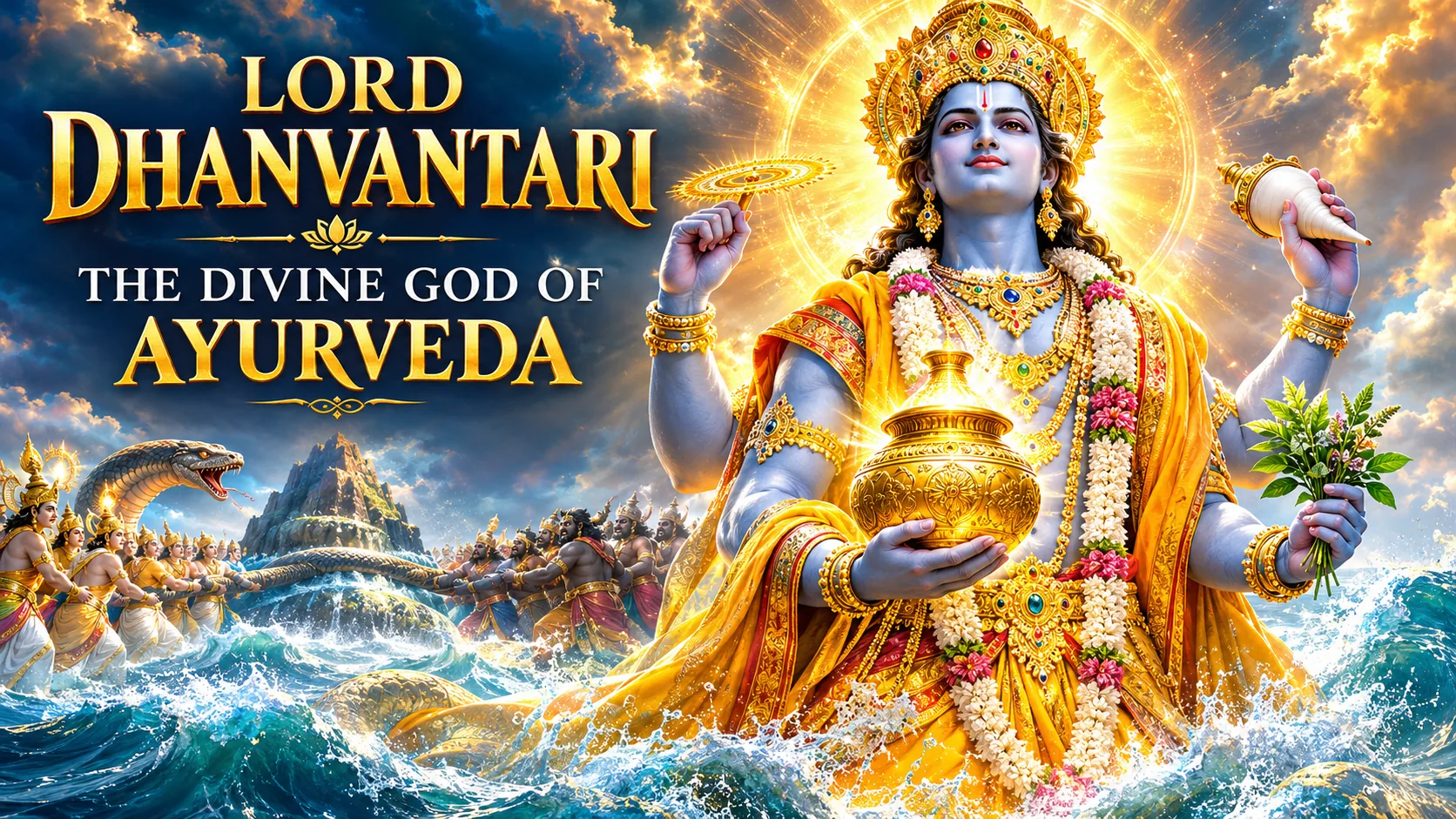
According to Hindu scriptures, Lord Dhanvantari emerged from the cosmic ocean during the legendary Samudra Manthan (churning of the ocean of milk), carrying a pot of Amrit, the divine nectar of immortality. His appearance marked an important moment in the divine struggle between the Devas and Asuras and is traditionally associated with the arrival of Ayurveda in the world.
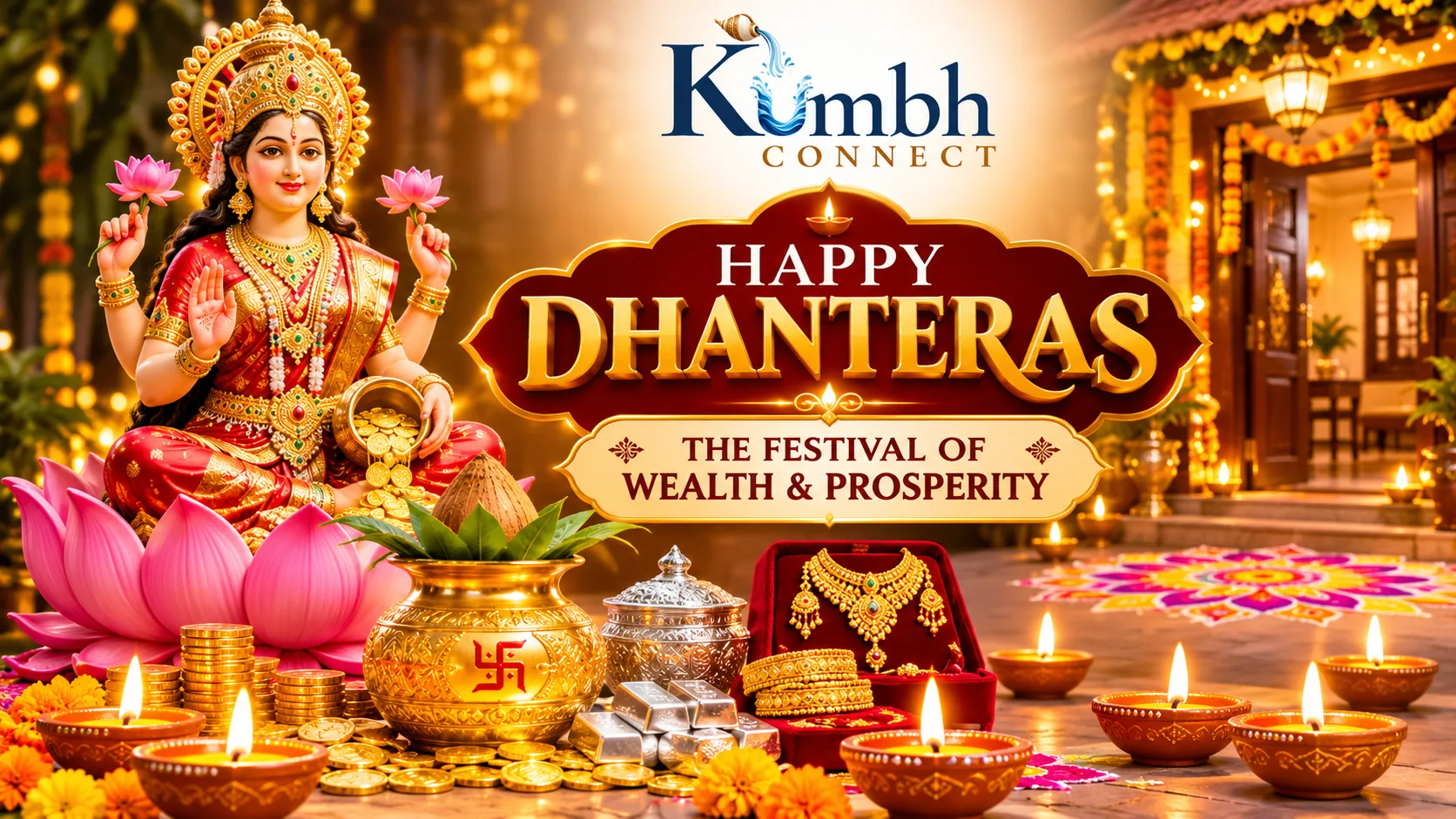
Lord Dhanvantari is particularly worshipped during Dhanteras, the first day of the five-day Diwali festival. Devotees pray to him for good health, protection from diseases and a long, healthy life.
But who was Lord Dhanvantari? Why did he emerge from the ocean? And how did he become associated with Ayurveda?
The answers lie in one of the most fascinating stories of Hindu mythology.
The Story of Samudra Manthan: The Cosmic Churning of the Ocean
The story of Lord Dhanvantari begins with Samudra Manthan, one of the most significant events described in Hindu mythology.
According to the Puranic tradition, the Devas (gods) and Asuras (demons) were engaged in a continuous struggle for power and control over the universe.
At one point, the Devas lost their strength and divine radiance due to a curse associated with Sage Durvasa. Their weakened condition allowed the Asuras to gain an advantage.
Seeking a solution, the Devas approached Lord Vishnu for guidance.
Lord Vishnu advised them to obtain Amrit, the divine nectar that could grant immortality and restore their strength. However, the nectar was hidden deep within Kshira Sagara, the cosmic ocean of milk.
To obtain it, the Devas would have to churn the entire ocean.
Since the task was too difficult for the Devas alone, Lord Vishnu suggested that they form an alliance with the Asuras and work together to churn the ocean. The nectar would be distributed after it emerged.
Both groups agreed to participate in this extraordinary undertaking.
The Churning Process
To perform the Samudra Manthan:
- Mount Mandara was used as the churning rod.
- Vasuki, the divine serpent, was used as the churning rope.
- Lord Vishnu took the form of Kurma, his tortoise incarnation, to support Mount Mandara on his back.
The Devas held one side of Vasuki, while the Asuras held the other. Together, they began churning the cosmic ocean.
As the churning continued, numerous extraordinary objects, beings and divine treasures emerged from the ocean. These became known as the fourteen Ratnas or divine treasures of Samudra Manthan in popular Puranic tradition.
Among the treasures were Goddess Lakshmi, the celestial elephant Airavata, the divine horse Uchchaihshravas, the wish-fulfilling tree Kalpavriksha and other extraordinary manifestations.
However, before the nectar of immortality could emerge, a deadly poison known as Halahala appeared.
The poison threatened to destroy the entire universe. To save creation, Lord Shiva consumed the poison and held it in his throat, which turned blue. This is why he became known as Neelkanth.
After this dangerous event, the cosmic churning continued, leading to the emergence of one of the most important divine personalities in Hindu tradition: Lord Dhanvantari.
The Divine Emergence of Lord Dhanvantari with the Pot of Amrit
As the churning of the ocean continued, a divine and radiant figure emerged from the depths of the cosmic ocean.
This was Lord Dhanvantari.
He appeared with a beautiful divine form, carrying a pot filled with Amrit, the nectar of immortality.
His emergence was a moment of great significance because the nectar represented freedom from death and the restoration of divine strength.
Lord Dhanvantari is traditionally depicted with four hands, holding:
- A pot of Amrit, symbolizing longevity and immortality.
- A conch shell, representing divine energy and purity.
- A Sudarshan Chakra, symbolizing divine protection.
- Medicinal herbs or other healing-related objects, representing his association with Ayurveda.
Different traditional depictions of Lord Dhanvantari may vary, but the pot of Amrit remains one of his most recognizable symbols.
The Asuras immediately became interested in obtaining the nectar. They wanted to gain immortality and establish their dominance over the universe.
A struggle over the Amrit followed. Lord Vishnu eventually assumed the enchanting form of Mohini to ensure that the nectar was distributed to the Devas.
This episode forms another important part of the larger Samudra Manthan story.
The emergence of Dhanvantari, however, is remembered for a different reason: his association with divine healing, medicine and the knowledge of Ayurveda.
How Lord Dhanvantari Became the God of Ayurveda
Lord Dhanvantari is worshipped as the divine source of Ayurveda, one of the oldest traditional systems of medicine in India.
The word Ayurveda comes from two Sanskrit words:
- Ayus: Life or longevity.
- Veda: Knowledge or science.
Together, Ayurveda means the knowledge or science of life.
According to traditional beliefs, Lord Dhanvantari brought the knowledge of healing and medicine to humanity. He is regarded as the divine physician who understood the importance of maintaining physical health, mental balance and overall well-being.
In Ayurvedic traditions, Dhanvantari is associated with knowledge of medicinal plants, treatments, healing practices and the principles of maintaining a healthy life.
He is also connected with the ancient transmission of medical knowledge through sages and teachers.
One important figure associated with this tradition is Sushruta, who is traditionally regarded as a student of Dhanvantari in the Sushruta Samhita, one of the foundational texts of Ayurveda.
The Sushruta Samhita contains extensive discussions of surgery, anatomy, medical instruments and treatments.
Thus, Lord Dhanvantari represents not only divine healing but also the ancient Indian tradition of medical knowledge and the importance of preserving human health.
Lord Dhanvantari and His Connection with Lord Vishnu
Lord Dhanvantari is also considered an incarnation or divine manifestation of Lord Vishnu in Hindu traditions.
Like other manifestations of Vishnu, Dhanvantari is associated with protecting the universe and maintaining the balance of creation.
While Lord Vishnu protects the universe from various threats, Lord Dhanvantari represents the healing aspect of divine protection.
His role reminds devotees that health is essential for fulfilling life's responsibilities and following the path of Dharma.
In many temples and traditional representations, Dhanvantari is worshipped as a divine form of Vishnu, carrying the Amrit Kalasha and symbols associated with healing and protection.
His worship is particularly important among Ayurvedic practitioners, traditional physicians and people seeking good health.
Why Is Lord Dhanvantari Worshipped on Dhanteras?
Lord Dhanvantari has a special connection with Dhanteras, also known as Dhantrayodashi.
Dhanteras is celebrated on the Trayodashi Tithi of Krishna Paksha in the Hindu month of Kartik. It marks the beginning of the five-day Diwali celebrations.
According to traditional belief, Lord Dhanvantari emerged from the cosmic ocean with the pot of Amrit on this auspicious occasion.
For this reason, Dhanteras is also celebrated as Dhanvantari Jayanti in many traditions.
Although the festival is widely associated with purchasing gold, silver, utensils and other valuable items, its spiritual significance also includes prayers for health and longevity.
Devotees worship Lord Dhanvantari and seek his blessings for:
- Good health and freedom from diseases.
- Long life and physical well-being.
- Protection from illness and suffering.
- Knowledge of healing and medicine.
- Peace, prosperity and happiness within the family.
The connection between Dhanvantari and Dhanteras highlights an important message: wealth is valuable, but good health is one of life's greatest treasures.
How Is Lord Dhanvantari Worshipped?
Lord Dhanvantari is worshipped with devotion, particularly on Dhanteras and Dhanvantari Jayanti.
Traditional worship practices may include:
1. Cleaning and Preparing the Puja Area
Devotees clean their homes and prepare a dedicated place for worship. An image or idol of Lord Dhanvantari is placed on a clean platform.
2. Offering Flowers and Traditional Items
Flowers, fruits, incense, lamps and other traditional offerings are presented to the deity.
3. Chanting Dhanvantari Mantras
Devotees chant prayers and mantras dedicated to Lord Dhanvantari, seeking blessings for good health and protection.
4. Offering Prayers for Health
Families pray for the well-being of their loved ones and for the recovery of people suffering from illnesses.
5. Worship by Ayurvedic Practitioners
Ayurvedic doctors, students and practitioners particularly honour Lord Dhanvantari as the divine inspiration behind their medical tradition.
The Spiritual Message of Lord Dhanvantari
The story of Lord Dhanvantari carries several meaningful lessons that remain relevant even today.
Health Is the Greatest Wealth
The emergence of Dhanvantari with Amrit reminds people that health and longevity are among life's most precious blessings.
Knowledge Should Be Used for the Welfare of Humanity
Ayurveda represents an ancient tradition of healing. Dhanvantari symbolizes the importance of using knowledge and wisdom to reduce suffering and improve human life.
Healing Is a Divine Responsibility
The worship of Dhanvantari teaches that caring for the sick, helping those in pain and protecting life are noble responsibilities.
Balance Is Essential for a Healthy Life
The principles associated with Ayurveda emphasize the relationship between the body, mind, lifestyle and environment.
Gratitude for Life
The divine nectar of Amrit represents the value of life itself. The festival encourages people to appreciate their health and take responsibility for their well-being.
Frequently Asked Questions About Lord Dhanvantari
1. Who is Lord Dhanvantari in Hindu mythology?
Lord Dhanvantari is the divine physician and the god of Ayurveda. He is associated with healing, medicine, health and longevity.
2. How did Lord Dhanvantari emerge?
According to Hindu mythology, Lord Dhanvantari emerged from the cosmic ocean during Samudra Manthan, carrying a pot of Amrit, the nectar of immortality.
3. Why is Lord Dhanvantari worshipped on Dhanteras?
Dhanteras is traditionally associated with the emergence of Lord Dhanvantari from the ocean of milk. Devotees worship him for good health, longevity and protection from diseases.
4. What is the relationship between Lord Dhanvantari and Ayurveda?
Lord Dhanvantari is regarded as the divine source of Ayurveda and traditional healing knowledge. He is worshipped by Ayurvedic practitioners as their divine inspiration.
5. Is Lord Dhanvantari an incarnation of Lord Vishnu?
Yes. Many Hindu traditions consider Lord Dhanvantari an incarnation or divine manifestation of Lord Vishnu.
6. What does Lord Dhanvantari hold in his hands?
Lord Dhanvantari is commonly depicted carrying a pot of Amrit, a conch shell, a Sudarshan Chakra and medicinal herbs or other healing-related objects.
7. What is the significance of Amrit in the story of Dhanvantari?
Amrit is the divine nectar associated with immortality. Its emergence represents the restoration of divine strength and is an important event in the story of Samudra Manthan.
Conclusion
The story of Lord Dhanvantari is one of the most meaningful episodes in Hindu mythology. Emerging from the cosmic ocean during Samudra Manthan with the pot of Amrit, he became a symbol of healing, longevity and the divine knowledge of Ayurveda.
His connection with Dhanteras gives the festival a deeper meaning beyond material prosperity. It reminds us that good health, knowledge and the ability to care for others are among the greatest blessings in life.
As devotees worship Lord Dhanvantari, they celebrate not only an important divine personality but also India's rich heritage of traditional medicine and healing.
His timeless message remains simple: protect life, value health, seek knowledge and use wisdom for the welfare of humanity.
Pilgrim Resources
Enhance Your Pilgrimage Experience
Mobile App
Download AppRead Kumbh Guides on Mobile
Download Divya Kripa to read all official guides offline, receive real-time snan alerts, and access GPS-enabled navigation on the ground.
AI Assistant
Try AI PlannerPersonalized Planner & Guide
Access your Kumbh Planner AI Assistant to receive tailored ritual advice, customized itineraries, and instant answers to spiritual questions.
More Stories
Related Articles
Loading discussion & reviews...