All Blog Posts
SpiritualityCultureFestival
Bhai Dooj – Celebrating the Sacred Bond of Love Between Brothers and Sisters
K
Kumbh AdminNovember 10, 20269 min readBhai Dooj is a beautiful Hindu festival celebrating the unconditional love and lifelong bond between brothers and sisters. Discover its mythological origins, the story of Yama and Yamuna, traditional rituals and the significance of this special occasion.
Bhai Dooj is one of the most cherished Hindu festivals, celebrating the beautiful and lifelong relationship between brothers and sisters. Observed shortly after Diwali, this festival is dedicated to the bond of love, affection, protection and mutual respect shared by siblings.
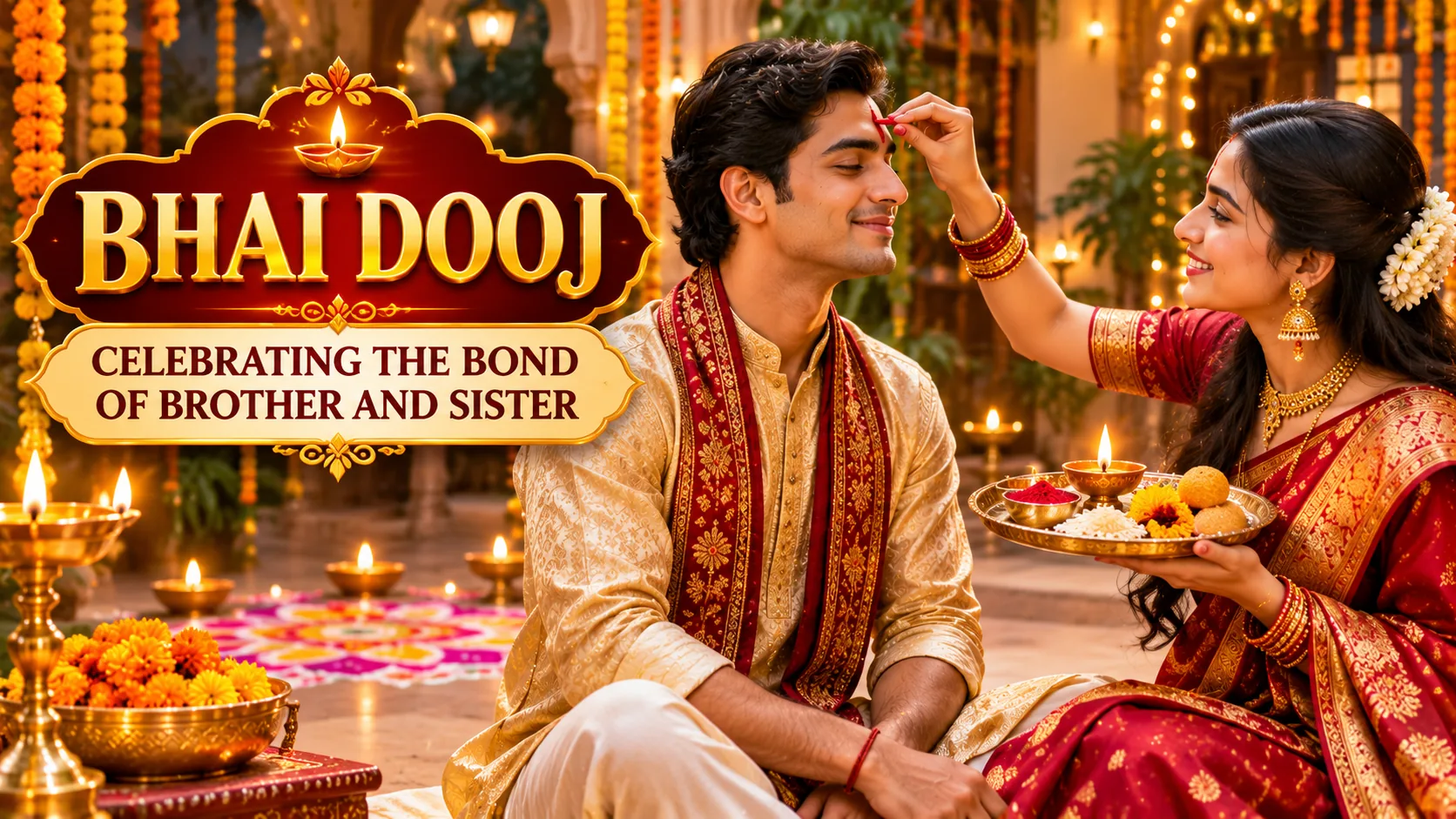
On this auspicious occasion, sisters apply a sacred tilak on their brothers' foreheads, perform aarti and pray for their long life, happiness and prosperity. Brothers, in return, express their love and appreciation by giving gifts and promising to stand beside their sisters through every stage of life.
Also known as Bhaiya Dooj, Yama Dwitiya, Bhau Beej and Bhai Phota in different parts of India, the festival carries deep mythological and cultural significance. Its traditions are rooted in the ancient story of Lord Yama and his sister Goddess Yamuna.
What Is Bhai Dooj and Why Is It Celebrated?
Bhai Dooj is a traditional Hindu festival celebrated on the Dwitiya Tithi (second lunar day) of the Shukla Paksha in the month of Kartik. It generally falls two days after Diwali and marks the conclusion of the five-day Diwali festival in many Hindu traditions.
The festival celebrates the special relationship between brothers and sisters. It is believed that performing the traditional tilak ceremony and praying for one's brother on this day brings blessings, happiness and prosperity.
The central tradition involves sisters welcoming their brothers, applying a tilak on their foreheads, performing an aarti and offering sweets. Brothers bless their sisters and give them gifts as a symbol of affection and appreciation.
Unlike Raksha Bandhan, which is associated with the tying of a sacred thread, Bhai Dooj emphasizes the tilak ceremony, prayers and the sharing of a special meal.
The festival is not merely a family celebration but also represents the importance of maintaining strong relationships, expressing gratitude and supporting one another throughout life.
The Mythological Story Behind Bhai Dooj: Yama and Yamuna
The most popular mythological story associated with Bhai Dooj revolves around Lord Yama, the Hindu deity of death, and his sister Goddess Yamuna, the sacred river goddess.
According to Hindu tradition, Yama and Yamuna were the children of Surya, the Sun God, and his wife Saranyu.
Yamuna deeply loved her brother and repeatedly invited him to visit her home. However, because of his responsibilities, Yama was unable to visit her for a long time.
One day, on the Dwitiya Tithi of the Shukla Paksha in Kartik, Yama finally accepted his sister's invitation and visited her.
Yamuna welcomed him with great affection. She performed aarti, applied a sacred tilak on his forehead and prepared a delicious meal for him.
Yama was extremely pleased with the love and hospitality shown by his sister. He asked her to request a blessing in return.
Yamuna expressed her wish that every brother who visits his sister on this auspicious day, receives her blessings and participates in the traditional rituals should be blessed with happiness, prosperity and a long life.
Lord Yama granted her wish.
He also declared that brothers and sisters who bathe in the sacred waters of the Yamuna on this day would receive special blessings.
Since then, the occasion has been celebrated as Yama Dwitiya or Bhai Dooj, symbolizing the eternal bond between siblings.
This story is the foundation of the festival's most important traditions and explains why sisters pray for the well-being and longevity of their brothers.
Bhai Dooj Rituals and Traditional Celebrations
Bhai Dooj is celebrated with great devotion across India. Although regional customs differ, the central rituals remain focused on prayers, tilak, aarti and family gatherings.
1. Preparing for the Festival
On the morning of Bhai Dooj, sisters prepare for the celebrations by cleaning and decorating their homes.
They arrange a puja thali containing roli or kumkum, rice grains, flowers, sweets, a diya and other traditional worship materials.
Families wear new or traditional clothes and prepare special dishes for the occasion.
2. Applying Tilak to the Brother
The most important ritual of Bhai Dooj is applying a sacred tilak on the brother's forehead.
The sister applies roli or kumkum, often accompanied by rice grains, and prays for her brother's long life, good health and prosperity.
The tilak represents blessings, protection and the sacred affection between siblings.
3. Performing Aarti
After applying the tilak, the sister performs aarti for her brother using a decorated puja thali.
This ritual symbolizes prayers for his well-being and protection from negative influences.
In many households, traditional songs and prayers are also recited during the ceremony.
4. Offering Sweets and a Special Meal
Food plays an important role in Bhai Dooj celebrations.
Sisters prepare or offer their brothers traditional sweets such as laddoos, barfi, peda and other regional delicacies.
Many families organize a special meal where brothers and sisters sit together and celebrate the occasion.
5. Exchanging Gifts and Blessings
After completing the rituals, brothers give gifts, clothes, money or other presents to their sisters.
These gifts symbolize affection, gratitude and appreciation.
The exchange of gifts strengthens the emotional connection between siblings and makes the celebration even more memorable.
Different Names and Regional Celebrations of Bhai Dooj Across India
Bhai Dooj is celebrated throughout India, but its name, customs and regional traditions vary.
1. Bhai Dooj in North India
In Uttar Pradesh, Bihar, Madhya Pradesh, Rajasthan and other northern states, the festival is commonly known as Bhai Dooj or Bhaiya Dooj.
Sisters apply tilak to their brothers, perform aarti and prepare special meals. In some communities, traditional stories and songs associated with Yama and Yamuna are recited.
2. Bhau Beej in Maharashtra and Goa
In Maharashtra and Goa, the festival is popularly known as Bhau Beej or Bhav Bij.
Sisters invite their brothers home, perform the tilak ceremony and prepare traditional dishes.
In some Maharashtrian traditions, a special square-shaped design is drawn on the floor, and the brother is seated within it during the ritual.
3. Bhai Phota in West Bengal
In West Bengal, Bhai Dooj is celebrated as Bhai Phota.
Sisters apply a special sandalwood or other traditional paste-based mark on their brothers' foreheads, accompanied by prayers for their long life and well-being.
The occasion is celebrated with family gatherings, traditional Bengali sweets and festive meals.
4. Bhai Tika in Nepal
In Nepal, a closely related festival is celebrated as Bhai Tika during the Tihar festival.
Sisters apply colourful tika to their brothers' foreheads, offer garlands and pray for their health and longevity.
The ceremony is particularly known for its elaborate rituals and colourful decorations.
5. Yama Dwitiya in Religious Traditions
The festival is also known as Yama Dwitiya because of its association with Lord Yama and Goddess Yamuna.
In religious traditions, devotees consider this day especially auspicious for honouring the relationship between siblings and seeking divine blessings.
Religious and Cultural Significance of Bhai Dooj
Bhai Dooj carries a message that goes beyond its traditional rituals. It celebrates the importance of family relationships, love, mutual responsibility and emotional support.
The Bond of Sibling Love: The festival reminds brothers and sisters to value their relationship and remain connected despite distance, responsibilities and changes in life.
Prayers for Long Life and Prosperity: Sisters pray for their brothers' health, happiness and success. These prayers reflect the selfless affection that defines the festival.
The Significance of Family: Bhai Dooj encourages family reunions and creates opportunities for siblings to spend meaningful time together.
The Blessings of Goddess Yamuna: The story of Yamuna and Yama highlights the importance of affection, hospitality and the blessings exchanged between siblings.
Tradition Across Generations: The festival preserves India's cultural heritage by passing down rituals, stories and family customs from one generation to another.
What Is the Difference Between Bhai Dooj and Raksha Bandhan?
Bhai Dooj and Raksha Bandhan are both Hindu festivals celebrating the relationship between brothers and sisters. However, their traditions and religious significance are different.
| Feature | Bhai Dooj | Raksha Bandhan |
|---|---|---|
| Occasion | Kartik Shukla Dwitiya | Shravan Purnima |
| Main Ritual | Applying tilak and performing aarti | Tying a rakhi |
| Mythological Association | Yama and Yamuna | Multiple traditional stories |
| Celebration | After Diwali | During the month of Shravan |
| Main Significance | Love, blessings and sibling affection | Love and the symbolic promise of protection |
Both festivals celebrate the importance of sibling relationships, but they do so through different rituals and traditions.
Frequently Asked Questions About Bhai Dooj
1. When is Bhai Dooj celebrated?
Bhai Dooj is celebrated on the Dwitiya Tithi of Shukla Paksha in the Hindu month of Kartik, generally two days after Diwali.
2. Why is Bhai Dooj also called Yama Dwitiya?
It is called Yama Dwitiya because the festival is associated with the mythological visit of Lord Yama to his sister Goddess Yamuna on the Dwitiya Tithi of Kartik.
3. Why do sisters apply tilak to their brothers on Bhai Dooj?
The tilak symbolizes blessings, love and prayers for the brother's long life, good health, happiness and prosperity.
4. What should a sister give her brother on Bhai Dooj?
Traditionally, sisters apply tilak, perform aarti and offer sweets to their brothers. The central focus is on prayers and blessings rather than expensive gifts.
5. Is Bhai Dooj celebrated only between brothers and sisters?
The festival primarily celebrates the traditional relationship between brothers and sisters. However, its broader message of affection, respect and family bonding can be appreciated by everyone.
6. What is the difference between Bhai Dooj and Bhau Beej?
There is no major difference in their central significance. Bhai Dooj is commonly used in North India, while Bhau Beej is the popular regional name in Maharashtra and Goa.
7. What is Bhai Phota?
Bhai Phota is the Bengali name for Bhai Dooj. It is celebrated with a traditional forehead mark, prayers, sweets and family gatherings.
Conclusion
Bhai Dooj is a beautiful celebration of the unconditional affection shared between brothers and sisters. Rooted in the story of Lord Yama and Goddess Yamuna, the festival reminds us that relationships become meaningful through love, care, blessings and mutual respect.
From the traditional tilak ceremony in North India to Bhau Beej in Maharashtra and Bhai Phota in Bengal, the festival brings families together and preserves India's rich cultural traditions.
Beyond gifts and celebrations, the true meaning of Bhai Dooj lies in appreciating the people who stand beside us throughout life. It is a day to strengthen family bonds, express gratitude and celebrate the special relationship that brothers and sisters share.
Pilgrim Resources
Enhance Your Pilgrimage Experience
Mobile App
Download AppRead Kumbh Guides on Mobile
Download Divya Kripa to read all official guides offline, receive real-time snan alerts, and access GPS-enabled navigation on the ground.
AI Assistant
Try AI PlannerPersonalized Planner & Guide
Access your Kumbh Planner AI Assistant to receive tailored ritual advice, customized itineraries, and instant answers to spiritual questions.
More Stories
Related Articles

Loading discussion & reviews...