All Blog Posts
SpiritualityCultureFestival
What Happens on Each of the Four Days of Chhath Puja?
K
Kumbh AdminNovember 14, 20269 min readChhath Puja is observed over four days, each marked by distinct rituals, traditional foods, and prayers to Surya Dev and Chhathi Maiya. From the first ritual bath to offering Arghya to the rising Sun, discover how devotees observe this beautiful festival.
Chhath Puja is not a festival that begins and ends with a single prayer. It unfolds over four days, with each day bringing devotees closer to the central ritual of offering prayers to Surya Dev, the Sun God, and seeking blessings from Chhathi Maiya.
Celebrated with particular devotion in Bihar, Jharkhand, eastern Uttar Pradesh, and Nepal, Chhath Puja is known for its strict fasting, traditional Prasad, devotional songs, and gatherings along riverbanks.
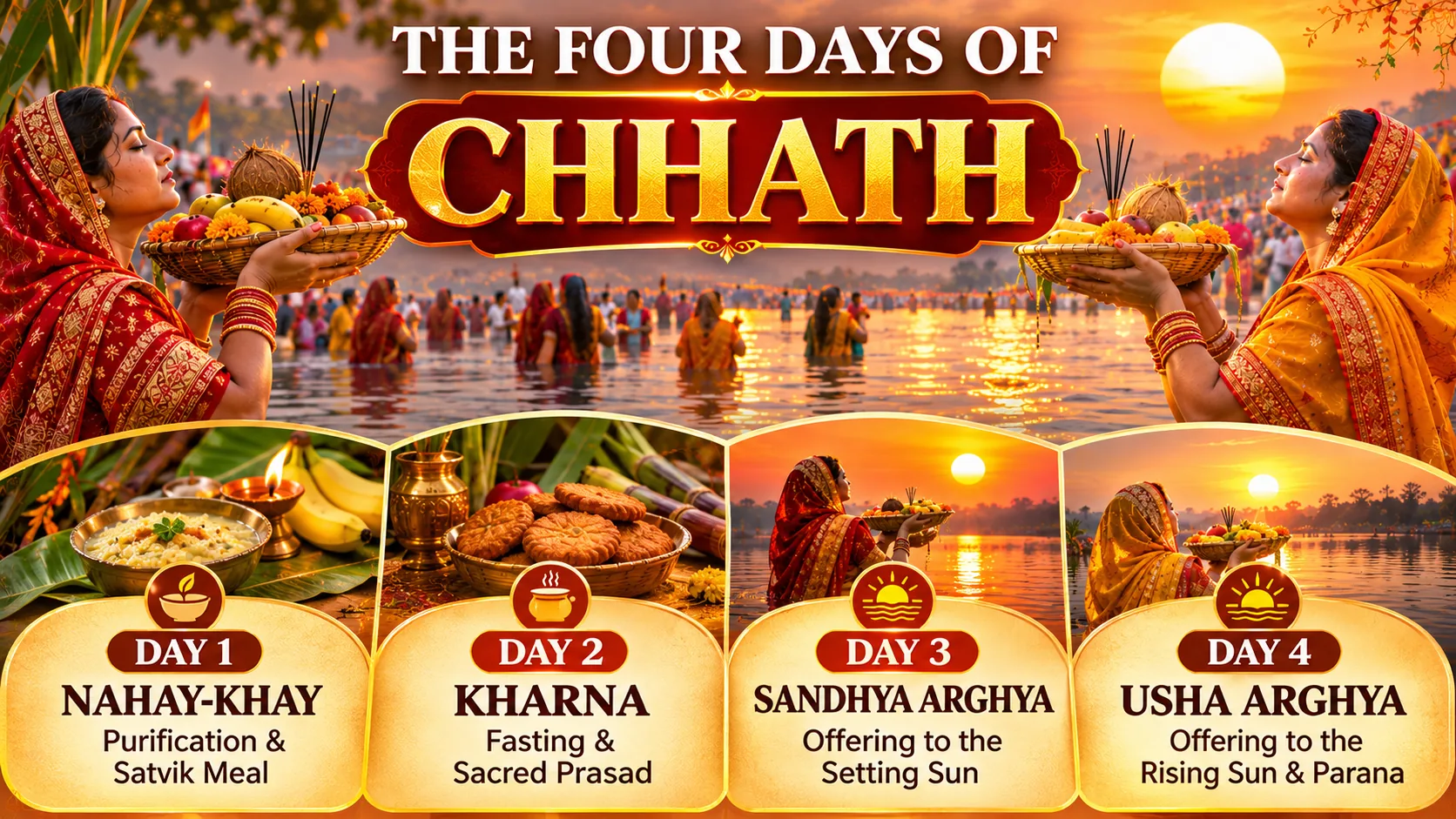
The festival follows four important stages: Nahay Khay, Kharna, Sandhya Arghya, and Usha Arghya. Devotees gradually prepare themselves through ritual bathing, food restrictions, fasting, and prayers before completing the festival with offerings to the setting and rising Sun.
Each ritual has its own meaning, and together they reflect gratitude towards nature, family devotion, spiritual discipline, and faith.
Here is what happens during each of the four days of Chhath Puja.
Day 1: Nahay Khay – How Does Chhath Puja Begin?
The first day of Chhath Puja is called Nahay Khay, which means bathing and eating. It marks the beginning of the festival and the preparation for the religious observances that follow.
On this day, devotees begin by taking a ritual bath, often in a river or another sacred water body. The Ganga holds particular importance for families who live near its banks.
After bathing, devotees clean their homes, kitchens, and cooking utensils. Maintaining cleanliness is especially important because the food prepared during Chhath is treated as sacred Prasad.
What Food Is Prepared on Nahay Khay?
A traditional vegetarian meal is prepared using carefully selected ingredients. Common preparations include:
- Arwa rice: Traditionally prepared rice without excessive processing.
- Chana dal: Bengal gram lentils.
- Kaddu ki Sabzi: A preparation made with pumpkin or bottle gourd, depending on family tradition.
- Other vegetarian dishes: Prepared according to regional and household customs.
The food is commonly prepared without onion and garlic.
The Vrati consumes the meal after offering it according to family customs. Other family members may also participate in the meal.
Why Is Nahay Khay Important?
Nahay Khay represents purification and preparation.
The ritual bath symbolizes cleanliness, while the simple vegetarian meal reflects restraint and devotion.
It is the first step in preparing the body and mind for the demanding fasting rituals of Chhath Puja.
Day 2: Kharna – Why Do Devotees Fast Before the Main Rituals?
The second day is known as Kharna, also called Lohanda-Kharna in some regions.
It is an important stage of Chhath Puja because devotees observe a day-long fast before beginning the traditional Nirjala Vrat.
What Happens During Kharna?
Devotees generally avoid food and water throughout the day. After sunset, they take a bath and prepare traditional offerings for the evening prayers.
The most commonly prepared Kharna Prasad includes:
- Rasiya or Gud Ki Kheer: Rice pudding prepared with jaggery and milk.
- Roti: Traditionally prepared without salt.
- Fruits: Included according to family traditions.
The food is first offered during prayers to Surya Dev and Chhathi Maiya. Afterward, the Prasad is distributed among family members, relatives, and neighbours.
Following the Kharna meal, devotees traditionally begin a rigorous fast without food or water, which continues until the morning rituals on the fourth day.
What Is the Significance of Kharna?
Kharna represents self-discipline, faith, and dedication.
The ritual also highlights the importance of sharing. Kharna Prasad is distributed among others, allowing the entire family and community to participate in the celebration.
For devotees observing the traditional fast, this day marks the beginning of the most demanding part of Chhath Puja.
Day 3: Sandhya Arghya – Why Do Devotees Worship the Setting Sun?
The third day is the main evening of Chhath Puja and is known as Sandhya Arghya.
It is the day when thousands of devotees gather at rivers, ponds, lakes, and specially prepared Chhath Ghats to offer prayers to the setting Sun.
The atmosphere becomes particularly devotional as families arrive carrying bamboo baskets filled with fruits, traditional sweets, sugarcane, coconuts, and other offerings.
Preparing the Chhath Prasad
Much of the day is spent preparing the traditional offerings.
Some of the most common items include:
- Thekua, prepared using wheat flour and jaggery.
- Bananas and seasonal fruits.
- Sugarcane.
- Coconuts.
- Rice laddoos and Kasar.
- Flowers and traditional पूजा materials.
These offerings are arranged in bamboo baskets known as Soop and Daura.
Thekua is especially associated with Chhath Puja and is prepared in many households as an essential part of the festival.
How Is Sandhya Arghya Offered?
Before sunset, devotees carry their offerings to the Chhath Ghat.
The Vrati enters the water, often standing waist-deep, and offers Arghya to Surya Dev as the Sun approaches the horizon.
Water is offered along with prayers, flowers, and traditional Prasad.
Family members gather around the devotees, while traditional Chhath Geet fill the surroundings with devotional music.
What Is Kosi Bharna?
In many families, another important ritual takes place on the night of Sandhya Arghya. It is called Kosi Bharna.
Sugarcane sticks are arranged to create a small structure or canopy. Earthen lamps, fruits, and other offerings are placed beneath or around it.
The ritual is associated with thanksgiving, family prosperity, and the fulfilment of religious vows.
Kosi Bharna is especially popular in certain regional traditions, although the exact practice differs between families.
Why Is the Setting Sun Worshipped?
One of the most distinctive aspects of Chhath Puja is the worship of the setting Sun.
While many solar worship traditions give particular attention to sunrise, Chhath Puja also honours the Sun as it sets.
This ritual expresses gratitude for the Sun's life-giving energy and acknowledges the importance of every phase of the natural cycle.
It also conveys a broader message of respect and humility: even as the day comes to an end, the Sun continues to deserve our gratitude.
Day 4: Usha Arghya – How Does Chhath Puja Come to an End?
The fourth and final day is known as Usha Arghya, also called Bihaniya Arghya.
After completing the evening offerings, devotees return to the Chhath Ghat before sunrise.
This is one of the most emotional moments of the festival, as families gather in the early morning darkness to welcome the first rays of the Sun.
How Is Usha Arghya Performed?
Devotees carry the remaining Prasad and traditional offerings to the riverbank.
They enter the water and wait for sunrise.
As the first rays appear, Arghya is offered to Surya Dev. Prayers are also offered to Chhathi Maiya for the health, happiness, and prosperity of children and family members.
The ritual marks the completion of the main worship associated with Chhath Puja.
What Is Paran?
After completing Usha Arghya and the morning prayers, devotees conclude their fast through a ritual known as Paran.
The traditional Nirjala Vrat is broken according to family customs, and Prasad is distributed among family members, neighbours, and other devotees.
Paran marks the end of the four-day observance.
Why Is the Rising Sun Worshipped?
The rising Sun represents new beginnings, hope, energy, and renewal.
By offering Arghya at sunrise, devotees express gratitude for another day of life and seek blessings for the future.
The morning offering also completes the cycle that began with the worship of the setting Sun on the previous evening.
Why Are the Four Days of Chhath Puja So Special?
Each day of Chhath Puja has a different purpose, but together they create a continuous journey of devotion.
The festival also reflects the close relationship between Hindu religious traditions, nature, and family life.
A Festival Connected with Nature
Chhath Puja places the Sun and natural water bodies at the centre of worship.
The Sun provides energy and warmth, while rivers and other water bodies sustain life.
The festival reminds devotees of the importance of these natural resources and encourages respect for the environment.
A Tradition That Brings Families Together
From preparing Thekua to arranging bamboo baskets and visiting the ghats, Chhath Puja involves participation from entire families.
People who live away from their hometowns often return to celebrate with their parents, grandparents, and relatives.
The festival therefore carries strong emotional and cultural significance, particularly among communities from Bihar and eastern Uttar Pradesh.
The Meaning Behind the Four Days
The four stages can also be understood as a progression:
- Nahay Khay begins with purification.
- Kharna develops discipline and devotion.
- Sandhya Arghya expresses gratitude.
- Usha Arghya completes the prayers with hope and renewal.
Together, these traditions preserve a cultural heritage that has been passed down through generations.
Frequently Asked Questions About Chhath Puja
1. What are the four days of Chhath Puja?
The four days are Nahay Khay, Kharna, Sandhya Arghya, and Usha Arghya. Each day has specific rituals, from ritual bathing and fasting to worshipping the setting and rising Sun.
2. What is Nahay Khay in Chhath Puja?
Nahay Khay is the first day of Chhath Puja. Devotees take a ritual bath, clean their homes, and prepare a traditional vegetarian meal.
3. What is eaten during Kharna?
Traditional Kharna Prasad commonly includes jaggery-based rice kheer, roti, and fruits. The Prasad is offered during evening prayers and distributed among family members.
4. How long do devotees fast during Chhath Puja?
The traditional Nirjala fast begins after Kharna Prasad and continues until the completion of Usha Arghya on the fourth morning. This is commonly described as an approximately 36-hour fast.
5. What is Sandhya Arghya?
Sandhya Arghya is the evening offering made to the setting Sun on the third day of Chhath Puja. Devotees gather at water bodies and offer prayers with traditional Prasad.
6. What is Usha Arghya?
Usha Arghya is the morning offering made to the rising Sun on the fourth day. It is the final major ritual of Chhath Puja.
7. What is Kosi Bharna?
Kosi Bharna is a regional Chhath ritual in which devotees arrange sugarcane sticks, earthen lamps, and traditional offerings. It is commonly performed on the night of Sandhya Arghya.
8. Why is Thekua important during Chhath Puja?
Thekua is a traditional sweet prepared using wheat flour and jaggery. It is one of the most recognizable Prasad items associated with Chhath Puja.
The Simple Answer
Chhath Puja is celebrated over four days, with each day representing an important stage of devotion.
Nahay Khay begins the festival with ritual bathing and preparation. Kharna introduces fasting and spiritual discipline. Sandhya Arghya brings devotees together to worship the setting Sun, while Usha Arghya welcomes the rising Sun and completes the festival.
These four days bring together faith, family traditions, respect for nature, and devotion to Surya Dev and Chhathi Maiya.
For millions of people, Chhath Puja is more than a religious celebration. It is a tradition that connects generations, brings families home, and reminds devotees to remain grateful for the blessings of nature and life.
Pilgrim Resources
Enhance Your Pilgrimage Experience
Mobile App
Download AppRead Kumbh Guides on Mobile
Download Divya Kripa to read all official guides offline, receive real-time snan alerts, and access GPS-enabled navigation on the ground.
AI Assistant
Try AI PlannerPersonalized Planner & Guide
Access your Kumbh Planner AI Assistant to receive tailored ritual advice, customized itineraries, and instant answers to spiritual questions.
More Stories Spirituality
 Ritual
 Spirituality
Related Articles
Chhath Puja in Hindu Mythology: The Stories of Surya Dev, Chhathi Maiya and Ancient Traditions
Nov 15, 2026Why Do We Worship the Setting and Rising Sun During Chhath Puja?
Nov 14, 2026Who Is Chhathi Maiya? Her Story, Identity and Significance in Hindu Mythology
Nov 13, 2026Loading discussion & reviews...