All Blog Posts
SpiritualityCultureFestival
Chhath Puja in Hindu Mythology: The Stories of Surya Dev, Chhathi Maiya and Ancient Traditions
K
Kumbh AdminNovember 15, 202610 min readChhath Puja has deep connections with Hindu mythology and ancient traditions of Sun worship. From Karna's devotion to Surya Dev and the story of Draupadi to the legends of Chhathi Maiya, explore the religious stories and beliefs associated with this sacred festival.
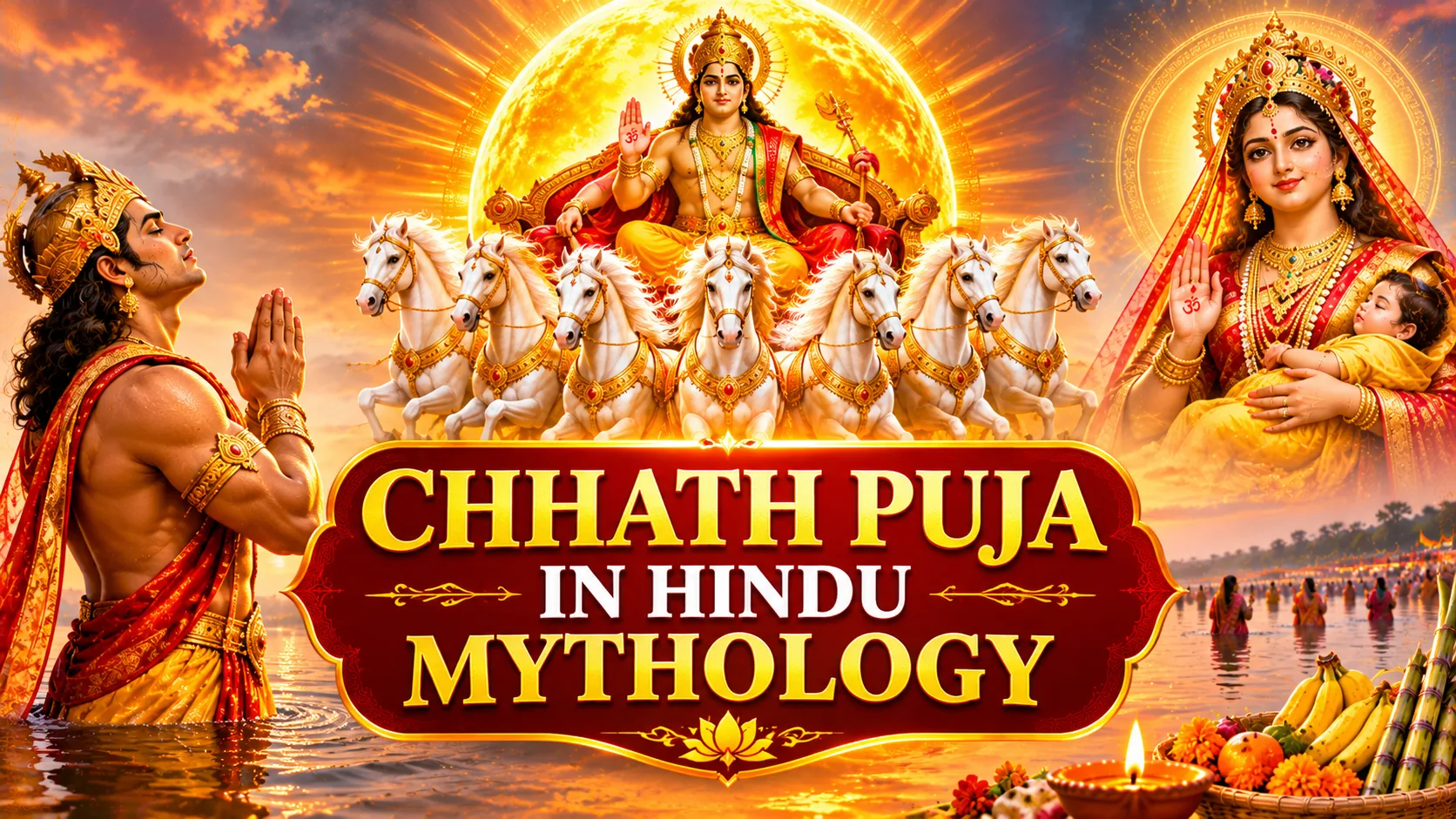
Chhath Puja is deeply connected with Hindu mythology, particularly the worship of Surya Dev, the Sun God, and Chhathi Maiya, the mother goddess associated with the protection of children and family welfare.
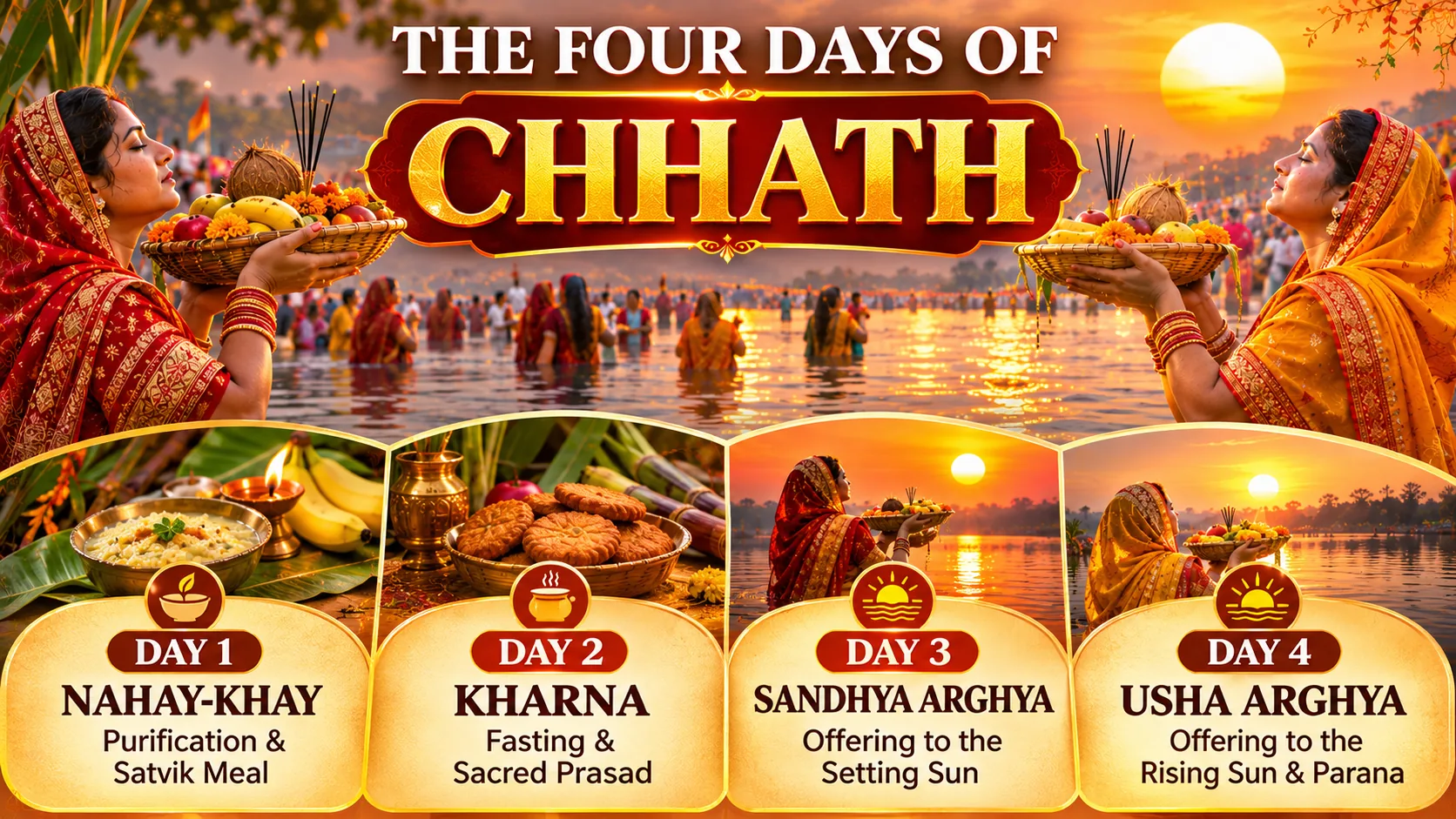
The festival is especially important in Bihar, Jharkhand, eastern Uttar Pradesh, and Nepal. Every year, devotees observe four days of rituals, fasting, and prayers, offering Arghya to both the setting and rising Sun.
But the traditions of Chhath Puja are connected with stories that go much further back than the present-day festival. Hindu epics and Puranic traditions describe the importance of Sun worship, the devotion of Karna, the prayers of Draupadi, and the divine powers of Goddess Shashthi.
These stories help explain why the Sun holds such an important place in Hindu religious life and why Chhath Puja has become one of the most distinctive festivals of eastern India.
There is no single universally accepted mythological account explaining the complete origin of the modern four-day Chhath festival. Instead, several religious narratives and regional traditions have contributed to the way devotees understand and celebrate it today.
1. Surya Dev in Ancient Hindu Scriptures: Why Is the Sun Worshipped?
To understand the mythological significance of Chhath Puja, it is important to understand the position of Surya Dev in Hindu religious traditions.
Surya Dev is regarded as the divine representation of the Sun and is associated with light, energy, health, knowledge, and life.
In ancient Hindu traditions, the Sun was not viewed merely as a celestial object. It was worshipped as a visible manifestation of divine energy that sustains the natural world.
References to Sun Worship in the Rigveda
The Rigveda, one of the oldest surviving collections of Vedic hymns, contains several prayers dedicated to solar deities.
Surya, Savitr, and other solar-associated divine figures are praised for their connection with light, movement, vitality, and the cosmic order.
One well-known Vedic prayer is the Gayatri Mantra, which invokes Savitr, a solar deity, and seeks illumination of the human intellect.
The Rigveda also contains hymns dedicated to Ushas, the goddess of dawn, who represents the arrival of morning light and the beginning of a new day.
These ancient traditions provide an important religious background for understanding the worship of the Sun during Chhath Puja.
Why Is Surya Dev Considered the Source of Life?
In Hindu religious understanding, Surya Dev represents the energy that makes life possible.
The Sun is associated with:
- Health and vitality: Prayers to Surya Dev traditionally seek strength, well-being, and freedom from illness.
- Knowledge and wisdom: Sunlight is associated with illumination, awareness, and the removal of darkness.
- Agriculture and prosperity: The Sun plays an essential role in the growth of crops and the natural cycle of seasons.
- Time and cosmic order: The movement of the Sun helps define days, seasons, and important religious calendars.
During Chhath Puja, devotees express gratitude for these blessings by offering Arghya to Surya Dev.
2. Karna in the Mahabharata: The Son of Surya Dev and His Devotion to the Sun
One of the most widely discussed mythological connections with Chhath Puja comes from the Mahabharata.
Karna, one of the most important characters in the epic, was the son of Surya Dev and Kunti.
Before her marriage, Kunti received a divine mantra from Sage Durvasa that allowed her to invoke a deity. Out of curiosity, she invoked Surya Dev and was blessed with a son, Karna.
Karna was born wearing divine armour, known as Kavacha, and earrings, known as Kundala. These divine protections made him an extraordinary warrior.
Karna's Worship of Surya Dev
Karna is traditionally remembered as a devoted worshipper of his divine father, Surya Dev.
According to popular accounts associated with the Mahabharata, he offered prayers to the Sun and performed religious observances while standing in water.
He is also remembered for his generosity and willingness to give away his possessions to those who approached him.
His devotion to Surya Dev and the tradition of offering prayers to the Sun are often connected with the religious meaning of Chhath Puja.
What Does Karna's Story Teach Us?
Karna's story highlights several values associated with Sun worship:
- Devotion towards the divine.
- Discipline and dedication.
- Generosity towards others.
- Respect for one's duties and responsibilities.
Although Karna's worship of Surya Dev is described in the Mahabharata tradition, the epic does not establish that he performed the complete modern four-day Chhath observance. His story is better understood as an important mythological association with the festival's central deity.
3. Draupadi and the Pandavas: The Story of Sun Worship During Exile
Another popular story associated with Chhath Puja involves Draupadi and the five Pandavas.
According to a traditional account, the Pandavas faced severe difficulties during their exile after losing their kingdom in a game of dice.
During this period, sages and visitors would sometimes arrive at their forest dwelling. Draupadi was concerned about how she could provide food and hospitality to everyone with limited resources.
The Advice of Sage Dhaumya
In a popular Chhath-related retelling, Draupadi approached Sage Dhaumya for guidance.
The sage advised her to worship Surya Dev and seek his blessings.
Draupadi followed the advice with devotion and prayed for the welfare of her family and the ability to fulfil her responsibilities.
The broader Mahabharata tradition also describes Yudhishthira receiving the Akshaya Patra, a divine vessel associated with the Sun, which provided food to the Pandavas and their guests.
Why Is This Story Connected with Chhath Puja?
The story represents the belief that Surya Dev blesses devotees with nourishment, prosperity, and the strength to overcome difficulties.
It also reflects the importance of faith during challenging periods.
Draupadi's devotion is frequently associated with Chhath Puja in regional religious storytelling, although the specific four-day Chhath rituals should not be treated as an independently established episode of the Mahabharata.
4. Lord Rama and Goddess Sita: A Popular Tradition of Sun Worship After Returning to Ayodhya
Another popular religious account connects Chhath Puja with Lord Rama and Goddess Sita.
According to this tradition, after returning to Ayodhya following their victory over Ravana, Lord Rama and Goddess Sita performed religious observances dedicated to Surya Dev.
Some regional retellings associate these prayers with the sixth day of the bright fortnight of Kartik.
The observance is understood as an expression of gratitude to the Sun God and a way of seeking divine blessings for the kingdom and family.
Why Is This Story Important?
Lord Rama and Goddess Sita occupy a central place in Hindu religious life.
Their association with Sun worship connects Chhath Puja with the broader tradition of expressing gratitude to divine powers after an important event.
However, the account of Rama and Sita performing the modern Chhath Vrat is primarily a popular religious tradition. It should not be presented as a clearly documented description of the four-day festival in the original Ramayana.
5. Chhathi Maiya and Goddess Shashthi: The Divine Protector of Children
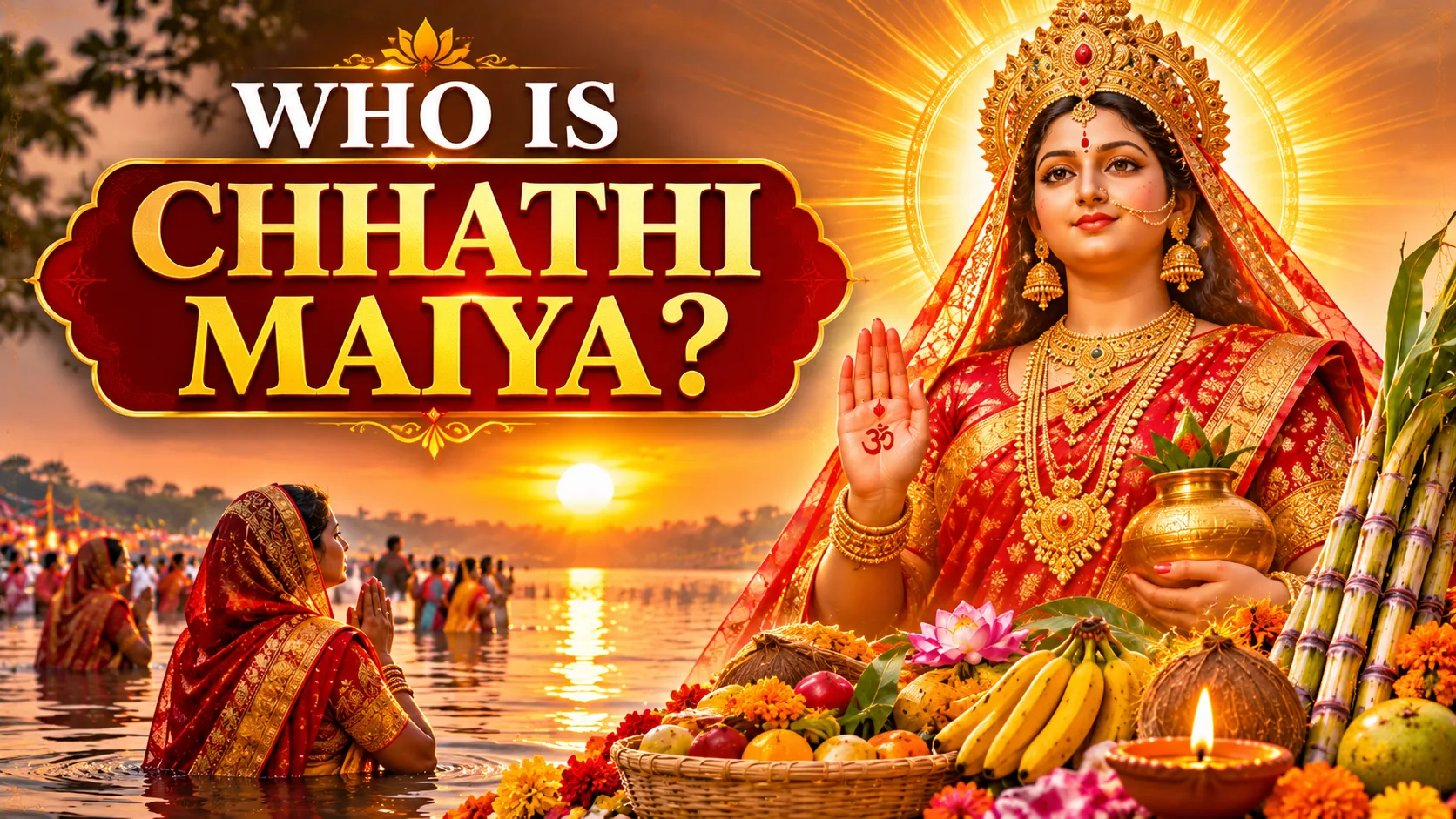
While Surya Dev is the principal deity receiving Arghya during Chhath Puja, Chhathi Maiya has a particularly important place in the devotion of families.
She is widely associated with Goddess Shashthi, a divine figure traditionally worshipped for the protection of children, childbirth, fertility, and motherhood.
In regional traditions, especially in Bihar and eastern Uttar Pradesh, Chhathi Maiya is also popularly regarded as the sister of Surya Dev.
What Does the Brahmavaivarta Purana Say About Shashthi Devi?
The Brahmavaivarta Purana contains descriptions of Shashthi Devi and her divine identity.
She is associated with Devasena, the wife of Lord Kartikeya, and is described in Puranic traditions as a manifestation of the divine feminine power of Prakriti.
Her worship is connected with the protection and welfare of children.
The Story of King Priyavrat and Queen Malini
A well-known story associated with Shashthi Devi appears in the Devi Bhagavata Purana.
King Priyavrat and Queen Malini were unable to have a child for a long time.
Following religious observances and a Putrakameshti Yajna performed by Sage Kashyapa, Queen Malini eventually gave birth to a son. However, the child was born lifeless.
The royal couple was devastated.
At that moment, a divine goddess appeared and identified herself as Shashthi Devi, also known as Devasena.
According to the traditional narrative, she restored the child's life and blessed the royal family.
King Priyavrat expressed his gratitude and began worshipping the goddess.
The story explains why Shashthi Devi became associated with childbirth, children's protection, and family prosperity.
Why Is Chhathi Maiya Worshipped During Chhath?
Devotees worship Chhathi Maiya to seek blessings for:
- The health and long life of children.
- Protection of newborn babies.
- Safe motherhood and childbirth.
- Happiness and prosperity within families.
- Peace and well-being in the household.
Her worship gives Chhath Puja an important maternal and family-oriented dimension alongside its central tradition of Sun worship.
6. Usha and Pratyusha: The Divine Connection with Sunrise and Sunset
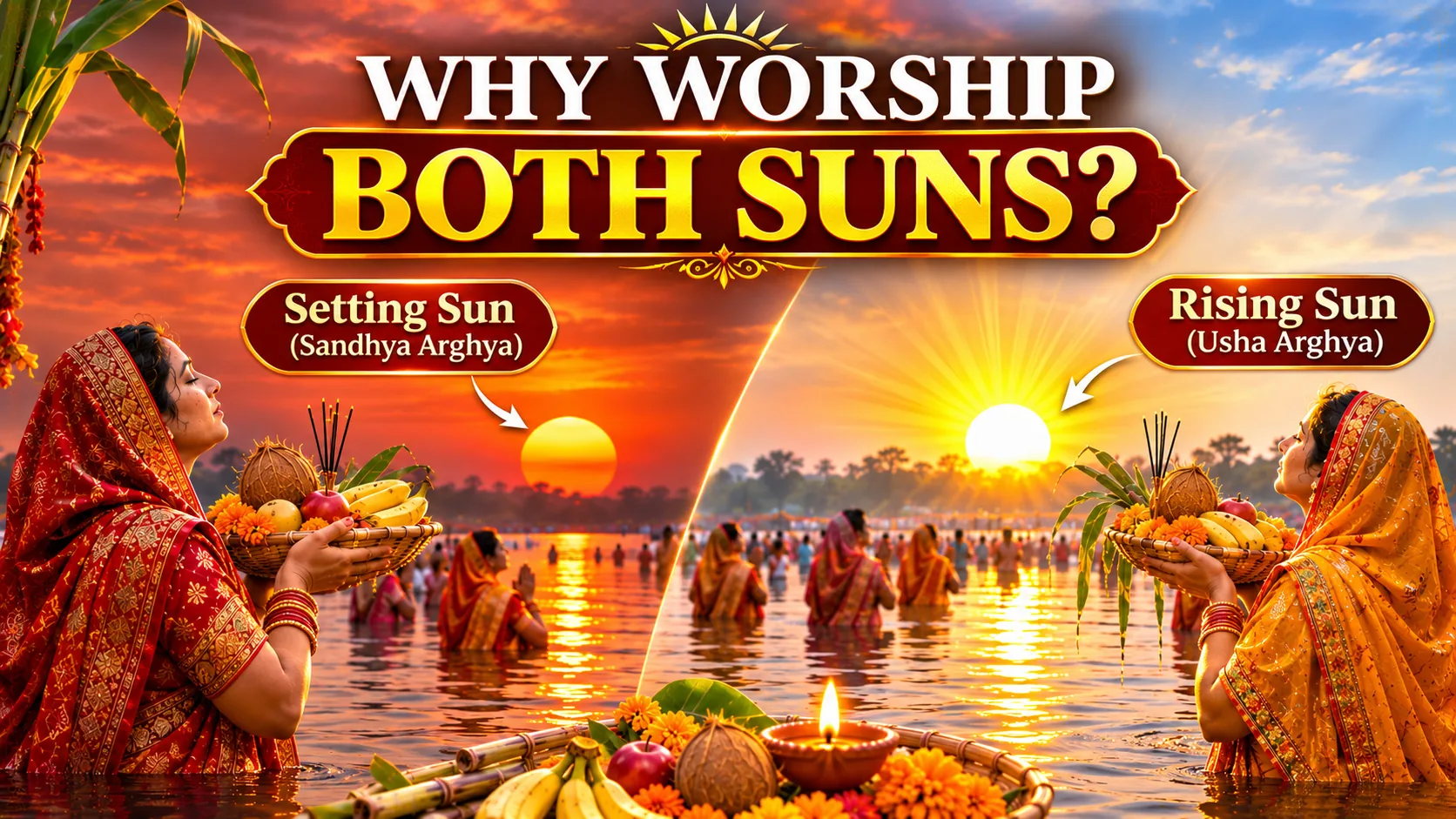
One of the most distinctive aspects of Chhath Puja is that devotees worship both the setting and rising Sun.
This tradition is often explained through the solar-associated divine figures Usha and Pratyusha.
Who Is Goddess Usha?
Usha is the Vedic goddess of dawn.
She represents the arrival of morning, the disappearance of darkness, and the beginning of a new day.
The Rigveda contains several hymns dedicated to Usha, describing her beauty, brightness, and role in awakening the world.
Her association with dawn makes her particularly relevant to the morning worship performed during Chhath Puja.
Who Is Pratyusha?
Pratyusha is associated with the light of the evening or the setting Sun in some religious explanations of Chhath Puja.
Together, Usha and Pratyusha are used to explain the symbolic importance of the two daily transitions that receive worship during the festival.
These associations are not identical across every Hindu text or regional tradition, but they provide a meaningful religious interpretation of Sandhya Arghya and Usha Arghya.
Why Are Both Phases of the Sun Worshipped?
The setting Sun represents the completion of a day, while the rising Sun represents a new beginning.
By worshipping both, devotees express gratitude for the blessings they have received and hope for the days ahead.
The tradition also teaches that every phase of life deserves respect and appreciation.
7. What Is the Connection Between Ancient Sun Worship and Modern Chhath Puja?
Chhath Puja brings together several elements of Hindu religious tradition: Vedic solar worship, Puranic stories of divine protection, epic narratives, and regional devotional practices.
Its present form has developed through generations of religious observance and cultural transmission.
The festival is particularly associated with Bihar, Jharkhand, eastern Uttar Pradesh, and Nepal's Terai region.
Ancient Religious Ideas in a Living Festival
Some of the important connections include:
| Ancient tradition or story | Connection with Chhath Puja |
|---|---|
| Rigvedic hymns to Surya and Savitr | Worship of the Sun as a source of life and energy |
| Vedic hymns to Usha | Religious significance of sunrise |
| Karna in the Mahabharata | Devotion to Surya Dev |
| Draupadi and the Pandavas | Popular stories of Sun worship during hardship |
| Rama and Sita | Regional traditions of Sun worship |
| Shashthi Devi in Puranic literature | Protection of children and motherhood |
These connections should be understood as different layers of religious and cultural tradition, not as evidence that every element of today's Chhath Puja appears together in one ancient scripture.
Why Does Chhath Puja Remain Important Today?
Chhath Puja continues to be important because it connects religious devotion with everyday life.
The festival involves:
- Respect for natural resources, especially sunlight and water.
- Traditional fasting and self-discipline.
- Prayers for children's health and family welfare.
- Community participation and shared responsibility.
- Preservation of regional songs, food, and cultural traditions.
In many towns and villages, entire communities work together to clean riverbanks, prepare ghats, arrange offerings, and welcome devotees.
This collective participation has helped Chhath Puja remain a strong part of the cultural identity of eastern India.
Pilgrim Resources
Enhance Your Pilgrimage Experience
Mobile App
Download AppRead Kumbh Guides on Mobile
Download Divya Kripa to read all official guides offline, receive real-time snan alerts, and access GPS-enabled navigation on the ground.
AI Assistant
Try AI PlannerPersonalized Planner & Guide
Access your Kumbh Planner AI Assistant to receive tailored ritual advice, customized itineraries, and instant answers to spiritual questions.
More Stories
Related Articles
Loading discussion & reviews...