All Blog Posts
SpiritualityCultureRitual
Govardhan Puja: History, Significance, Story, Rituals and Celebrations
K
Kumbh AdminNovember 9, 20269 min readGovardhan Puja celebrates Lord Krishna's divine act of lifting Govardhan Hill to protect the people of Vrindavan from torrential rain sent by Lord Indra. Discover the mythology, traditions, Annakut offerings and spiritual significance of this beautiful Hindu festival.
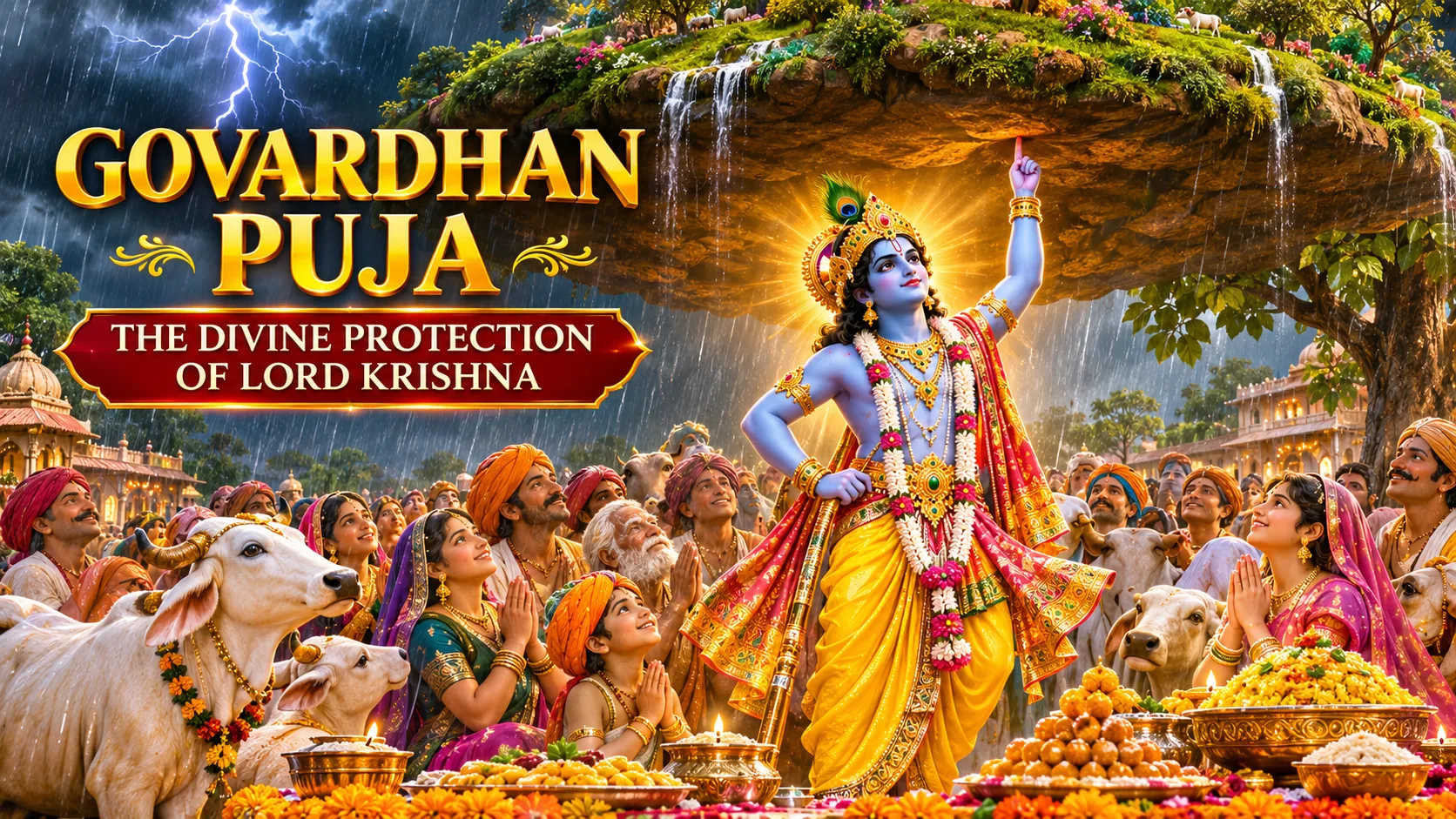
Govardhan Puja is one of the most spiritually significant festivals in Hinduism, celebrated with devotion and enthusiasm on the day following Diwali. Dedicated to Lord Krishna, this festival commemorates the divine event in which Krishna lifted the mighty Govardhan Hill on his little finger to protect the residents of Vrindavan from devastating rainfall sent by Lord Indra.
Also known as Annakut Puja, Govardhan Puja is a celebration of devotion, gratitude, abundance and the importance of nature in human life. Devotees prepare elaborate food offerings, worship Govardhan Hill, decorate temples and participate in religious ceremonies to express their gratitude to Lord Krishna.
Beyond its mythological significance, the festival carries an important message: nature provides everything necessary for life, and human beings should respect, protect and remain grateful for its blessings.
What Is Govardhan Puja and Why Is It Celebrated?
Govardhan Puja is a traditional Hindu festival primarily associated with Lord Krishna and the sacred Govardhan Hill located near Vrindavan in Uttar Pradesh.
The festival celebrates the protection of the people of Braj by Lord Krishna, who challenged the excessive pride of Lord Indra and demonstrated that nature, rather than the fear of powerful deities, deserves gratitude and reverence.
According to Hindu tradition, the residents of Vrindavan originally performed elaborate rituals to worship Lord Indra, believing that he controlled rainfall and agricultural prosperity. However, Krishna encouraged them to worship Govardhan Hill instead because it provided grass for cattle, vegetation, water and resources essential for their livelihood.
Following Krishna's advice, the people of Vrindavan offered food and prayers to Govardhan Hill. Angered by this change, Indra unleashed heavy rainfall and thunderstorms upon the village. To protect everyone, Krishna lifted Govardhan Hill and provided shelter to the villagers and their cattle.
This divine event became the foundation of Govardhan Puja, which is celebrated annually to remember Krishna's compassion and the importance of living in harmony with nature.
The Story of Lord Krishna Lifting Govardhan Hill
The story of Govardhan Hill is one of the most beloved episodes in the life of Lord Krishna and is described in Hindu scriptures, particularly the Bhagavata Purana.
According to the traditional account, Krishna spent his childhood in Gokul and Vrindavan, where the people depended heavily on cattle rearing, agriculture and the natural resources surrounding them.
The residents regularly organized a grand yajna and offered prayers to Lord Indra for timely rainfall and prosperous harvests.
One day, young Krishna questioned the necessity of performing these rituals. He explained that the people received their livelihood from Govardhan Hill, which provided fresh grass for cattle, fertile land, water and other natural resources.
He suggested that instead of worshipping Indra out of fear, they should express gratitude to Govardhan Hill and the natural environment that sustained their lives.
The villagers accepted Krishna's suggestion and organized a grand celebration in honour of Govardhan Hill. They prepared delicious dishes, offered food to the hill and celebrated with devotion.
However, Lord Indra became furious after learning that the people of Vrindavan had stopped worshipping him. In his anger, he ordered the clouds to release torrential rain upon the village.
For seven continuous days, heavy rainfall threatened to destroy the homes, cattle and lives of the villagers.
Seeing their suffering, Lord Krishna lifted the entire Govardhan Hill on his little finger, creating a gigantic natural shelter beneath which the people and their cattle could take refuge.
Krishna remained in this position for seven days while the villagers stayed safely beneath the hill. Eventually, Indra realized Krishna's divine power and understood his mistake. He stopped the rainfall and sought forgiveness.
The incident established Krishna's divine protection of his devotees and demonstrated that arrogance and excessive pride have no place before the supreme power.
Govardhan Puja Rituals and Annakut Tradition
Govardhan Puja is celebrated through several religious customs, with Annakut being one of its most important traditions.
1. Preparing Govardhan Hill
In many households, devotees create a symbolic representation of Govardhan Hill using cow dung. It is decorated with flowers, leaves, miniature figures and other traditional materials.
Devotees offer prayers to this representation as a symbol of the sacred hill that protected the people of Vrindavan.
2. Annakut – The Mountain of Food Offerings
Annakut literally means a mountain of food. On this occasion, devotees prepare a large variety of vegetarian dishes and arrange them as offerings before Lord Krishna.
These offerings may include sweets, fruits, vegetables, rice preparations, chapatis, traditional delicacies and other regional dishes.
The tradition represents abundance, gratitude and the belief that all food and nourishment are blessings of the divine.
3. Govardhan Parikrama
One of the most significant traditions associated with the festival is Govardhan Parikrama.
Devotees visit Govardhan Hill in Uttar Pradesh and circumambulate the sacred hill as an expression of devotion to Lord Krishna.
The traditional parikrama route is approximately 21 kilometres long and passes several sacred places, including:
- Daan Ghati
- Kusum Sarovar
- Radha Kund
- Shyam Kund
- Mansi Ganga
Pilgrims undertake the journey throughout the year, while the occasion of Govardhan Puja attracts particularly large numbers of devotees.
4. Worship of Cows
Cows hold a special place in Krishna's life and Hindu traditions. Govardhan Puja is also associated with the worship and honouring of cattle.
In many regions, cows and bulls are bathed, decorated with colourful ornaments, adorned with flowers and offered special food.
This tradition reflects the importance of cattle in traditional agriculture and rural livelihoods.
5. Temple Celebrations
Temples dedicated to Lord Krishna organize special prayers, devotional singing and elaborate Annakut offerings.
The celebrations are particularly grand in Vrindavan, Mathura, Nathdwara and other important Krishna pilgrimage destinations.
Why Is Govardhan Puja Also Known as Annakut?
Annakut is one of the most important aspects of Govardhan Puja.
The word is derived from two Sanskrit terms: Anna, meaning food or grain, and Kuta, meaning mountain or heap.
Together, Annakut represents a mountain of food offered to Lord Krishna.
According to the traditional belief, after Krishna protected the people of Vrindavan from Indra's rainfall, the residents prepared an enormous variety of food as an expression of gratitude.
This tradition continues today in Krishna temples across India.
In many temples, hundreds of food preparations are arranged in elaborate displays before the deity. After the religious ceremony, the offerings are distributed among devotees as prasad.
The Annakut celebration reminds people that food is sacred and that gratitude should always accompany abundance.
Spiritual Significance and Message of Govardhan Puja
Govardhan Puja is more than a celebration of a mythological event. It carries several important spiritual and cultural messages.
Respect for Nature: Govardhan Hill symbolizes the natural environment that provides food, water, shelter and resources. The festival encourages people to respect and protect nature.
Humility Before Divine Power: Lord Indra's pride and subsequent realization demonstrate that arrogance can lead to mistakes. True greatness is associated with humility and wisdom.
Faith and Protection: Krishna's act of lifting Govardhan Hill represents his unconditional protection of those who surrender themselves to him with genuine devotion.
Gratitude for Food: Annakut reminds people to value food and acknowledge the natural and divine blessings behind every meal.
Community and Togetherness: The festival brings families, communities and devotees together through prayers, food offerings, celebrations and charitable activities.
Govardhan Puja therefore connects mythology with everyday life, teaching people to appreciate the natural world and live with humility, compassion and gratitude.
Where Is Govardhan Puja Celebrated in India?
Govardhan Puja is celebrated across India, but certain destinations are particularly important because of their connection with Lord Krishna and the Govardhan Hill tradition.
1. Govardhan, Mathura, Uttar Pradesh
Govardhan is the most significant pilgrimage destination associated with this festival. Thousands of devotees visit the sacred hill to perform parikrama and offer prayers.
2. Vrindavan, Uttar Pradesh
Vrindavan is known for its magnificent Krishna temples and grand Annakut celebrations. Temples such as Banke Bihari Temple and ISKCON Vrindavan organize special religious ceremonies.
3. Mathura, Uttar Pradesh
As the birthplace of Lord Krishna, Mathura celebrates Govardhan Puja with devotional programmes, temple rituals and traditional festivities.
4. Nathdwara, Rajasthan
Shrinathji Temple in Nathdwara is especially famous for its elaborate Annakut celebrations. Thousands of food preparations are offered to Lord Shrinathji, a form of Lord Krishna.
5. Other Parts of India
The festival is also celebrated in Gujarat, Maharashtra, Madhya Pradesh, Rajasthan and many other regions. Customs and food offerings vary according to local traditions.
Frequently Asked Questions About Govardhan Puja
1. When is Govardhan Puja celebrated?
Govardhan Puja is traditionally celebrated on the Pratipada Tithi of the Shukla Paksha in the Hindu month of Kartik, generally the day after Diwali.
2. Why did Lord Krishna lift Govardhan Hill?
Lord Krishna lifted Govardhan Hill to protect the residents of Vrindavan and their cattle from the torrential rainfall unleashed by Lord Indra.
3. What is Annakut during Govardhan Puja?
Annakut is a traditional food offering in which devotees prepare and arrange numerous vegetarian dishes before Lord Krishna as an expression of gratitude and devotion.
4. How many days did Lord Krishna hold Govardhan Hill?
According to the traditional account, Lord Krishna held Govardhan Hill on his little finger for seven days and nights.
5. What is the significance of Govardhan Parikrama?
Govardhan Parikrama is the religious practice of circumambulating the sacred Govardhan Hill. The traditional route is approximately 21 kilometres long and is undertaken by devotees as an act of devotion to Lord Krishna.
6. Is Govardhan Puja the same as Annakut?
The two traditions are closely connected. Govardhan Puja commemorates Krishna's protection of Vrindavan, while Annakut refers to the elaborate food offerings made to Lord Krishna during the celebration.
7. Why are cows worshipped during Govardhan Puja?
Cows are closely associated with Lord Krishna, who is also known as Gopal and Govinda. Their worship reflects their spiritual importance and their contribution to traditional rural life.
Conclusion
Govardhan Puja is a beautiful celebration of Lord Krishna's divine compassion, the importance of nature and the value of gratitude. The story of Govardhan Hill reminds devotees that true strength lies not in pride or power but in protecting others and respecting the natural world.
Through Annakut offerings, Govardhan Parikrama, cow worship and temple celebrations, the festival continues to preserve India's rich spiritual and cultural traditions.
The timeless message of Govardhan Puja remains relevant even today: respect nature, value food, remain humble and always be grateful for the blessings that sustain life.
Pilgrim Resources
Enhance Your Pilgrimage Experience
Mobile App
Download AppRead Kumbh Guides on Mobile
Download Divya Kripa to read all official guides offline, receive real-time snan alerts, and access GPS-enabled navigation on the ground.
AI Assistant
Try AI PlannerPersonalized Planner & Guide
Access your Kumbh Planner AI Assistant to receive tailored ritual advice, customized itineraries, and instant answers to spiritual questions.
More Stories
Related Articles

Loading discussion & reviews...