All Blog Posts
CultureAwarenessHistory
Why Is There a Mela Every Year in Prayagraj but Not at Other Kumbh Locations?
K
Kumbh AdminOctober 6, 20266 min readWhy does Prayagraj host a religious mela every year while Kumbh Mela rotates between four sacred locations? Discover the difference between Magh Mela and Kumbh Mela, the importance of Triveni Sangam, and the traditions that make Prayagraj a year-round pilgrimage destination.
Why Does Prayagraj Have a Mela Every Year?
Prayagraj is famous for its grand Kumbh Mela, but there is something many people do not realise: a major religious fair takes place here every year, even when it is not a Kumbh year.
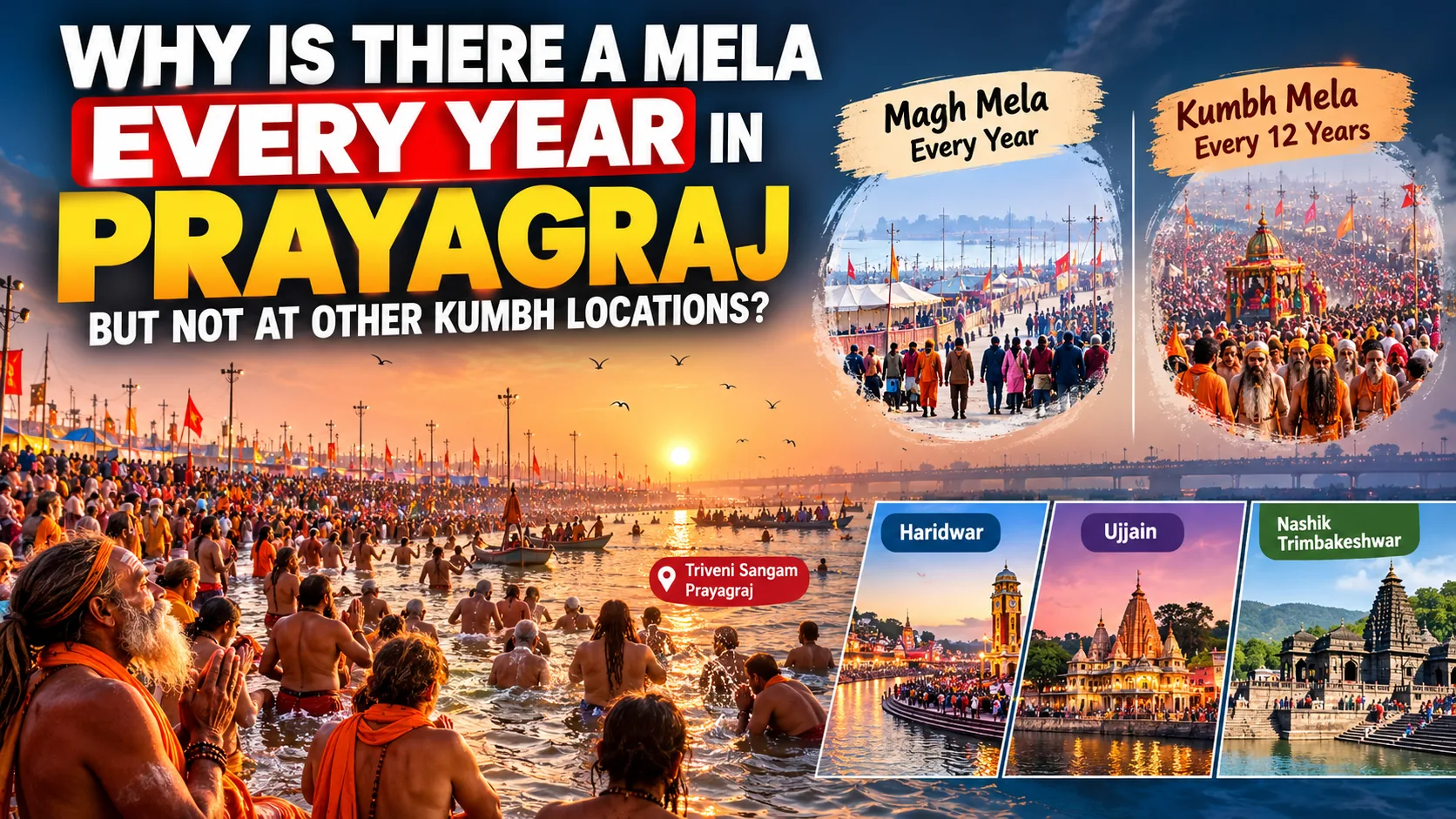
This annual gathering is called Magh Mela.
Every year, during the Hindu month of Magh, pilgrims gather at Triveni Sangam to take sacred dips, offer prayers, perform rituals, and participate in spiritual activities.
But why does Prayagraj have this annual tradition when Kumbh Mela takes place at four different locations?
The answer lies in the difference between the annual Magh Mela and the periodic Kumbh Mela.
1. Magh Mela Is an Annual Tradition
Magh Mela is held every year around January and February, corresponding to the Hindu month of Magh.
During this period, pilgrims arrive at Triveni Sangam, the sacred confluence of the Ganga, Yamuna, and the traditionally believed invisible Saraswati.
The annual gathering includes:
- Sacred bathing on auspicious dates.
- Prayer, meditation, and religious ceremonies.
- Kalpavas, a traditional period of spiritual discipline and simple living.
- Discourses and gatherings involving saints and religious teachers.
The scale varies from year to year, but the tradition continues annually.
According to the Prayagraj district administration, Magh Mela is held every year, and in the traditional cycle, the gathering becomes the larger Kumbh Mela in the appropriate year.
2. Triveni Sangam Gives Prayagraj a Distinct Identity
Prayagraj's religious importance is closely connected to Triveni Sangam.
In Hindu tradition, the meeting of rivers is considered spiritually significant. Triveni Sangam holds a particularly important place because it is associated with the Ganga, Yamuna, and the invisible Saraswati.
This sacred geography supports pilgrimage throughout the year, not only during Kumbh Mela.
Devotees visit Sangam for ritual bathing, religious observances, and remembrance ceremonies on various auspicious occasions.
The annual Magh Mela builds on this long-standing pilgrimage tradition. People do not need to wait for a Kumbh year to visit Sangam or participate in its religious practices.
3. Magh Mela and Kumbh Mela Are Not the Same
This is the most important distinction to understand.
Although both gatherings are associated with sacred bathing and pilgrimage at Prayagraj, they follow different schedules and have different scales.
| Feature | Magh Mela | Kumbh Mela |
|---|---|---|
| Frequency at Prayagraj | Every year | Traditionally around every 12 years for the full Kumbh cycle |
| Timing | Hindu month of Magh, usually January–February | Determined by traditional astrological considerations |
| Main location | Triveni Sangam | Triveni Sangam |
| Main activities | Sacred bathing, prayers, Kalpavas, religious gatherings | Sacred bathing, major akhada processions, and large-scale religious gatherings |
| Scale | Varies annually | Generally much larger in a Kumbh year |
The annual Magh Mela keeps Prayagraj's seasonal pilgrimage tradition active. Kumbh Mela is a distinct, periodically occurring gathering associated with specific traditional planetary alignments.
An annual mela in Prayagraj does not mean that Kumbh Mela itself happens every year.
4. Why Doesn't the Same Annual Kumbh Tradition Exist at Every Location?
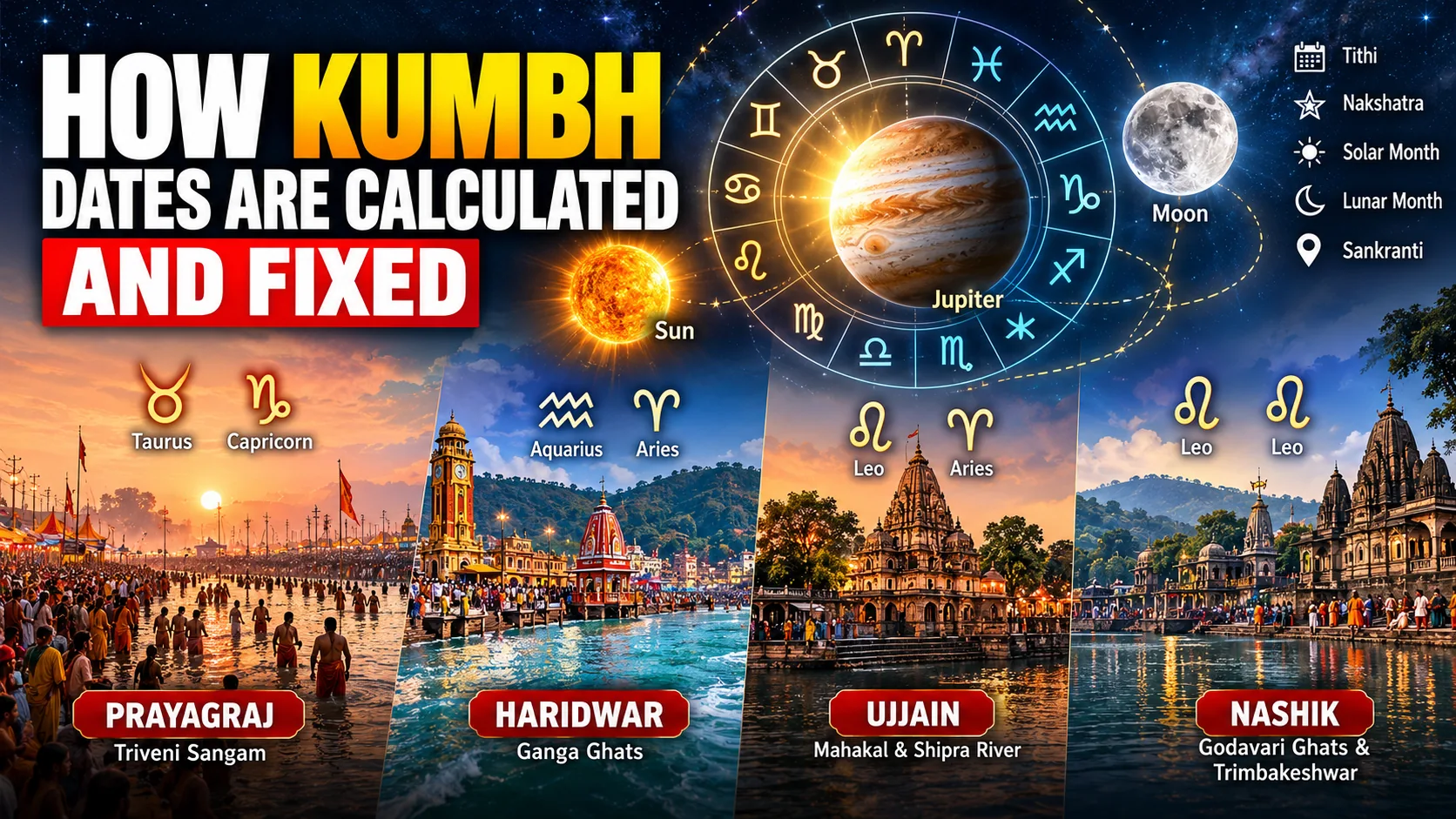
The four traditional Kumbh locations are Prayagraj, Haridwar, Ujjain, and Nashik–Trimbakeshwar.
Each has its own sacred geography, pilgrimage traditions, religious calendar, and schedule for major Kumbh gatherings.
Kumbh Mela does not rotate simply because one city has a river and another does not. Its traditional timing is connected with religious beliefs and specific astrological alignments associated with each location.
Prayagraj has a particularly well-established annual Magh Mela tradition. That does not mean other locations lack annual religious festivals, temple events, or pilgrimages. Rather, they do not all follow Prayagraj's same annual Magh Mela format.
For example:
- Haridwar: Hosts regular pilgrimages to the Ganga and has its own Kumbh and Ardh Kumbh cycles.
- Ujjain: Has year-round religious activity centred on Mahakaleshwar Temple and the Shipra River.
- Nashik–Trimbakeshwar: Has important temple and river pilgrimage traditions, alongside its Simhastha Kumbh cycle.
- Prayagraj: Combines year-round pilgrimage to Sangam with the annual Magh Mela and periodic Kumbh gatherings.
The difference is in the specific traditions and calendars, not in whether these cities are religiously important throughout the year.
5. Why Is Magh Mela Held During Winter?
The timing of Magh Mela follows the traditional Hindu calendar.
The month of Magh generally falls during January and February. Several auspicious bathing occasions occur during this period, drawing pilgrims to Sangam.
For Kalpvasis, the gathering can involve staying near the river for an extended period, following a disciplined routine of prayer, bathing, and spiritual reflection.
Temporary settlements and public facilities are arranged to support the seasonal gathering.
The winter timing, religious calendar, and long-standing tradition together make Magh Mela a recurring feature of Prayagraj's pilgrimage life.
6. What Happens in Prayagraj Between Kumbh Melas?
Prayagraj does not become a pilgrimage destination only during Kumbh Mela.
Visitors can explore the Sangam, visit temples, learn about the city's religious heritage, and participate in other observances throughout the year.
During Magh Mela, the annual pilgrimage atmosphere becomes especially visible, with designated bathing days and temporary arrangements along the riverbanks.
For travellers, this means Prayagraj can be explored in different ways depending on the season. A visit during Magh Mela offers the experience of an annual religious gathering, while a Kumbh year brings a much larger event with additional ceremonies and crowds.
Conclusion: An Annual Tradition and a Periodic Gathering
Prayagraj's annual mela is not a yearly Kumbh Mela. It is the Magh Mela, a separate and long-standing pilgrimage tradition centred on Triveni Sangam.
Kumbh Mela follows its own periodic schedule across Prayagraj, Haridwar, Ujjain, and Nashik–Trimbakeshwar, based on traditional religious and astrological considerations.
Understanding this distinction explains why Prayagraj welcomes pilgrims every year while the major Kumbh gathering takes place periodically.
Stay Connected with Kumbh Connect
Want to understand the differences between Magh Mela, Kumbh Mela, and Ardh Kumbh? Planning to explore Prayagraj or another sacred Kumbh destination?
Visit https://kumbhconnect.com for guides about Kumbh traditions, pilgrimage destinations, important dates, and travel planning.
Keep exploring, learn the traditions behind each gathering, and stay connected with Kumbh Connect for more guides as Kumbh Mela 2027 approaches.
Understand the tradition. Explore the destinations. Stay connected with Kumbh Connect.
Frequently Asked Questions
Does Kumbh Mela happen every year in Prayagraj?
No. The annual gathering is Magh Mela. The full Kumbh Mela follows a periodic cycle, traditionally around twelve years at Prayagraj.
What is Magh Mela?
Magh Mela is an annual Hindu pilgrimage fair held at Triveni Sangam during the Hindu month of Magh, usually in January and February.
Why is Prayagraj important for Magh Mela?
Prayagraj is home to Triveni Sangam, the sacred confluence of the Ganga, Yamuna, and the traditionally believed invisible Saraswati. Its religious significance supports annual pilgrimage.
Do the other Kumbh cities have annual religious gatherings?
Yes. Haridwar, Ujjain, and Nashik–Trimbakeshwar have their own religious festivals, temple traditions, and pilgrimage activities. However, these are not all the same as Prayagraj's annual Magh Mela.
Is Magh Mela smaller than Kumbh Mela?
Generally, yes. Magh Mela is an annual gathering, while Kumbh Mela brings a much larger congregation and additional major ceremonies. The actual scale of each event varies.
Enhance Your Pilgrimage Experience
Mobile App
Read Kumbh Guides on Mobile
Download the Divya Kripa to read all 19 guides offline, receive real-time snan alerts, and access GPS-enabled navigation on the ground.
Download AppAI Assistant
Personalized Planner & Chatbot
Access your Kumbh Planner AI Assistant to receive tailored ritual advice, customized itineraries, and instant answers to spiritual questions.
Try AI Planner