All Blog Posts
SpiritualityCultureFestival
Why Is Chhath Puja Celebrated? History, Significance and Traditions
K
Kumbh AdminNovember 13, 20269 min readDiscover why Chhath Puja is celebrated, its religious significance, the worship of Surya Dev and Chhathi Maiya, ancient traditions, and the meaning of its four-day rituals.
Chhath Puja is one of India's most sacred festivals dedicated to the Sun God and Chhathi Maiya. Discover why devotees observe this four-day festival, its mythological origins, spiritual significance, and the traditions behind offering Arghya to the rising and setting Sun.
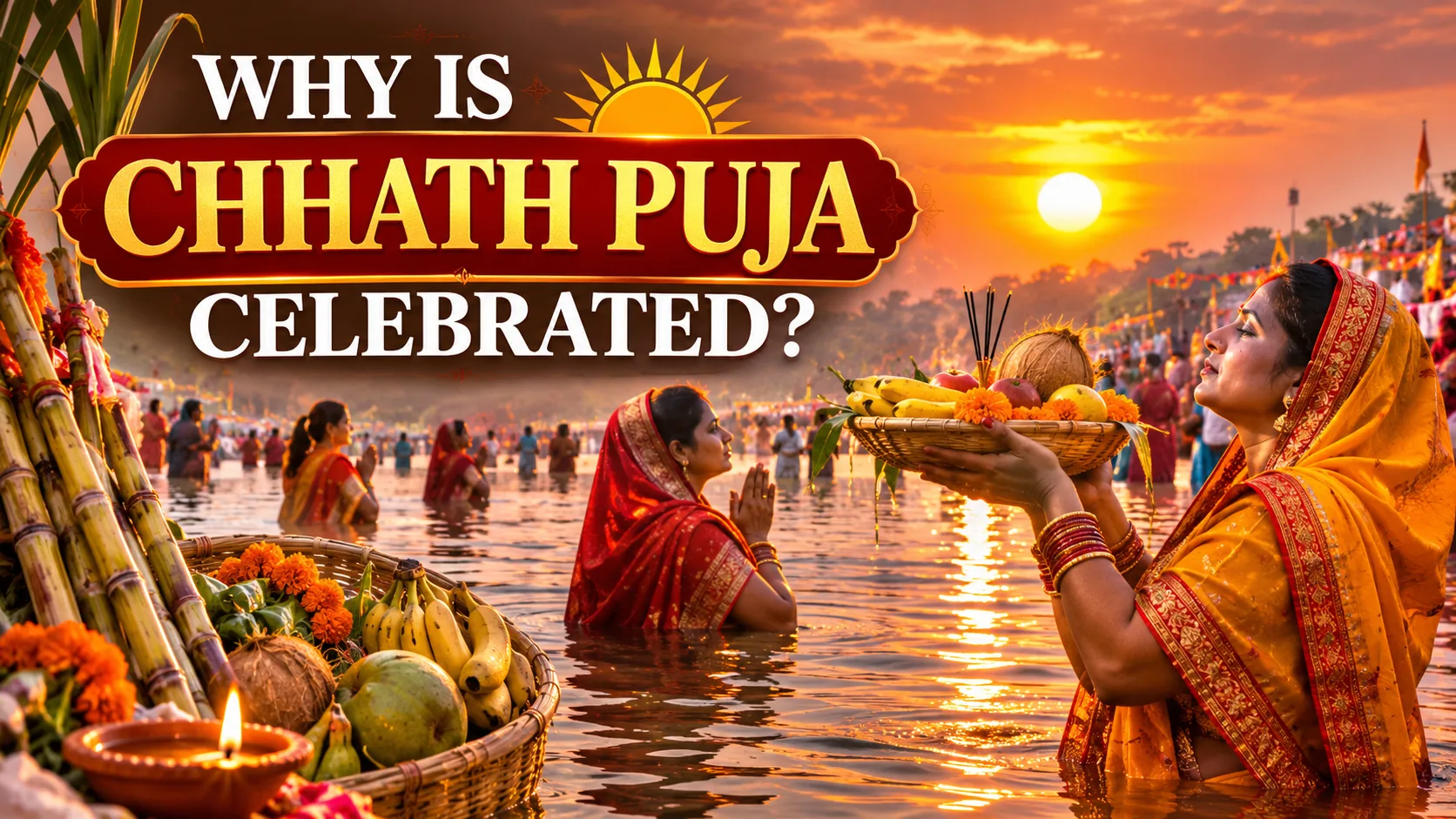
Chhath Puja is celebrated to express gratitude to Surya Dev (the Sun God) and seek blessings from Chhathi Maiya for health, prosperity, happiness, and the well-being of family members. It is one of the most important Hindu festivals, particularly observed in Bihar, Jharkhand, eastern Uttar Pradesh, and parts of Nepal.
Unlike many Hindu festivals that involve worship inside temples, Chhath Puja is primarily performed near rivers, ponds, lakes, and other natural water bodies. Devotees observe strict fasting, maintain ritual purity, and offer prayers to the setting and rising Sun.
One of the most distinctive aspects of Chhath Puja is that devotees worship both the setting Sun and the rising Sun. This tradition reflects gratitude for the energy that sustains life, respect for nature, and the belief that the divine deserves reverence throughout every phase of existence.
But why is Chhath Puja celebrated, and what makes this festival so spiritually significant?
1. Why Is Chhath Puja Celebrated?
Chhath Puja is celebrated to worship Surya Dev, the Sun God, who is considered the source of light, energy, warmth, and life on Earth. According to Hindu traditions, the Sun sustains all living beings and plays an essential role in maintaining the natural world.
Devotees observe Chhath Puja to express gratitude for these blessings and pray for:
- Good health: Seeking physical well-being and protection from diseases.
- Family prosperity: Praying for happiness, peace, and financial stability.
- Children's well-being: Seeking blessings for the long life, health, and prosperity of children.
- Fulfilment of wishes: Devotees observe the rituals with faith and devotion, seeking blessings for their families.
- Spiritual purification: Practising discipline, fasting, cleanliness, and self-control.
Chhathi Maiya is also worshipped during this festival. She is traditionally associated with the protection of children, motherhood, fertility, and family welfare.
The festival is therefore not simply an occasion to worship the Sun. It represents gratitude towards nature, devotion to divine powers, family relationships, and the importance of discipline in spiritual life.
2. Religious and Mythological Significance of Chhath Puja
Chhath Puja has deep roots in Hindu religious traditions. Its significance is associated with Surya Dev, Chhathi Maiya, and several stories found in popular religious traditions.
Worship of Surya Dev
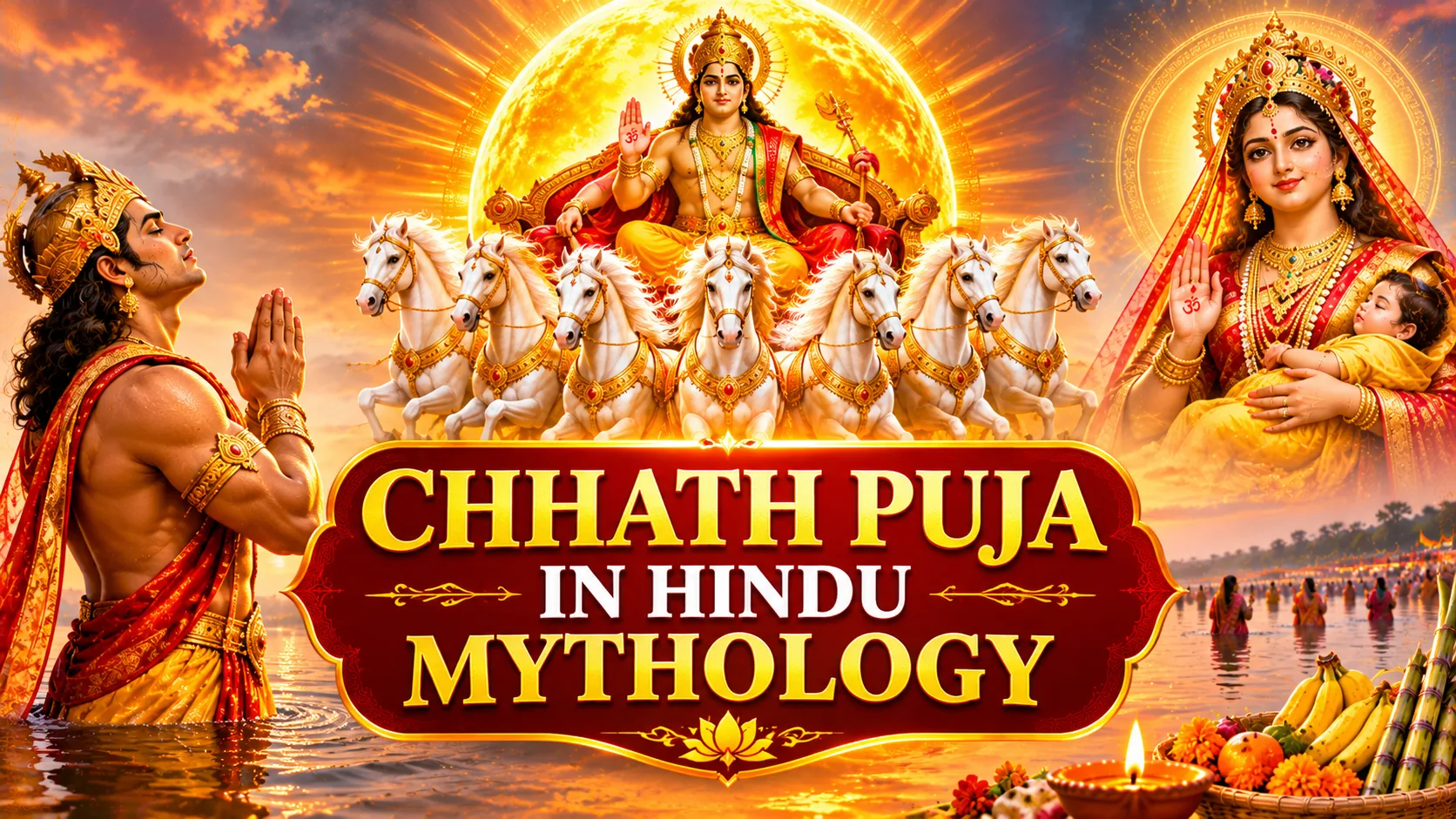
In Hinduism, Surya Dev is regarded as one of the principal manifestations of divine energy. The Sun is traditionally worshipped as the visible source of life and is associated with knowledge, vitality, health, and prosperity.
The Rigveda contains several hymns dedicated to solar deities, reflecting the ancient importance of the Sun in Vedic religious practices.
During Chhath Puja, devotees offer Arghya (a ritual offering of water) to the setting and rising Sun. This act symbolizes gratitude, devotion, and recognition of the Sun's importance in sustaining life.
Worship of Chhathi Maiya
Chhathi Maiya is deeply revered in the Chhath tradition. She is popularly associated with the sixth form of divine maternal protection and is worshipped for the welfare of children and families.
In popular Hindu belief, she is also associated with the protection of newborn children and the blessings of motherhood.
Devotees worship Chhathi Maiya alongside Surya Dev, seeking her blessings for family happiness, children's health, and prosperity.
The Connection with Karna from the Mahabharata
One popular traditional association of Chhath Puja comes from the Mahabharata.
Karna, the son of Surya Dev and Kunti, is remembered for his devotion to the Sun God. According to popular accounts, he regularly offered prayers to Surya Dev while standing in water.
His devotion, discipline, and generosity are often connected with the traditions of Sun worship.
Although this association is widely discussed in religious storytelling, it should be understood as a traditional explanation rather than definitive historical evidence of the festival's origin.
The Connection with Draupadi and the Pandavas
Another popular religious tradition connects Chhath Puja with Draupadi and the Pandavas.
According to traditional accounts, Draupadi worshipped Surya Dev during difficult times and sought divine blessings for the well-being of her family.
These stories reinforce the festival's association with devotion, family protection, perseverance, and faith.
3. Why Do People Offer Arghya to Both the Setting and Rising Sun?
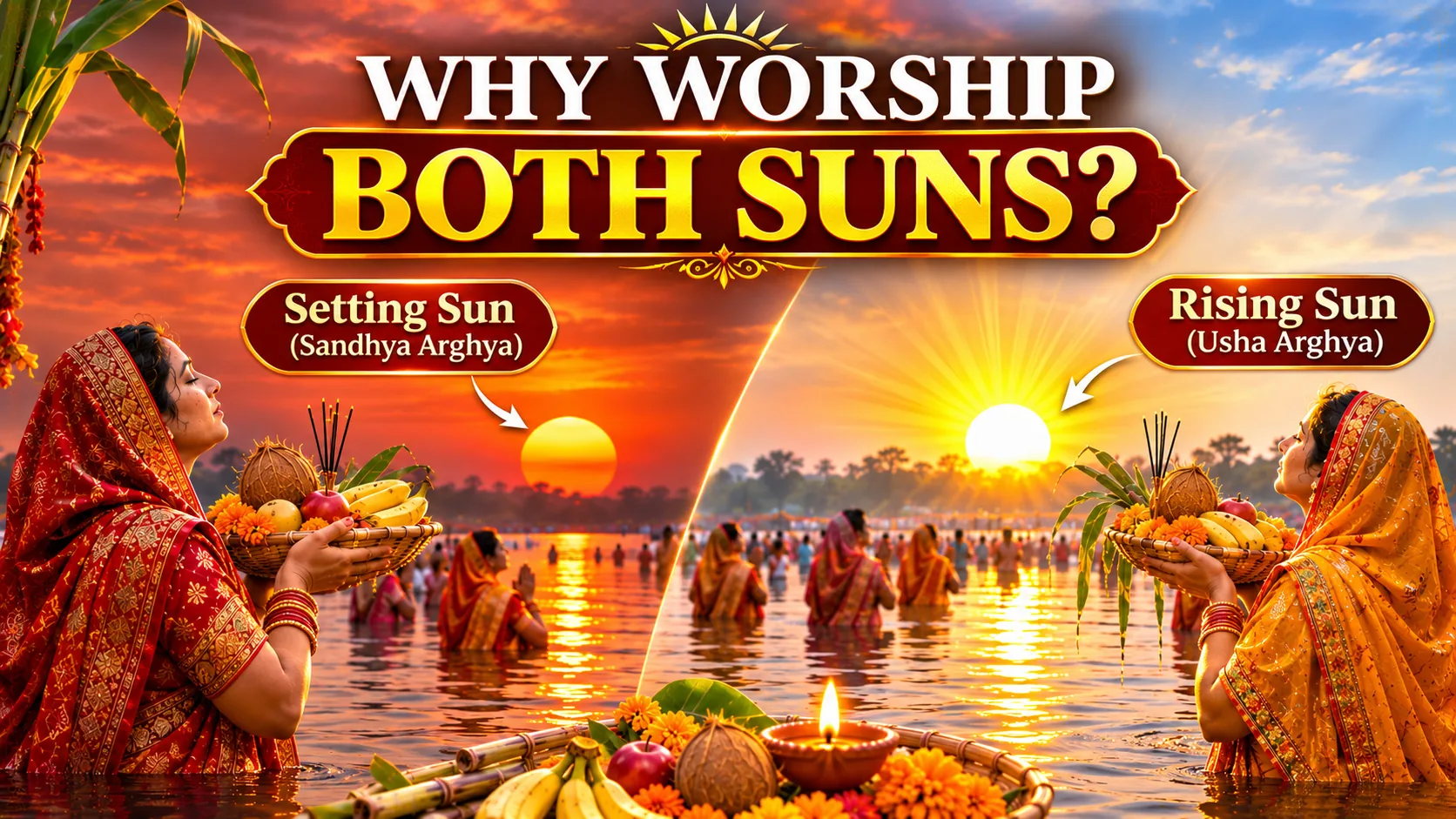
One of the most distinctive traditions of Chhath Puja is offering Arghya to both the setting Sun and the rising Sun.
In many Hindu rituals, the rising Sun receives special attention. However, Chhath Puja gives equal importance to the setting Sun.
This practice carries a meaningful spiritual message.
Offering Arghya to the Setting Sun
On the third day of Chhath Puja, devotees gather near rivers, ponds, and other water bodies to offer Arghya to the setting Sun.
This ritual expresses gratitude for the Sun's energy and acknowledges the importance of every phase of life.
It also represents humility, appreciation, and respect for nature.
Offering Arghya to the Rising Sun
On the fourth and final day, devotees return to the water bodies before sunrise and offer Arghya to the rising Sun.
The rising Sun represents new beginnings, hope, vitality, and renewed energy.
After completing the morning prayers, devotees break their fast through a ritual known as Paran.
Together, these two offerings convey a powerful message: we should respect and remain grateful for both the beginning and ending phases of every cycle of life.
4. What Are the Four Days of Chhath Puja and Why Are They Important?
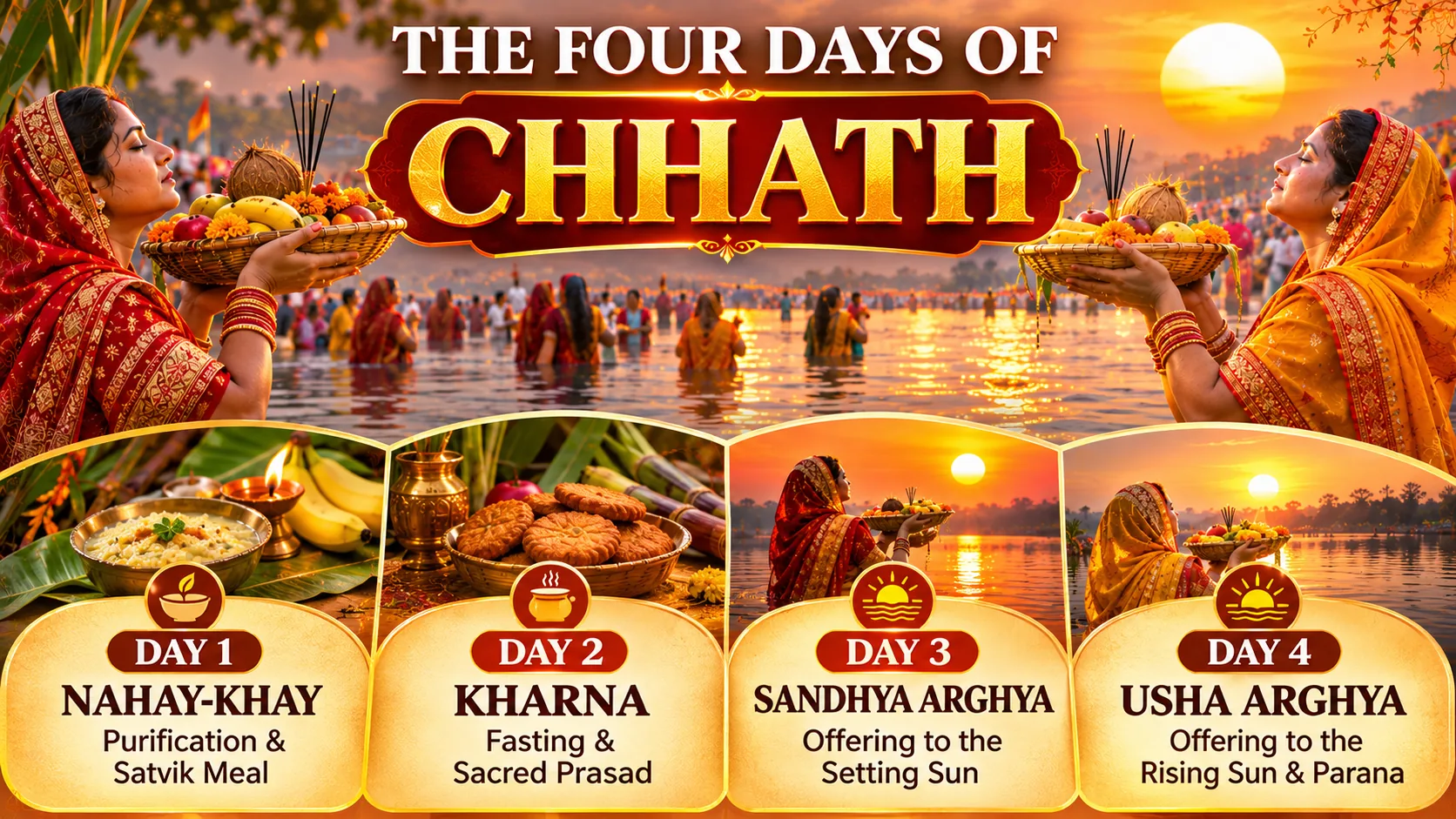
Chhath Puja is observed over four days, with each day having its own religious significance and rituals.
Day 1: Nahay Khay
The first day is known as Nahay Khay.
Devotees take a ritual bath, clean their homes, and prepare for the festival. Traditional meals are prepared using carefully selected ingredients.
The food is generally prepared with particular attention to cleanliness and purity.
Nahay Khay marks the beginning of the festival and prepares devotees for the strict observances that follow.
Day 2: Kharna
The second day is known as Kharna.
Devotees observe a fast throughout the day and traditionally break it after sunset following prayers.
Special offerings, commonly including kheer prepared with jaggery and rice, along with roti and fruits, are prepared and shared as Prasad.
After Kharna, devotees begin the rigorous period of fasting associated with Chhath Puja, traditionally without food or water.
Day 3: Sandhya Arghya
The third day is the main day of Chhath Puja.
Devotees prepare traditional offerings, arrange fruits and other Prasad in bamboo baskets or soops, and visit nearby rivers, ponds, or other water bodies.
During sunset, they stand in the water and offer Arghya to Surya Dev.
This ritual is known as Sandhya Arghya.
Families and communities gather at the ghats to participate in prayers, devotional songs, and traditional celebrations.
Day 4: Usha Arghya
The fourth day is known as Usha Arghya.
Devotees return to the ghats before sunrise and offer prayers to the rising Sun.
After completing the rituals and offering Arghya, devotees seek blessings from Surya Dev and Chhathi Maiya.
They then complete the fast through Paran.
Usha Arghya marks the conclusion of Chhath Puja.
5. Why Is Chhath Puja So Important in Bihar and Eastern Uttar Pradesh?
Chhath Puja has a particularly strong cultural and religious connection with Bihar, Jharkhand, eastern Uttar Pradesh, and the Terai region of Nepal.
For many families, it is not just a festival but an important part of their cultural identity and family traditions.
A Festival of Family and Community
Chhath Puja brings together entire families and communities.
Family members participate in preparing Prasad, cleaning homes, arranging पूजा materials, and visiting the ghats.
People living in different cities and countries often return to their hometowns to celebrate Chhath with their families.
Connection with Rivers and Nature
The festival emphasizes the importance of natural water bodies and the environment.
Rivers, ponds, and lakes become central locations for the rituals.
The tradition encourages respect for natural resources and reminds people of the essential role of water, sunlight, and environmental cleanliness in sustaining life.
A Tradition Passed Through Generations
Chhath Puja is deeply connected with family traditions.
Children learn devotional songs, rituals, and the importance of the festival from their parents and grandparents.
Traditional Chhath songs, known as Chhath Geet, are an important part of the celebration and preserve the cultural heritage of the region.
Today, the festival is celebrated not only in Bihar and Uttar Pradesh but also by Indian communities across the country and abroad.
Frequently Asked Questions About Chhath Puja
1. Why is Chhath Puja celebrated?
Chhath Puja is celebrated to worship Surya Dev and Chhathi Maiya. Devotees seek blessings for good health, prosperity, children's well-being, and family happiness.
2. Why do devotees worship the setting Sun during Chhath Puja?
Devotees offer Arghya to the setting Sun to express gratitude for its life-giving energy. The ritual also symbolizes respect for every phase of life and the natural cycle of the Sun.
3. Who is Chhathi Maiya?
Chhathi Maiya is a revered maternal deity associated with Chhath Puja. She is traditionally worshipped for the protection, health, and prosperity of children and families.
4. Why is Chhath Puja mainly celebrated in Bihar?
Chhath Puja has a particularly strong historical, religious, and cultural presence in Bihar. Over generations, the festival has become an important part of the region's traditions and community identity.
5. Why do devotees observe a difficult fast during Chhath Puja?
Devotees observe fasting as an expression of devotion, discipline, purity, and spiritual commitment. The strict fasting tradition is an important part of the festival.
6. Why is Chhath Puja celebrated for four days?
Each of the four days has a distinct ritual purpose: Nahay Khay, Kharna, Sandhya Arghya, and Usha Arghya. Together, these observances form the complete traditional celebration.
7. What is the significance of offering Arghya during Chhath Puja?
Arghya is a ritual offering of water to Surya Dev. It represents gratitude, devotion, and reverence for the Sun as the source of life and energy.
The Simple Answer
Chhath Puja is celebrated to honour Surya Dev, the Sun God, and seek blessings from Chhathi Maiya for health, prosperity, and the well-being of children and families.
Its four-day observance combines fasting, prayer, discipline, traditional offerings, and worship of the setting and rising Sun.
Beyond its religious significance, Chhath Puja teaches people to respect nature, remain grateful for life's blessings, preserve family traditions, and maintain faith during difficult times.
It is a festival that connects spirituality with nature and brings families and communities together in devotion.
For millions of devotees, Chhath Puja is not simply an annual celebration. It is an expression of faith, gratitude, cultural identity, and devotion passed from one generation to the next.
Pilgrim Resources
Enhance Your Pilgrimage Experience
Mobile App
Download AppRead Kumbh Guides on Mobile
Download Divya Kripa to read all official guides offline, receive real-time snan alerts, and access GPS-enabled navigation on the ground.
AI Assistant
Try AI PlannerPersonalized Planner & Guide
Access your Kumbh Planner AI Assistant to receive tailored ritual advice, customized itineraries, and instant answers to spiritual questions.
More Stories
Related Articles
Loading discussion & reviews...