All Blog Posts
SpiritualityCultureFestival
Why Is Lord Rama Not the Main Deity Worshipped on Diwali? The Story Behind Lakshmi-Ganesha Puja
K
Kumbh AdminNovember 12, 202610 min readDiwali is widely celebrated as the day Lord Rama returned to Ayodhya after defeating Ravana. Yet, on Diwali night, millions of Hindus perform Lakshmi-Ganesha Puja instead of making Lord Rama the central deity. Why? Discover the fascinating connection between Ramayana, Goddess Lakshmi, Lord Ganesha and the different traditions of Diwali.
Diwali is one of the grandest festivals in Hinduism. It is widely associated with the return of Lord Rama to Ayodhya after 14 years of exile and his victory over the demon king Ravana. According to the Ramayana, the people of Ayodhya welcomed their beloved king by lighting thousands of earthen lamps, celebrating his return with immense joy.
However, an interesting question arises when we look at the way Diwali is celebrated today.
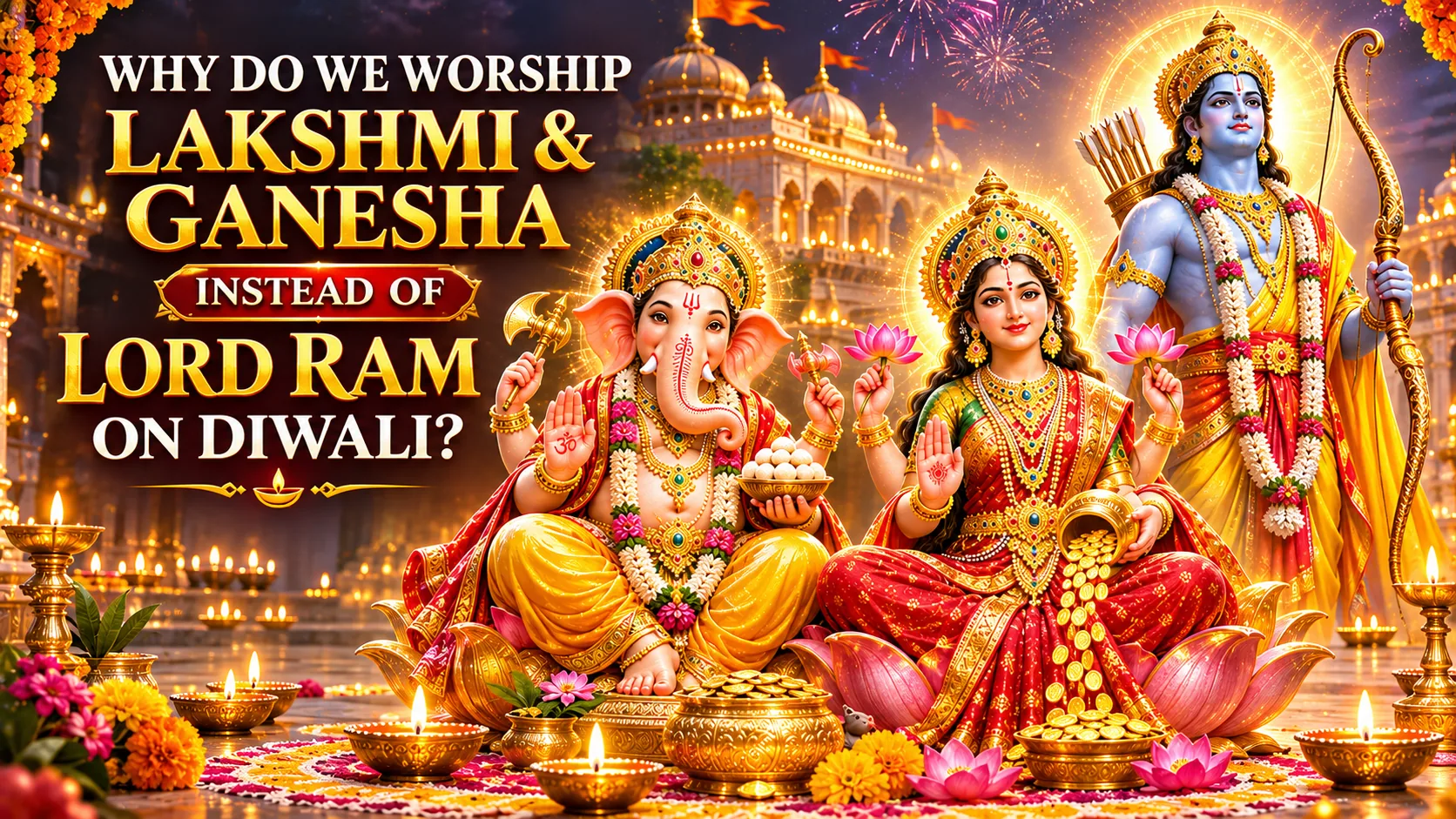
If Diwali marks the return of Lord Rama to Ayodhya, why do most Hindu families worship Goddess Lakshmi and Lord Ganesha on Diwali night instead of making Lord Rama the central deity of the puja?
Why is Goddess Lakshmi worshipped as the goddess of wealth and prosperity, and why is Lord Ganesha included in the ceremony?
The answer lies in the different mythological traditions, religious beliefs and regional customs associated with Diwali. To understand this practice, we need to explore the connection between Lord Rama, Goddess Lakshmi, Lord Ganesha and the significance of the new moon night of Kartik.
Is Diwali Actually the Festival of Lord Rama's Return to Ayodhya?
One of the most popular explanations of Diwali comes from the Ramayana.
According to the traditional story, Lord Rama, Goddess Sita and Lakshmana returned to Ayodhya after completing 14 years of exile. During this period, Lord Rama defeated Ravana, the king of Lanka, who had abducted Goddess Sita.
Their return was an extraordinary moment for the people of Ayodhya. After spending years waiting for their beloved prince, the entire kingdom prepared to welcome them.
The residents decorated their homes, illuminated streets with earthen lamps and celebrated the return of righteousness and justice.
This tradition became closely associated with the celebration of Diwali, symbolizing the victory of good over evil and light over darkness.
However, Diwali has several religious and mythological associations beyond the Ramayana.
Different regions and Hindu traditions celebrate the festival for different reasons. These include the worship of Goddess Lakshmi, the victory of Lord Krishna over Narakasura, the return of the Pandavas in certain regional traditions and the beginning of new financial years in some communities.
Therefore, although Lord Rama's return is one of the most popular explanations of Diwali, it is not the only religious tradition associated with the festival.
Why Is Goddess Lakshmi Worshipped on Diwali Night?
The main reason Goddess Lakshmi is worshipped on Diwali is her association with wealth, prosperity, abundance and good fortune.
Diwali falls on the Amavasya, or new moon night, of the Hindu month of Kartik. This particular night is considered highly auspicious for worshipping Goddess Lakshmi in many Hindu traditions.
According to Hindu mythology, Goddess Lakshmi emerged from the cosmic ocean during Samudra Manthan, the great churning of the ocean of milk by the Devas and Asuras.
She appeared as a divine and radiant goddess, carrying the blessings of prosperity, beauty and abundance.
In many traditional accounts, her emergence is associated with the restoration of prosperity and divine balance in the universe.
Goddess Lakshmi is therefore worshipped on Diwali to seek blessings for:
- Financial stability and prosperity.
- Happiness and abundance within the family.
- Success in business and professional activities.
- Peace and well-being in the household.
- Good fortune and new opportunities.
There is also a cultural connection between Diwali and the agricultural and financial cycles of India. The festival traditionally marks an important seasonal transition, and many communities associate it with harvest prosperity, fresh beginnings and new business accounts.
Thus, Lakshmi Puja on Diwali represents the hope of welcoming abundance and prosperity into one's home.
Why Is Lord Ganesha Worshipped Along with Goddess Lakshmi?
If Goddess Lakshmi is the goddess of wealth, why is Lord Ganesha included in her worship?
The answer is connected with the different divine qualities represented by these two deities.
Goddess Lakshmi represents wealth, prosperity and abundance, whereas Lord Ganesha represents wisdom, intelligence, knowledge and the removal of obstacles.
According to a popular traditional story, Goddess Lakshmi once became proud of her wealth and divine powers. Lord Vishnu reminded her that wealth alone could not make life complete without wisdom and understanding.
In a popular devotional narrative, Goddess Lakshmi later accepted Lord Ganesha as her adopted son through Goddess Parvati.
This story is commonly used to explain why Lakshmi and Ganesha are worshipped together, although it is not a universally established scriptural account.
Their combined worship carries a deeper message.
Wealth without wisdom can lead to poor decisions, unnecessary spending and difficulties. Similarly, success becomes meaningful when accompanied by intelligence, discipline and good intentions.
Therefore, devotees worship Goddess Lakshmi for prosperity and Lord Ganesha for the wisdom to use that prosperity correctly.
There is another important reason for including Ganesha in the ceremony.
Lord Ganesha is known as Vighnaharta, the remover of obstacles, and Pratham Pujya, the deity traditionally worshipped first before beginning an auspicious activity.
For this reason, Lakshmi-Ganesha Puja begins with prayers to Lord Ganesha before proceeding to the worship of Goddess Lakshmi.
Then Why Is Lord Rama Not Worshipped as the Main Deity on Diwali?
This is where understanding the different traditions of Diwali becomes important.
The assumption that Lord Rama is not worshipped on Diwali is not entirely correct. Lord Rama is worshipped in many households and temples during Diwali, particularly in places associated with the Ramayana.
However, the main evening puja in many Hindu households is dedicated to Goddess Lakshmi and Lord Ganesha.
There are several reasons behind this tradition.
1. Diwali Has Multiple Religious Associations
Diwali is not associated with just one mythological event. It represents different religious stories and celebrations across India.
In North India, the return of Lord Rama to Ayodhya is a major part of Diwali's cultural identity.
However, the Kartik Amavasya night is particularly associated with the worship of Goddess Lakshmi.
Both traditions exist together, but their rituals emphasize different aspects of the festival.
2. Lakshmi Puja Is Specifically Associated with Kartik Amavasya
The new moon night of Kartik is traditionally considered an important occasion for worshipping Goddess Lakshmi.
The central purpose of Lakshmi Puja is to seek blessings for prosperity, abundance and happiness.
This is why the evening worship in many households focuses on Lakshmi and Ganesha.
3. Lord Rama's Return Is Celebrated Through Other Diwali Traditions
The return of Lord Rama is celebrated through lighting diyas, decorating homes, organizing religious gatherings, reciting Ramayana stories and visiting temples.
In Ayodhya, the connection with Lord Rama is particularly significant, and the festival is celebrated with extraordinary devotion.
Therefore, Rama's worship is not absent from Diwali. It is expressed through different rituals and regional celebrations.
4. Lakshmi-Ganesha Puja Represents New Beginnings
Diwali is also an occasion when families and business communities pray for a prosperous new beginning.
Lord Ganesha symbolizes auspicious beginnings and the removal of obstacles, while Goddess Lakshmi represents prosperity.
Their combined worship is therefore especially meaningful for households, traders and business owners.
Is Goddess Lakshmi Connected with Lord Rama?
An interesting connection between Goddess Lakshmi and Lord Rama comes from the belief that Goddess Sita is an incarnation of Goddess Lakshmi.
According to Hindu traditions, Lord Vishnu incarnated as Lord Rama, while Goddess Lakshmi incarnated as Goddess Sita.
Their divine relationship represents the connection between Vishnu and Lakshmi in their earthly forms.
When Lord Rama returned to Ayodhya with Goddess Sita, the people welcomed both of them with great happiness.
Therefore, the celebration of Rama's return also has a connection with the divine presence of Goddess Lakshmi.
However, the Lakshmi worship performed on Diwali has its own independent religious significance and is not simply a ritual for celebrating Sita's return.
This connection provides another way to understand how the Ramayana tradition and Lakshmi Puja coexist during Diwali.
How Is Diwali Celebrated Differently Across India?
The different traditions of Diwali explain why the festival does not have exactly the same religious focus everywhere.
1. Ayodhya and North India
In Ayodhya and many parts of North India, Diwali is strongly associated with Lord Rama's return from exile.
Temples organize special prayers, homes are decorated with diyas, and devotees celebrate the victory of good over evil.
Lakshmi-Ganesha Puja is also widely performed in households.
2. Gujarat and Western India
In Gujarat, Diwali is particularly important for business communities.
Families perform Lakshmi Puja and Chopda Pujan, worshipping new account books and seeking prosperity for the coming financial year.
Lord Ganesha is also worshipped for success and the removal of obstacles.
3. Bengal and Eastern India
In West Bengal and several eastern regions, Kali Puja is an important part of the Diwali night celebrations.
Devotees worship Goddess Kali, seeking protection, strength and blessings.
4. South India
In many parts of South India, the larger Diwali celebrations are associated with Naraka Chaturdashi, commemorating Lord Krishna's victory over the demon Narakasura.
The celebrations include early morning oil baths, lighting lamps, wearing new clothes and enjoying traditional sweets.
These regional differences demonstrate that Diwali is a festival with several layers of religious and cultural significance.
The Deeper Spiritual Meaning of Worshipping Rama, Lakshmi and Ganesha
The traditions associated with Diwali can also be understood through the qualities represented by the three divine personalities.
Lord Rama – Dharma and Righteousness
Lord Rama represents truth, duty, discipline, sacrifice and righteousness. His return to Ayodhya symbolizes the victory of Dharma over Adharma.
Goddess Lakshmi – Wealth and Prosperity
Goddess Lakshmi represents abundance, fortune, happiness and material well-being. Her worship reminds people to appreciate prosperity and use resources responsibly.
Lord Ganesha – Wisdom and Auspicious Beginnings
Lord Ganesha represents intelligence, knowledge, good judgment and the removal of obstacles. His blessings symbolize the wisdom required to achieve success.
Together, these traditions offer a beautiful understanding of a prosperous life.
Rama teaches us to follow the right path, Ganesha teaches us to make wise decisions, and Lakshmi represents the prosperity that can follow.
Diwali therefore becomes more than a celebration of lights. It becomes a reminder to bring righteousness, wisdom and prosperity into our lives.
Frequently Asked Questions About Rama and Lakshmi-Ganesha Puja on Diwali
1. If Diwali celebrates Lord Rama's return, why do we worship Goddess Lakshmi?
Diwali has multiple religious associations. Lord Rama's return to Ayodhya is one of its most popular traditions, while Kartik Amavasya is traditionally associated with Goddess Lakshmi's worship for prosperity and abundance.
2. Is Lord Rama worshipped on Diwali?
Yes. Lord Rama is worshipped on Diwali in many households and temples, particularly in Ayodhya and regions where the Ramayana tradition is central to the celebration. However, Lakshmi-Ganesha Puja is the main evening ceremony in many Hindu households.
3. Why is Lord Ganesha worshipped with Goddess Lakshmi?
Goddess Lakshmi represents wealth and prosperity, while Lord Ganesha represents wisdom and the removal of obstacles. Their combined worship symbolizes prosperity accompanied by wisdom.
4. Is Goddess Sita an incarnation of Goddess Lakshmi?
Yes. According to Hindu traditions, Goddess Sita is considered an incarnation of Goddess Lakshmi, while Lord Rama is an incarnation of Lord Vishnu.
5. Why is Diwali celebrated on Amavasya?
The main Diwali celebration falls on Kartik Amavasya, the new moon night of the Hindu lunar calendar. Lighting diyas on this darkest night symbolizes the victory of light over darkness. It is also an important occasion for Lakshmi Puja.
6. Which gods are worshipped during Diwali?
The principal deities worshipped vary by region and tradition. Goddess Lakshmi and Lord Ganesha are commonly worshipped during the main Diwali evening puja. Lord Rama, Goddess Sita, Lord Krishna and Goddess Kali are also associated with different Diwali traditions.
Conclusion
The question of why Lord Rama is not the main deity worshipped during Diwali has an interesting answer: he is worshipped, but Diwali has several religious traditions, each emphasizing a different aspect of Hindu mythology and spirituality.
Lord Rama's return to Ayodhya represents the victory of righteousness and the celebration of Dharma. Goddess Lakshmi's worship on Kartik Amavasya represents prosperity and abundance, while Lord Ganesha symbolizes wisdom and auspicious beginnings.
These traditions are not contradictory. Instead, they complement one another and make Diwali a festival with a deeper meaning.
As we light diyas and celebrate the festival, we remember Lord Rama's righteousness, seek Goddess Lakshmi's blessings for prosperity and pray to Lord Ganesha for wisdom.
The true message of Diwali is not simply to acquire wealth, but to build a life guided by righteousness, intelligence, compassion and gratitude.
Pilgrim Resources
Enhance Your Pilgrimage Experience
Mobile App
Download AppRead Kumbh Guides on Mobile
Download Divya Kripa to read all official guides offline, receive real-time snan alerts, and access GPS-enabled navigation on the ground.
AI Assistant
Try AI PlannerPersonalized Planner & Guide
Access your Kumbh Planner AI Assistant to receive tailored ritual advice, customized itineraries, and instant answers to spiritual questions.
More Stories
Related Articles
Loading discussion & reviews...